Cat Vaccination Schedule by Age: From Kitten to Senior
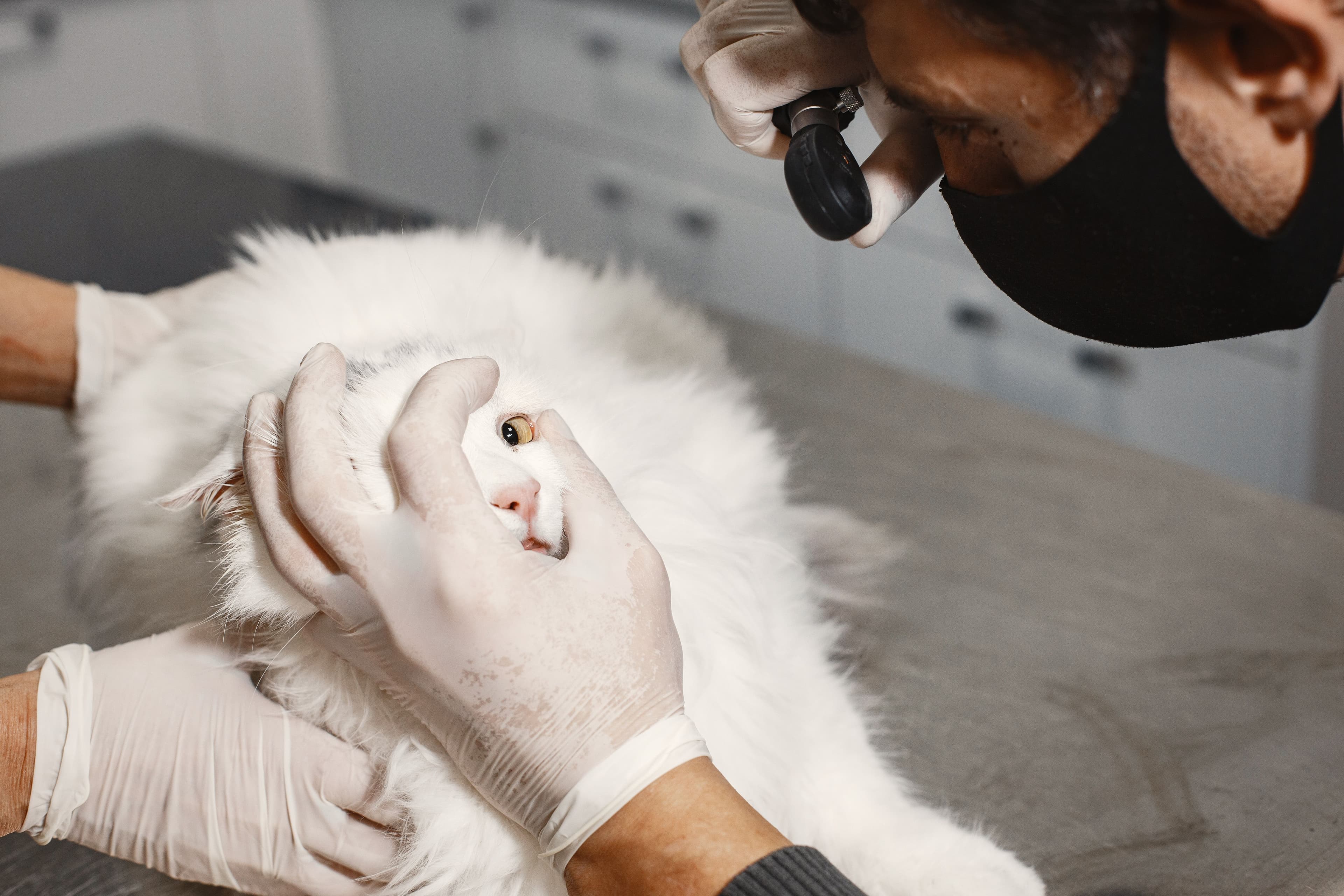
The paperwork Nadia got with Pepper was a half-sheet of photocopied paper with one line filled in: 1 vaccine given, 7 wks. He was an eleven-week-old brown tabby with a crooked whisker pad, adopted at a folding-table rescue event outside a hardware store in April. Nadia read that line and assumed the shots were handled. Four weeks later a vet would explain, gently, that a single kitten shot is closer to a rough draft than a finished vaccine — and that the real cat vaccination schedule by age runs from about six weeks old until the day the cat dies.
The line on the adoption form that didn't mean what she thought
Pepper's one dose was real. It was also, on its own, close to useless.
Kittens are born with borrowed immunity. They absorb maternally derived antibodies (MDA) from their mother's colostrum in the first days of life, and those antibodies do two things at once: they protect the kitten, and they neutralize vaccine antigen before the kitten's own immune system can respond to it. That's why the AAHA/AAFP guidelines don't treat kitten vaccines as a one-and-done event — they treat them as a series designed to catch the moment maternal antibodies fade.
The catch is that nobody can predict when that moment arrives for a specific kitten. It depends on how immune the mother was, whether she nursed properly in the first 72 hours, and how much colostrum that particular kitten managed to get while its littermates shoved it aside. For one kitten the window closes at 8 weeks. For another, at 14.
This is why the final kitten dose is given no earlier than 16 weeks of age — not because 16 weeks is magic, but because it's the point by which maternal interference has almost certainly ended in nearly every kitten.
Pepper's 7-week dose landed squarely inside the window where his mother's antibodies were probably still wiping it out. On paper, he was vaccinated. Biologically, he was a naive kitten walking around with a piece of paper.
What the vet drew on the back of the receipt
Dr. Okafor didn't hand Nadia a brochure. She flipped over the receipt and drew a timeline, and Nadia photographed it in the parking lot before she'd even started the car.
Weeks 6–8: first FVRCP — feline viral rhinotracheitis (herpesvirus-1), calicivirus, and panleukopenia. Panleukopenia is the one that gets glossed over in conversation and shouldn't be. It's a parvovirus, it survives in the environment for months, and mortality in young unvaccinated kittens runs above 90% even with treatment, according to the European Advisory Board on Cat Diseases. Herpesvirus and calicivirus rarely kill, but herpes never leaves — a cat that gets it at nine weeks can be flaring with eye and sinus problems at nine years.
Every 3–4 weeks after that, until the final dose at 16 weeks or later. Not a countdown of "three shots." A schedule that ends at an age, not at a number.
Week 8: first FeLV (feline leukemia virus), second dose 3–4 weeks later. This surprises most people: the 2020 AAHA/AAFP guidelines classify FeLV as core for every kitten, indoor or not. Kittens have genuine age-related susceptibility to FeLV that adult cats largely outgrow. Vaccinating at eight months of age is not the same protection as vaccinating at eight weeks.
Weeks 12–16: rabies. Not before 12 weeks — the immune response in younger kittens isn't reliable enough, and most jurisdictions won't recognize a dose given earlier.
Nadia's takeaway from the receipt was that Pepper needed doses at 12, 16, and roughly 20 weeks, plus a second FeLV, plus rabies. Five appointments in the space of two months, for a cat she'd assumed was finished.
The sentence Nadia almost said: "But he's an indoor cat"
She got halfway into it before Dr. Okafor answered the question she hadn't finished asking.
Indoor status changes the risk math. It does not change the law, and it does not change biology as much as owners want it to. Rabies vaccination for cats is legally mandated in most U.S. states and many municipalities, and indoor confinement is not an exemption in the overwhelming majority of them. The practical reason is bats. Bats get into houses, bats are the leading rabies reservoir in the United States, and a cat is very good at catching one before anyone notices there's a bat.
There's a second reason, and it's the one that actually persuaded Nadia: an unvaccinated cat that bites someone — a groomer, a house guest, a child — creates a legal problem with a range of outcomes that includes quarantine and, in some jurisdictions, euthanasia for testing. A rabies certificate is a piece of protection for the household as much as the cat.
Where indoor status genuinely matters is the non-core column:
- FeLV in adulthood — non-core after year one, and reasonable to stop for a strictly indoor, single-cat household with no new arrivals. Keep it going if your cat goes outside, lives with an indoor-outdoor cat, or shares space with a cat of unknown status.
- Bordetella bronchiseptica — non-core, realistically relevant for crowded shelters, catteries, and multi-cat rescue environments.
- Chlamydia felis — non-core, mostly a multi-cat-household conjunctivitis problem.
The honest framing: indoor cats get fewer vaccines, not zero. And "indoor" is a status that changes without warning — a move, a foster placement, a screen door left open in July.
The cat vaccination schedule by age, the way her vet wrote it down
The condensed version of that receipt, which is the cat vaccination schedule by age most general practices in North America follow:
6–8 weeks: FVRCP #1. FeLV #1 at 8 weeks. 10–12 weeks: FVRCP #2. FeLV #2. 12–16 weeks: Rabies (single dose). 16–20 weeks: FVRCP final dose — must be at or after 16 weeks. 6 months: FVRCP booster. (See below — this one gets skipped constantly.) 1 year after the rabies dose: rabies booster, regardless of how old the cat was at the first one. 1 year: FeLV booster if risk continues. Adult, low risk: FVRCP every 3 years. Rabies every 1 or 3 years depending on the product used and local law. Adult, higher risk: FVRCP every 3 years still holds for most; annual FeLV for cats with ongoing exposure; annual exam either way. Senior (roughly 10+): same intervals, more scrutiny — not fewer visits.
The appointment nobody remembers: six months
Here's the one that falls through the cracks in almost every household.
The 2020 AAHA/AAFP guidelines recommend an FVRCP booster at approximately six months of age, in place of the traditional one-year booster. The logic is the "window of susceptibility" — the gap between maternal antibodies fading and the kitten's own durable immunity establishing itself. A booster at six months closes it earlier than a booster at twelve months does.
Almost nobody books it. The kitten series ends around five months, there's a sense of completion, the carrier goes back in the closet, and the next reminder postcard arrives seven months later. AVMA pet owner survey data has consistently shown cats getting less veterinary care than dogs — roughly 57% of cat owners reported a vet visit in the past year, versus about 74% of dog owners. A six-month booster with no obvious symptom attached to it is exactly the kind of appointment that gets lost in that gap.
This is precisely the kind of thing ZooMinder's vaccine reminders exist for — you enter the date the last kitten dose was given and the six-month and one-year boosters get scheduled forward automatically, instead of living in your memory of a parking-lot photo. Nadia also photographed each vaccine certificate into Pepper's ZooMinder record, which turned out to matter more than she expected: two years later, boarding him required proof of rabies with a certificate number, and she had it on her phone in the parking lot of the kennel.
Year two, and the schedule finally loosens
By Pepper's second birthday, the schedule had gone quiet, and that's normal.
FVRCP for a healthy adult cat at ordinary risk moves to every three years. This is settled veterinary consensus, not a corner-cutting move — duration of immunity for panleukopenia in particular is long and well documented.
Rabies depends on two things that owners often conflate: the product and the law. A three-year rabies vaccine gives three years of labeled protection, but if your county ordinance requires annual rabies vaccination, the ordinance wins. Ask your clinic which product they used and what your local requirement is, and write both down.
FeLV becomes a yearly conversation rather than a yearly automatic. Dr. Okafor asked Nadia the same three questions at every annual: does he go outside, has anyone new moved in, is there a cat in the house whose status you don't know? Three no's, no FeLV booster.
One practical note that comes up in adult cats and almost never gets explained: modern feline vaccines are increasingly non-adjuvanted, and vaccines are given in distal limb or tail locations rather than between the shoulder blades. That's a deliberate response to feline injection-site sarcoma — a rare tumor, estimated at roughly 1 to 4 cases per 10,000 vaccinated cats, but one that is far more treatable when it occurs somewhere a surgeon can get clean margins.
The rule to know is 3-2-1: have any post-vaccination lump checked if it persists more than 3 months, is larger than 2 cm, or is still growing 1 month after the injection.
Mild lethargy or a little soreness for 24–48 hours is expected and unremarkable. A lump that's still there in the spring is not.
The year Pepper turned eleven
He got slower, slept in the sun more, and lost a bit of muscle over his spine. Nadia asked the question a lot of owners of older cats ask: isn't he past all this?
The answer runs the other way. Senior cats have less robust immune function, not more, and they're more likely to be carrying something — chronic kidney disease, hyperthyroidism, early dental disease — that a routine vaccine visit catches. Age is not a reason to stop vaccinating. It's a reason to individualize.
What does change at eleven:
- Titer testing becomes a reasonable conversation, particularly for panleukopenia. The ABCD's 2025 guidance supports checking FPV antibody levels before revaccinating; adequate titers mean you can reasonably skip that booster. Titers are useful for FVRCP components and legally meaningless for rabies — no jurisdiction accepts a titer in place of a rabies certificate.
- Non-core vaccines usually drop away for an indoor senior with a stable household.
- The exam matters more than the injection. Weight is the single most useful number you can track in an older cat, because gradual loss is invisible day to day and obvious on a chart. Nadia logs Pepper's weight in ZooMinder after every visit; the graph is what prompted the bloodwork that caught his kidney values early.
The half-sheet of paper, four years later
Nadia still has it — the photocopied form with 1 vaccine given, 7 wks written in ballpoint. It's in a drawer with the takeout menus.
She keeps it because it's a good reminder of a specific mistake: she read a completed line and heard a completed sentence. A vaccine record tells you what was given and when. It never tells you what's still owed. The only thing that does that is a date on a calendar with a name next to it — and if you're going to trust one number from this entire article, make it 16 weeks, because a kitten series that stops before then is a series that may not have worked at all.
Pepper is eleven, on a three-year FVRCP, a three-year rabies, no FeLV since year one, and a titer conversation scheduled for his next annual. His whisker pad is still crooked.
Try ZooMinder — Built by Pet Owners, for Pet Owners
If this guide helped, ZooMinder takes it a step further: smart medication reminders, vet appointment tracking, weight and symptom logs you can share at your next visit. Free, no ads.