Dog Dental Care at Home: 5 Myths Your Vet Wishes You'd Drop
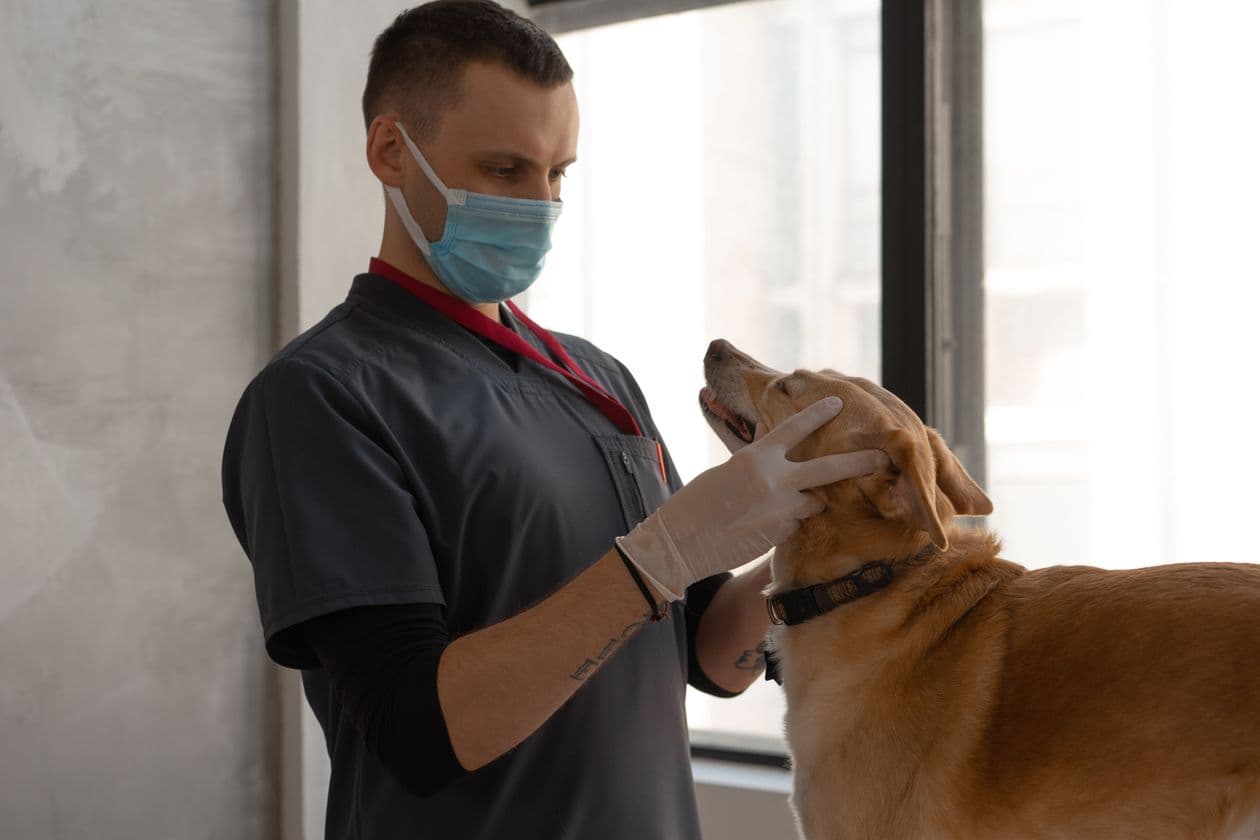
Most pet owners think the crunch of dry kibble scrubs a dog's teeth clean, and that the two cups a 40-pound Lab eats every day are doing a toothbrush's job. Add a dental chew now and then and the job feels done. Here's what veterinarians actually say: according to the American Veterinary Dental College, most dogs already have some degree of periodontal disease by age three, and plenty of those dogs ate dry food their whole lives. Good dog dental care at home isn't complicated, but it does mean letting go of a few comfortable beliefs. Here are the five most common ones, and what the evidence says instead.
"Dry kibble keeps my dog's teeth clean"
The idea sounds reasonable. Hard food should scrape teeth, the way biting an apple feels like it cleans yours.
The truth: a standard kibble piece shatters as soon as the tip of the tooth touches it. It never reaches the gumline, and the gumline is where plaque bacteria cause damage. Dogs also tend to swallow kibble with very little chewing, so there's barely any contact to begin with. Ordinary dry food is about as good at cleaning teeth as wet food, which is to say not very.
There's one real exception. Some prescription and over-the-counter dental diets use a large kibble with an aligned fiber structure. The tooth sinks into the piece before it breaks, and that wipes the surface on the way down. Several of these diets carry the VOHC Seal (Veterinary Oral Health Council), which means they passed controlled trials for reducing plaque or tartar. If your vet suggests one, it's a reasonable add-on. The regular bag in your pantry doesn't count.
"Brushing once a week is good enough"
A lot of owners who do brush settle on weekly brushing, often on Sunday after a bath. It feels responsible, and it's a lot better than nothing.
The truth: plaque is a soft bacterial film that comes back within hours of a cleaning. It starts mineralizing into tartar (calculus) in roughly 24 to 48 hours, and once it hardens, a toothbrush can't get it off. Only a professional scaling can. A weekly brush lets six days of plaque harden in place.
The research backs this up. In a 2021 study of 160 racing Greyhounds published in the journal Animals, both daily and weekly brushing reduced calculus, but only daily brushing significantly reduced gingivitis. An earlier Beagle study in the Journal of Veterinary Dentistry found a similar pattern: dogs brushed daily or every other day did much better than dogs brushed weekly.
So the vet's answer to "how often should I brush my dog's teeth?" is daily if you can, every other day at minimum. A frequently cited survey in the same journal found that only about 2% of dog owners brush daily. If you're in that 2%, you're already ahead of nearly everyone.
A 60-second brush every day does more than a five-minute scrub once a week. With plaque, frequency beats intensity.
Tools that actually work
- A soft-bristled dog toothbrush or a finger brush. Finger brushes are easier to start with. A long-handled brush reaches the back teeth better once your dog tolerates it.
- Dog-specific enzymatic toothpaste. Never use human toothpaste. It's designed to be spit out, it can contain fluoride, and some brands contain xylitol, which is toxic to dogs. Poultry or peanut flavors also turn brushing into something closer to a treat.
- Outside surfaces only, to start. Lift the lip and brush along the gumline at about a 45-degree angle. Focus on the canines and the big upper back teeth (the upper fourth premolars), where tartar builds up fastest. Your dog's tongue does a fair job on the inside surfaces.
If your dog has never had a toothbrush in their mouth, take it slowly. Spend a few days letting them lick paste off your finger, then rub a finger along the gums, then introduce the brush. Most dogs accept it within two or three weeks.
The hard part isn't the technique. It's remembering every day for years. That's where a recurring reminder helps more than willpower: in ZooMinder, you can set a daily "brush teeth" reminder for each dog, the same way you'd set one for a monthly flea preventive, so it doesn't depend on remembering it at 10 p.m.
"Dental chews and water additives do the same job as brushing"
The pet aisle is full of chews, sprays, powders, and water additives promising "fresh breath and clean teeth, no brushing required." Plenty of owners take that literally.
The truth: some of these products really do help, and many do nothing. None of them replace brushing. Vets treat them as supplements to brushing, not substitutes.
To tell which is which, look for the VOHC Seal of Acceptance. The council's current list for dogs includes chews like Greenies, Purina DentaLife, Hill's Science Diet Oral Care chews, and ProDen PlaqueOff, plus water additives like HealthyMouth and TropiClean Fresh Breath Dental Water Additive. These products showed a measurable reduction in plaque or tartar in trials. A product without the seal might work, but it hasn't proven it.
Some caveats your vet would want you to hear:
- Chews only work if your dog actually chews them. A dog that swallows a dental stick in two bites gets calories and no cleaning. Size up so they have to work at it.
- Count chews as calories. A daily dental chew can make up a real share of a small dog's calorie needs. If your dog is gaining weight, check the chews first.
- Harder isn't better. Antlers, cow hooves, real bones, and nylon bones are a leading cause of slab fractures of the upper fourth premolar, a painful break that often means extraction or a root canal. Vets use two quick tests. You should be able to dent the chew with your thumbnail. And if you wouldn't want to be hit in the kneecap with it, it's too hard for your dog's teeth.
Water additives are the lowest-effort option, which is why owners like them. They're a good backup for a dog who won't tolerate a brush yet. Just don't expect them to deal with tartar that's already there.
"Bad breath is just dog breath"
People joke about "doggie breath" as if a strong smell were part of owning a dog.
The truth: a healthy dog's mouth shouldn't smell bad. Persistent bad breath (halitosis) is usually the first visible sign of periodontal disease: bacteria breaking down tissue at and below the gumline. And the part you can see is the small part. Most of each tooth's structure sits below the gums, so a mouth that looks "a little yellow" can be hiding bone loss and infected roots.
Watch for these signs of dental disease in dogs:
- Bad breath that doesn't go away
- A red line along the gums, or gums that bleed when touched
- Brown or yellow tartar, especially on the canines and back teeth
- Chewing on one side, dropping food, or suddenly preferring soft food
- Pawing at the face or rubbing the muzzle on the carpet
- Swelling under one eye, a classic sign of an abscessed upper fourth premolar
- Loose or missing teeth, or drooling more than usual
Dogs are very good at hiding mouth pain. Many keep eating normally with advanced disease, so "he's still eating fine" doesn't mean his mouth is fine. Short notes like "breath worse this week" or "dropped kibble twice at dinner" help your vet see a pattern. Logging them in ZooMinder's symptom log means you can show the vet a dated timeline instead of trying to remember when it started.
"Anesthesia-free dental cleaning is the safer option"
Groomers and pop-up clinics often advertise "anesthesia-free dentals." For owners worried about anesthesia, especially with an older dog, it sounds like an easy call.
The truth: the American Animal Hospital Association's 2019 Dental Care Guidelines and the American Veterinary Dental College both recommend against non-anesthetic dentistry. Scraping tartar off an awake dog cleans only the visible crown, which is cosmetic. It can't clean under the gumline, where the disease actually is. It can't include dental X-rays, which are the only way to see root and bone problems. And it can be stressful or painful for the dog. Worse, the teeth look white afterward, which can hide disease that keeps getting worse underneath.
A tooth that looks clean isn't the same as a healthy tooth. Most of what matters in a dental cleaning happens under the gumline and on an X-ray.
Modern anesthesia, with pre-anesthetic bloodwork, IV fluids, and monitoring, is much safer than many owners expect, even for seniors. If you're worried, ask your vet about their monitoring protocol. That conversation is a better use of your concern than skipping the anesthesia.
As for timing, AAHA recommends annual dental evaluations and cleanings starting around age one for small breeds and age two for large breeds. Small dogs crowd 42 teeth into tiny jaws and tend to develop disease earlier and faster.
What to do instead
Here's what a vet-approved routine for dog dental care at home looks like:
- Brush daily, or at least every other day. Use a soft dog toothbrush or finger brush and enzymatic dog toothpaste. Focus on the outer surfaces and the gumline, especially the canines and the big back teeth. Sixty seconds is enough.
- Add one VOHC-accepted product if you want extra help, such as a properly sized chew or a water additive. Check the seal, not the marketing.
- Skip anything too hard to dent with your thumbnail. That rules out antlers, real bones, and hooves.
- Lift the lip once a week and look. Note red gums, new tartar, swelling, or changes in breath.
- Book a dental exam every year, plus a cleaning under anesthesia with X-rays when your vet recommends it. That usually starts at one to two years old, depending on size.
- Treat chewing changes as a vet visit, not a phase. Dropping food, chewing on one side, or facial swelling means it's time to call.
If you have more than one dog, the routine gets harder to track: who got brushed, whose cleaning is due, which one had swollen gums last month. Keeping each dog's dental cleaning dates and vet records in its own ZooMinder profile makes it easier to remember that the Yorkie is due in March and the Lab isn't due until next fall.
The crunch of kibble was never what kept your dog's teeth clean. A cheap toothbrush, used for a minute a day, does that job.
Keep Your Pet's Health on Track with ZooMinder
ZooMinder helps you manage medication schedules, track vet appointments, and keep complete health records for all your pets — all in one free app.