A Dog Vaccination Schedule Guide That Actually Makes Sense
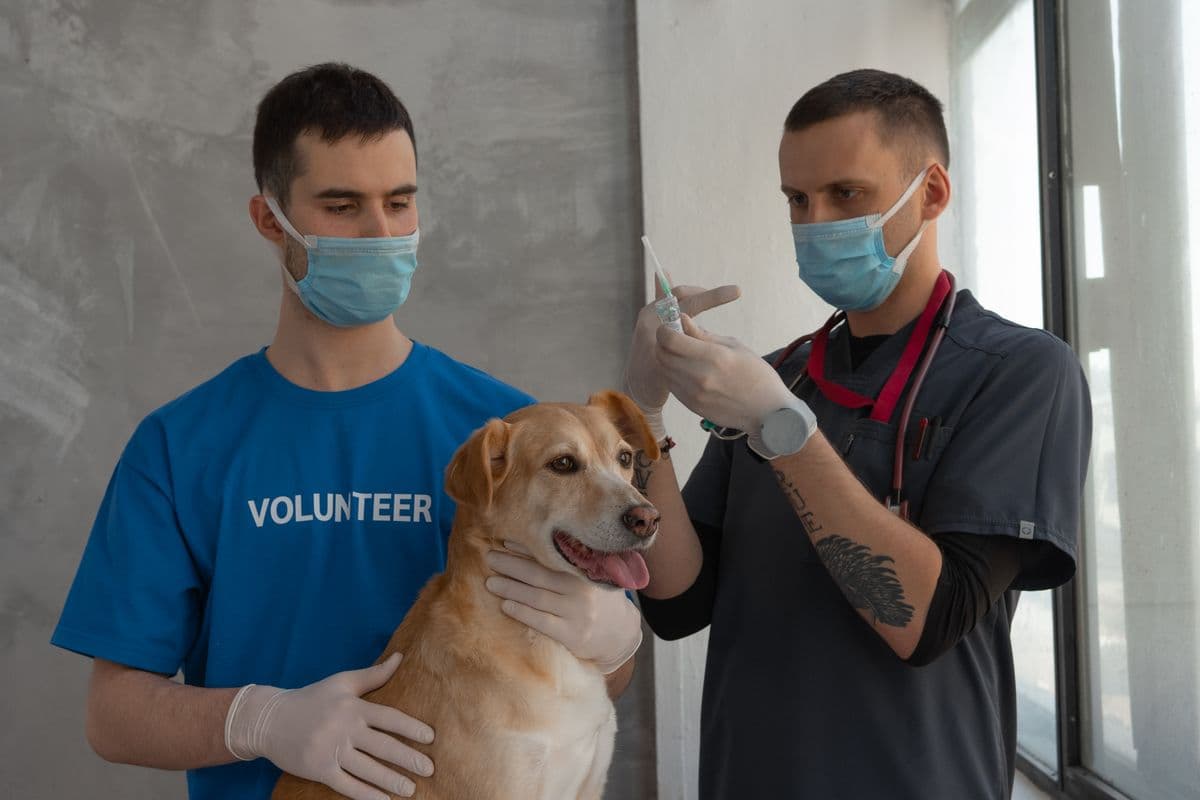
Priya picked up Nutmeg, a nine-week-old terrier mix with one ear that never stood up right, from a rescue foster home on a Saturday morning. By Monday afternoon she was sitting in an exam room with a sticky note in her hand that read "DHPP #2 — 3 wks," a rabies date circled for "week 16ish," and a vet tech saying something about leptospirosis that she only half-caught over Nutmeg's excited barking. She left with more questions than answers, and a nagging feeling that if she messed up the timing, she'd somehow undo the first shot entirely.
That feeling — a mix of responsibility and confusion — is basically universal for anyone who's just become a dog parent. A dog vaccination schedule guide sounds like it should be simple: a list, some dates, done. In practice it's a moving target that depends on your puppy's age, where you live, and what your dog's life actually looks like. Here's how Priya figured it out, step by step, and how you can skip the confusion she didn't.
The folder full of vaccine dates
The first thing Priya's vet explained, more clearly than the sticky note had, was that puppy vaccines aren't a single event — they're a series. Puppies are born with some protection from their mother's antibodies, passed through nursing, but nobody knows exactly when that protection fades in an individual puppy. It could be gone at 8 weeks or still hanging around at 14. So vets vaccinate repeatedly through that window to make sure at least one dose lands after maternal antibodies stop interfering.
For Nutmeg, that meant a core vaccine series — the DHPP combo, which covers distemper, adenovirus (hepatitis), parvovirus, and parainfluenza — given roughly every three to four weeks starting at 6–8 weeks old. The standard rhythm most vets follow looks like this:
- 6–8 weeks: First DHPP
- 10–12 weeks: Second DHPP, plus the first of two leptospirosis doses if the vet is starting that series early
- 14–16 weeks: Third DHPP, rabies (timing depends on state law), and the second lepto dose if applicable
- 1 year: Booster for everything given as a puppy
- Every 1–3 years after that: Rabies per your state's law and the vaccine label; DHPP typically every 3 years once the adult booster series is complete
Priya's vet flagged one detail that a lot of guides gloss over: the final DHPP dose in the puppy series should land at 16 weeks or later — closer to 18–20 weeks is even better. That's a relatively recent shift in guidance from the American Animal Hospital Association's (AAHA) canine vaccination task force, driven by research showing maternal antibodies can linger longer than the old 12-week cutoff assumed, sometimes blocking the vaccine from working if the last dose comes too early.
What actually happened in the exam room
When Priya asked why Nutmeg needed a leptospirosis shot when her sister's older dog had never gotten one, the vet gave her the most useful five minutes of the whole appointment: the difference between core and non-core vaccines.
Core vaccines are the ones every dog should get, regardless of lifestyle, because the diseases are widespread, severe, or dangerous to humans too. As of AAHA's 2024 guideline update, that list is: distemper, canine adenovirus, parvovirus, rabies, and now leptospirosis — lepto was moved from "non-core, consider it" to core for essentially all dogs, because the bacteria has spread into suburban and urban environments (it's carried in wildlife urine, including from raccoons and rats) and a lepto infection can cause fatal kidney and liver failure — and spread to people.
Non-core vaccines depend on what your dog's actual life involves:
- Bordetella (kennel cough): recommended for dogs who go to daycare, boarding, grooming, or dog parks
- Canine influenza: relevant in areas with outbreaks or for social dogs
- Lyme disease: recommended in tick-heavy regions, especially the Northeast and upper Midwest US
- Rattlesnake vaccine: regional, for dogs in snake-heavy hiking areas
Your vet isn't upselling you by mentioning non-core vaccines — they're matching the shot to your dog's actual risk. A city apartment dog and a farm dog need different protection, even at the same age.
This is also the point where Priya started keeping Nutmeg's vaccine certificates in ZooMinder instead of a manila folder in a kitchen drawer — mostly because her sister asked "wait, did Nutmeg get lepto or not?" and Priya couldn't answer without digging through paper. Having the actual vaccine record attached to Nutmeg's profile meant she could just check, instead of guessing.
The 16-week rule that almost tripped her up
Here's where Priya nearly went sideways. Nutmeg's foster home had already given her one distemper/parvo shot at around 7 weeks before the adoption, but the paperwork was vague on the exact date. Priya's vet made the call to treat it as valid and slot the next dose in three weeks later — but warned her that if she'd waited past 16 weeks for the final booster in the series without confirming maternal antibody status, Nutmeg could have looked "protected" on paper while actually being exposed to parvovirus risk at puppy socialization class.
This is the part of a dog vaccination schedule that trips up even attentive owners: missing the exact recommended window doesn't just mean "a little late is fine." Restarting or delaying doses in the middle of the puppy series can leave a real gap in protection during exactly the weeks a puppy is most likely to be out meeting other dogs. Parvovirus alone still kills a significant share of untreated puppies who catch it, which is why vets are strict about not skipping doses even when a puppy "seems fine."
It's also why a due-date reminder that isn't just a sticky note on the fridge matters more than it sounds. Priya set up ZooMinder's reminders the same week, so instead of trying to recall "was it three weeks or four?" from memory, she got a notification a few days ahead of each appointment window — timed off the actual date of Nutmeg's last shot, not a guess.
Booster season, a year later
By the time Nutmeg turned one, Priya wasn't confused anymore — she was just busy, which turns out to be the more common failure mode for adult dogs. According to AVMA survey data, nearly one in five dog owners who skip veterinary visits cite "my pet doesn't need vaccines" as a reason, often because it's easy to lose track of when an adult dog is actually due, not because owners don't care.
Nutmeg's one-year booster covered her full puppy series again — DHPP, rabies (on whatever schedule Priya's state and vet's vaccine brand required, either one or three years), and a lepto booster, since leptospirosis immunity doesn't last as long as the other core vaccines and needs annual boosting regardless of the dog's age. Because Nutmeg had started going to a dog daycare two mornings a week, the vet added bordetella to the mix too, on roughly a six-to-twelve-month rebooking cycle rather than an annual one.
This is the stage where a paper reminder system usually falls apart — different vaccines on different clocks, one dog with three or four separate "next due" dates. Priya uses ZooMinder to log each vaccine separately with its own next-due date, so lepto, bordetella, and the three-year DHPP don't get blended into one wrong assumption. When she later adopted a second dog, a senior beagle named Waffles, having each pet's schedule tracked separately — instead of trying to hold two dogs' worth of dates in her head — is what kept her from double-booking or missing Waffles's rabies renewal entirely.
The lepto shot she almost skipped
A year and a half in, Priya almost declined Nutmeg's lepto booster because a neighbor mentioned dogs "hardly ever get that anymore." Her vet pulled up a map showing confirmed leptospirosis cases in dogs within their own county that year — plenty of them in dogs who never left the city, exposed through puddles and storm runoff after rain. That conversation is a good reminder that a dog vaccination schedule guide written five or ten years ago may not reflect where a disease has spread since. Lepto's move to a core vaccine wasn't arbitrary — it followed the actual case data.
How Priya stopped losing track
Eighteen months after that first overwhelming sticky note, Priya's system looks almost boring: every vaccine Nutmeg and Waffles get is logged the same day, at the vet's office, on her phone. ZooMinder sends her a heads-up before each one comes due, and when a new vet asked for proof of rabies vaccination for a boarding stay last spring, she pulled up the record in about ten seconds instead of calling three different clinics trying to remember which one had it on file.
The schedule itself never got simpler — DHPP, rabies, lepto, and bordetella are still on four different clocks. What changed was that Priya stopped trying to hold all four in her head. A vaccination schedule only works if something more reliable than memory is tracking it — that's the whole lesson from the sticky note to now.
Keep Your Pet's Health on Track with ZooMinder
ZooMinder helps you manage medication schedules, track vet appointments, and keep complete health records for all your pets — all in one free app.