Dog Vaccination Schedule Guide: What Charts Get Wrong
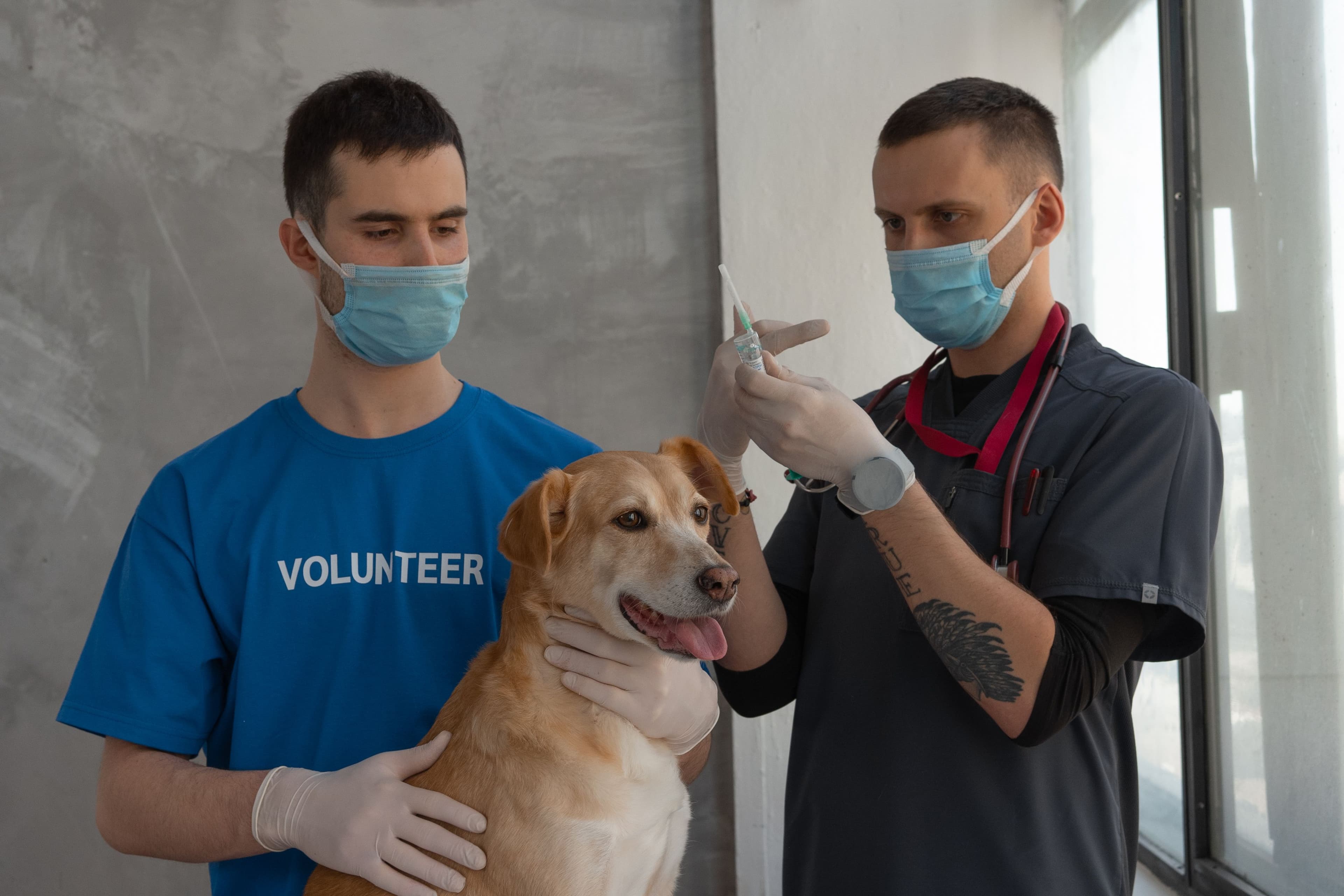
Bodie was a 14-week-old beagle mix who got his third and final distemper/parvo combo on a Tuesday. His owner did everything right: three rounds, three weeks apart, no missed appointments. Eleven days later he was on IV fluids with parvovirus. Nobody was negligent. The schedule was just built around the wrong number.
That's the thing most articles miss. Nearly every dog vaccination schedule guide you'll find online presents the puppy series as a countdown — three shots, then you're done, then annual boosters forever. It's clean, it's memorable, and it's a decent approximation. But immunity isn't a punch card. The puppy series isn't three doses because three is the magic number; it's a series because nobody knows the exact week your specific puppy stops being immune to his own vaccine. Understanding that one idea changes how you read every chart below.
The last puppy shot isn't the one your calendar says it is
Puppies are born with maternally derived antibodies (MDA) from their mother's colostrum. Those antibodies protect them early — and simultaneously neutralize vaccine antigen before the puppy's own immune system can respond to it. MDA levels decline exponentially and are usually gone by 12 to 14 weeks, but "usually" is carrying a lot of weight there. In a puppy from a heavily vaccinated dam, protective maternal antibody can persist past 16 weeks.
This is why the 2022 AAHA Canine Vaccination Guidelines don't say "give three doses." They say begin at 6–8 weeks and revaccinate every 2–4 weeks until the puppy is older than 16 weeks — with 18–20 weeks preferred in areas with high distemper risk. The 2024 WSAVA guidelines push further, recommending either a titer test or a final dose at 20–26 weeks.
The number of shots is not the schedule. The age at the final shot is the schedule.
Bodie's problem wasn't that he got three doses. It was that his last dose landed at 14 weeks, when maternal antibody was still high enough to eat it. He was, functionally, an unvaccinated puppy walking around with a completed vaccine record.
What to do instead: count backward from age, not forward from shot number. If your puppy's final dose lands before 16 weeks, book one more — even if the vet tech says the series is "complete." And write down the date and age at each dose, not just the vaccine name. This is the boring part people skip, and it's exactly what ZooMinder's vaccine records are for: each dose logged with its date, so at a glance you can see whether that last parvo shot actually landed on the right side of 16 weeks.
"Wait until the shots are done before you socialize him" is advice that gets dogs killed
This one is genuinely hard, because the conventional advice is medically reasonable. Parvo is real, it lives in soil for months, and an under-vaccinated puppy at a dog park is a bad idea. Any vet telling you to be careful is being responsible.
But the American Veterinary Society of Animal Behavior takes a firm position on this, and the reasoning is hard to argue with: behavioral problems, not infectious disease, are the leading cause of death in dogs under three years old. A puppy's primary socialization window is roughly the first three months — the same weeks the standard advice says to keep him home. Miss it, and you get fear, avoidance, and aggression that shows up at 18 months and, too often, ends in euthanasia.
AVSAB's position is that puppies should be socialized before they're fully vaccinated, and that this should be the standard of care.
The actual rule is risk-tiered, not binary:
- Yes: a well-run puppy class requiring at least one vaccine dose and a deworming, on cleanable surfaces, with healthy puppies
- Yes: friends' homes with known, vaccinated adult dogs; car rides; carried trips to hardware stores and cafés
- No: dog parks, pet store floors, rest stops, anywhere with untracked dog traffic and porous ground
Socialization is about novel experiences, not dog-on-dog contact. You can hit most of the window from a tote bag.
Leptospirosis quietly moved across the core/non-core line
The classic teaching is four core vaccines — distemper, adenovirus, parvovirus, rabies — and everything else is lifestyle-dependent. That's still the framework, but leptospirosis no longer sits comfortably on the "optional" side. AAHA's 2022 guidelines, backed by ACVIM consensus, recommend lepto for essentially every dog regardless of breed or lifestyle.
The reason is a nice piece of epidemiological misdirection. Lepto was long framed as a rural, farm-dog, standing-water disease, so small city dogs didn't get it. Then small city dogs started showing up sick — and the pattern was read as "small breeds are more susceptible." They aren't especially. They were just the least-vaccinated group. Urban raccoons, rats, and squirrels shed Leptospira in exactly the puddles a terrier drinks from on a sidewalk. And it's zoonotic: your dog can pass it to you.
Lepto also runs on a different clock than the core vaccines. It's a two-dose primary series 2–4 weeks apart, then annually — not triennially — because protection wanes inside twelve months.
"Annual boosters" is outdated and still sometimes correct
Here's where a single answer fails everyone. If you ask "how often does my dog need boosters," any number you get is wrong for some of the vaccines in the syringe, because different vaccines have genuinely different durations of immunity.
| Vaccine | Puppy series | After the 1-year booster |
|---|---|---|
| DAPP (distemper, adenovirus, parvo, parainfluenza) | 6–8 wks, every 2–4 wks until >16 wks | Every 3 years or longer |
| Rabies | Single dose, usually 12–16 wks | 1 or 3 years — set by state law |
| Leptospirosis | 2 doses, 2–4 wks apart | Annually |
| Bordetella | 1–2 doses depending on route | 6–12 months |
| Lyme | 2 doses, 2–4 wks apart | Annually, tick-endemic areas |
| Canine influenza (H3N2/H3N8) | 2 doses, 2–4 wks apart | Annually, if boarding/showing |
For the core modified-live vaccines, both AAHA and WSAVA are clear: after the puppy series and its one-year booster, revaccination no more often than every three years. WSAVA's 2024 guidelines note that dogs which responded properly to core MLV vaccines hold solid immunity for many years without repeat doses, and they now endorse titer testing (lab-run, not in-house) as a legitimate alternative for distemper, adenovirus, and parvo.
Meanwhile Bordetella is on a six-month leash. Most boarding facilities won't accept a booster older than six months, which is how people end up rebooking a vaccine appointment four days before a flight.
This mismatch is the real reason dogs fall behind — not forgetfulness, but three different renewal clocks that never line up into one tidy "annual visit." Setting a separate reminder per vaccine, rather than one per vet visit, is what actually keeps the schedule intact, and it's the specific thing ZooMinder's reminders handle: rabies on its three-year cycle, lepto on twelve months, Bordetella on six, each pinging independently.
The rabies shot follows the law, not the immunology
Rabies is the one vaccine where "what does my dog need" and "what does my dog need medically" can be different questions. Immunologically, three-year rabies products are well-supported. Legally, your state or municipality decides.
Most states let veterinarians choose a 1-year or 3-year labeled product. A few — California, West Virginia, and Mississippi among them — don't recognize the 1-year label for dogs at all and require a 3-year product. Some municipalities require annual revaccination regardless of the label. The universal part: a booster is due one year after the first dose, whichever product was used, before the three-year cycle begins.
If you move across state lines, that rabies certificate becomes the document that matters — for licensing, for boarding, for anything involving a bite report. Keep a photo of it somewhere you can find in ten seconds. Storing it alongside the vaccine log in ZooMinder means the certificate travels with the record instead of living in a folder at home, which matters more than it sounds like it does the first time a boarding facility asks for it at 7 a.m.
More shots in one visit isn't automatically better
Bundling everything into one appointment is convenient and usually fine. But it isn't neutral. A Purdue study of over 1.2 million vaccinated dogs (JAVMA, 2005) found adverse events at a rate of 38.2 per 10,000 dogs — low overall, but with two clear patterns: risk rose as body weight fell, and each additional vaccine in a single visit raised risk by 27% in dogs under 22 lb (10 kg) versus 12% in larger dogs. A 2023 JAVMA follow-up confirmed the same associations with breed, smaller size, and multiple injections.
Young adult small-breed dogs receiving multiple vaccines at once carried the highest risk. That's not an argument against vaccinating a Chihuahua — it's an argument for splitting her non-core vaccines across two visits two weeks apart. Ask. Most clinics will happily do it.
Here's the actual rule
Three sentences, and they replace every chart in this article:
- The puppy series ends at an age, not a count — no earlier than 16 weeks, and later is better in high-risk areas.
- Core vaccines run on a three-year clock; the lifestyle vaccines protecting against bacteria and rapidly-shifting respiratory bugs run on six-to-twelve months — so track each vaccine separately, never as one annual bundle.
- Every non-core vaccine is a question about your dog's actual life — where she drinks, who she boards with, what ticks live in your county — and the honest answer changes when your life does.
Bodie recovered, incidentally. Five days of hospitalization, one very expensive lesson, and a fourth vaccine at 17 weeks that his record insisted he didn't need. His owner now keeps a running vaccine log with dates and ages on every dose — which, had it existed eleven days earlier, would have shown a completed series that ended two weeks too soon.
Try ZooMinder — Built by Pet Owners, for Pet Owners
If this guide helped, ZooMinder takes it a step further: smart medication reminders, vet appointment tracking, weight and symptom logs you can share at your next visit. Free, no ads.