History of the Rabies Vaccine: What It Means for Your Pet
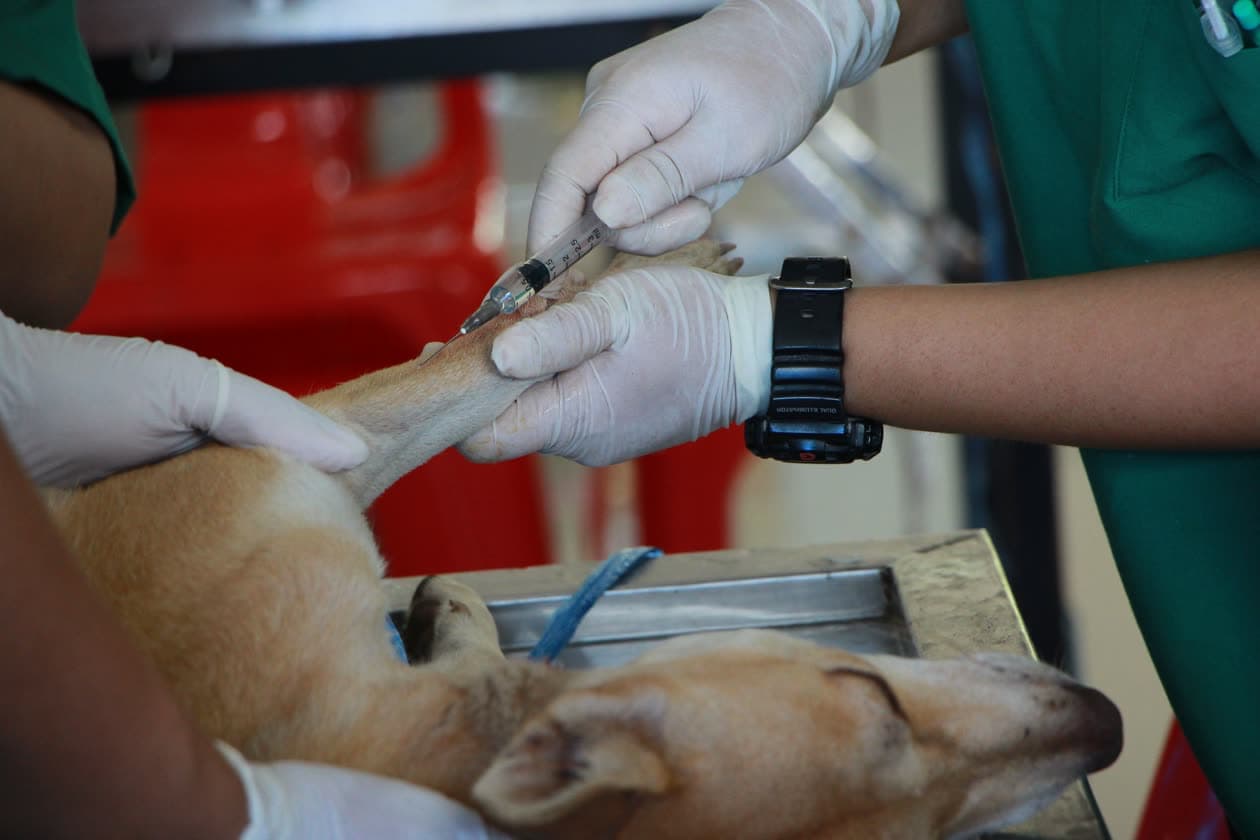
On the morning of July 6, 1885, a nine-year-old named Joseph Meister was brought to Louis Pasteur's laboratory in Paris. Two days earlier, a rabid dog had bitten him more than a dozen times. At the time, rabies was close to a death sentence once symptoms began, and nobody had ever tried Pasteur's experimental treatment on a person. Pasteur wasn't a physician, so a doctor named Jacques-Joseph Grancher gave the injections. They were made from the spinal cords of infected rabbits, dried for different lengths of time, starting with the weakest material and moving to stronger material over about ten days (Institut Pasteur). Joseph never developed rabies.
That is the story most people know about the history of the rabies vaccine. The part that matters more for your dog or cat came later, and it explains why your pet's vaccine certificate looks the way it does.
The history of the rabies vaccine in four dates
1885: Pasteur treats a person after a bite. Meister's treatment was post-exposure. It raced the virus after the bite. It protected one bitten person at a time and did nothing about the dogs.
Here is a detail that surprises most readers. Pasteur never saw the thing he was fighting. Rabies is a virus, far too small for the light microscopes of his day. He weakened a pathogen he couldn't see, using the time it took to travel through animal nerve tissue. Historians don't even agree on the exact number of injections. Institut Pasteur, the CDC and Nature give counts ranging from 12 to 14. That is a useful reminder that even famous medical stories are worth checking against sources.
1921: Japan vaccinates the dogs. Two Japanese researchers, Umeno and Doi, published work on preventive rabies vaccination for dogs (Kitasato Archives of Experimental Medicine, 1921). Together with dog registration, control of roaming dogs and compulsory vaccination, this helped Japan eliminate rabies. The last animal case was recorded in 1957 (Japanese Journal of Infectious Diseases). Japan still requires owners to vaccinate their dogs every year.
1950–2007: The United States follows. Thanks to dog vaccination, licensing and stray control, reports of rabid dogs in the US fell from about 5,000 in 1950 to 79 in 2006. In September 2007 the CDC declared the dog-to-dog strain of rabies eliminated from the country (CDC, 2007). In Latin America, mass dog-vaccination campaigns coordinated through PAHO since the 1980s have sharply reduced human rabies transmitted by dogs.
Today: the problem is still dogs. According to the WHO, dogs cause up to 99% of human rabies cases, and tens of thousands of people still die of rabies each year, mostly in Asia and Africa. The WHO calls vaccinating dogs the most cost-effective way to protect people.
The big change wasn't treating bitten people. It was vaccinating the animal that sleeps on the couch, so it can't become the source.
That is why your dog's rabies shot is often a legal requirement, not only a medical one. Your pet is part of a public health barrier that took a century to build. It also explains the three habits below.
What to NOTICE
Which rabies vaccine your pet actually got
Licensed dog rabies vaccines come in 1-year and 3-year versions (AAHA 2022 Canine Vaccination Guidelines). The certificate should say which one. Don't assume "every three years." Your local law may require a shorter interval than the product label, and the law wins.
The first-booster trap
AAHA recommends a booster one year after the first rabies vaccination, regardless of which product was used or how old the animal was. The reason is simple. A small share of animals don't respond well to that first dose, and the one-year booster catches them. So a puppy or kitten vaccinated with a "3-year" product is still due back in 12 months. This is the most common scheduling surprise.
Minimum age and waiting periods
Dog rabies vaccines are labeled for animals 3 months of age and older. Some rules also say a first-time vaccination doesn't "count" right away. The EU, for example, requires a microchip, then the vaccine, and then a 21-day wait after the primary vaccination before a pet can travel. If a trip, a move or boarding is coming up, notice the calendar early.
Normal versus not normal after the shot
Mild tiredness, a sore spot or a small bump where the needle went in are common for a day or two. Facial swelling, hives, repeated vomiting, trouble breathing or collapse are not. Those need a vet right away. In cats, keep an eye on any lump at the injection site. Feline vaccination guidelines use a "3-2-1" rule: have a lump checked if it is still there 3 months after the shot, is larger than 2 cm, or is still growing 1 month after the injection.
Possible exposures
Notice these: a fight with a raccoon, skunk, fox or other wild animal; a bite from a dog you don't know; a bat found in a room where your pet was. A bat scratch can be tiny, so you can't count on seeing a wound.
What to RECORD
The rabies tag on the collar is helpful, but it is not proof of vaccination on its own. What protects your pet in an emergency is the paperwork.
The certificate details
- Date given and next due date
- Vaccine duration (1-year or 3-year) and manufacturer
- Lot or serial number
- Vet or clinic name and signature
- Tag number and microchip number
Why the paper matters this much
Under US public health guidance, the 2016 Compendium of Animal Rabies Prevention and Control, the record can change what happens after an exposure.
- A dog or cat that is overdue but has documentation of a prior rabies vaccine is generally given a booster and watched at home by the owner for 45 days.
- An animal without documentation may be handled as unvaccinated. That can mean a four-month quarantine, unless blood testing shows evidence of a prior response to vaccination.
Local health authorities can adjust these rules. Either way, the gap between "I'm sure he had it" and a dated certificate can be months of disruption.
ZooMinder can hold each vaccination date and remind you before the next one is due, so the information is on your phone, not in a folder at a previous address.
Anything unusual after the shot
Write down what you saw, when it started, and how long it lasted. "Face swelling about 40 minutes after the shot" is something your vet can use when planning the next visit. Logging it in ZooMinder's notes keeps it next to the vaccination date, where you'll find it next year.
Screenshot checklist: rabies, at a glance
- ☐ I know whether the last shot was a 1-year or 3-year vaccine
- ☐ I know the next due date, and whether local law sets it differently
- ☐ First-ever rabies shot? Booster booked for 12 months later
- ☐ Certificate stored somewhere I can reach in under a minute
- ☐ Microchip number recorded (needed for most international travel)
- ☐ Any past vaccine reactions noted with date and timing
- ☐ Before travel or a move: destination rules checked months ahead
When to CALL A VET (or your local health department)
The same day: any possible exposure
If your pet tangled with wildlife, was bitten by an unknown animal, or shared a room with a bat, call your vet promptly, even if your pet is vaccinated and up to date. What happens next depends on your pet's vaccination status, the other animal and local rules. Use gloves if you have to handle your pet's wounds, because saliva on the coat can matter. Don't try to catch or kill the wild animal. Call animal control or the local health department.
If your pet bites someone
The person should wash the wound and contact a doctor. Your dog, cat or ferret may be placed under a 10-day observation. This rule reflects a fact about the disease: an animal can pass rabies through its saliva only for a short time before signs appear. A healthy pet at day ten couldn't have transmitted rabies at the time of the bite. The bite is reported to local authorities, and your vaccination certificate will be one of the first things they ask for.
Right away: a serious vaccine reaction
Swelling of the face, hives, vomiting, weakness or breathing trouble shortly after a vaccine is an urgent call. Don't wait to see whether it passes.
Soon, without panic: an overdue vaccine
A missed due date happens. It's a scheduling problem, not a moral failure. Book the booster and ask your vet whether your area has specific rules for lapsed vaccinations. The time to fix it is before an exposure, not after.
Before you plan: travel, a move, or an exemption question
Rules differ by country, state, province and sometimes city. They include the age at first vaccination, booster intervals, whether a 3-year vaccine is accepted, and whether elderly or sick animals can get a medical exemption. Ask your vet well ahead of time. For international travel, also check the destination country's official requirements, which may include waiting periods or antibody tests.
The takeaway
Joseph Meister grew up and worked as a caretaker at the Pasteur Institute, the place that saved him. His treatment was a race against a clock that started with a bite. Your pet's protection works the other way around. It's a date on a calendar, set long before anything bites anyone. Today, find the certificate, check whether the vaccine was 1-year or 3-year, and save the next due date somewhere you'll actually see it.
Keep Your Pet's Health on Track with ZooMinder
ZooMinder helps you manage medication schedules, track vet appointments, and keep complete health records for all your pets — all in one free app.