How Often Should Dogs Get a Checkup? A Life-Stage Field Guide
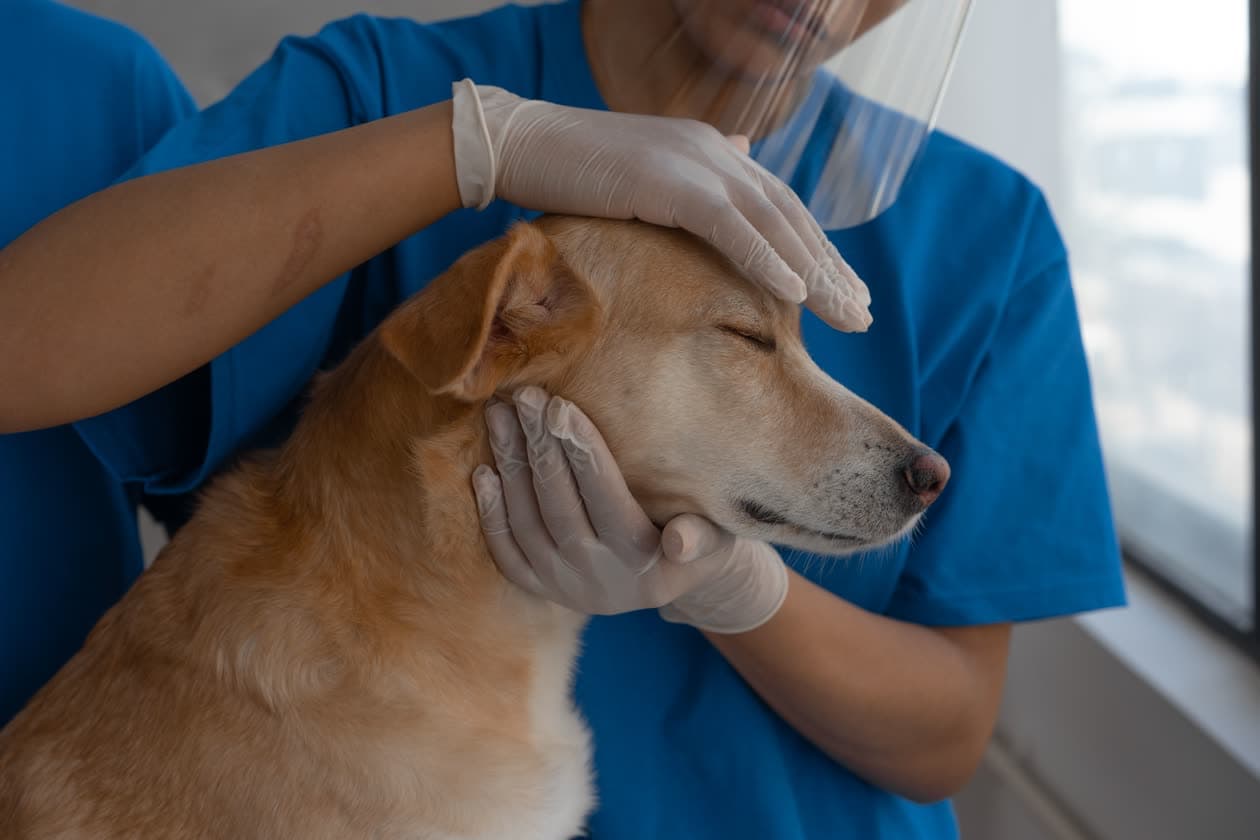
At eight weeks old, a Labrador puppy is developmentally similar to a nine-month-old human baby. Both are about to start losing their baby teeth. That comparison comes from a 2020 study in Cell Systems. UC San Diego researchers tracked chemical changes in the DNA of 104 Labrador retrievers and compared them with the same changes in humans. By that measure, a one-year-old Lab is roughly comparable to a 30-year-old person, and a four-year-old is closer to 52. After about age seven, dog aging slows down again.
That curve explains most of what you need to know about how often dogs should get a checkup. Dogs don't age at one steady rate. A whole stage of human life can go by in a few dog months, so the right visit schedule changes with your dog's age.
Here's the short answer, based on current guidance from the American Animal Hospital Association (AAHA) and the World Small Animal Veterinary Association (WSAVA):
- Puppies: a visit every 2–4 weeks during the vaccine series, which runs until at least 16 weeks of age, plus a booster at or after 26 weeks
- Healthy adults: a wellness exam every 6–12 months
- Seniors: at least twice a year
The rest of this guide covers what to notice, what to write down, and when to call the vet instead of waiting for the next scheduled visit.
Notice the life stage first: how often should dogs get a checkup at each age?
The 2019 AAHA Canine Life Stage Guidelines stopped using one fixed number for "senior." They define a dog's senior stage as the last 25% of its estimated lifespan. They also note that different breeds age at different rates. A giant breed can become a senior years before a small terrier does. So the useful question is how far your dog is through a typical life for its size and breed, not just how old it is.
Puppy (birth to about 6–9 months): the busy season
The 2024 WSAVA vaccination guidelines recommend giving core vaccines every 2 to 4 weeks, with the final dose at 16 weeks of age or older. The reason is maternal antibodies. A puppy gets these from its mother, and they protect it for a while, but they can also block a vaccine from working. Nobody can tell from the outside exactly when they wear off in a particular puppy. Repeating the dose at intervals means at least one lands after the window opens.
WSAVA also recommends revaccinating at or after 26 weeks. This is for the minority of puppies whose maternal antibodies were still blocking the vaccine at the 16-week dose.
Vaccines aren't the only reason for these visits. Each one is also a chance to check growth, deworming, parasite prevention, socialization, house training and whether the puppy is chewing everything in sight. Expect a lot of questions to come up, and bring them.
Rabies vaccination and other legal requirements vary by country and region. Your local vet will know which ones apply to you.
Young and mature adult: the quiet years
AAHA's life-stage checklists list a wellness exam every 6–12 months for adult dogs. AAHA's guide for owners says annual or twice-yearly visits work for most healthy adults.
These exams can feel routine because nothing obvious seems wrong. They matter anyway, because they give your vet a record of what normal looks like for your dog: weight, body condition, teeth, heart sounds and baseline bloodwork. Later, when something changes, your vet has a reference point to compare against.
Senior (the last quarter of expected lifespan): twice a year
AAHA's guide for owners recommends that healthy senior dogs see a veterinarian at least twice a year. AAHA's guidelines also put more weight on regular bloodwork and other screening tests for older dogs.
The reasoning is simple. A year is a bigger share of a senior dog's remaining life, and conditions such as kidney disease, arthritis and dental disease often develop gradually. Six months between visits gives your vet more chances to catch these early.
The rule of thumb: the younger or older your dog, the shorter the gap between visits. If your dog is in the middle of its life and healthy, the gap can be longer.
What usually happens at a wellness exam
Clinics vary, but most wellness exams include:
- Weight and body condition score: a hands-on check of how much fat covers the ribs, not just a number on the scale
- Nose-to-tail physical exam: eyes, ears, mouth, lymph nodes, skin, abdomen and joints
- Heart and lung listening
- Dental check: tartar, gum color and broken teeth
- Vaccines and parasite prevention reviewed based on your dog's risk and local rules
- Lab work when it fits your dog's age or health history: bloodwork, urine tests, fecal tests or heartworm testing where it's relevant
Record: the notes that make the next visit useful
A checkup is a snapshot of one day. Your notes cover the months in between. A vet who hears "he's been drinking more" learns something. A vet who hears "he's been finishing his water bowl by noon since about August" learns a lot more.
Record at the visit
- Weight on the day. Write down the actual number, not "about the same." Gradual weight changes are easy to miss when you see your dog every day.
- What was done. Note which vaccines were given, which tests were run and which medications were started or changed.
- What's due and when. This includes the next booster, rechecks and dental cleanings. Write down the specific date or month your vet gives you, not "sometime next year."
- Anything your vet said they'd keep an eye on. For example: "small lump on left flank, recheck in three months," or "watch that back molar."
Record between visits
- New lumps: where they are, roughly how big (compared with a pea, grape or walnut) and the date you found them
- Appetite and water changes: how long the change has lasted and roughly how much is different
- Mobility: a dog that stopped jumping onto the couch, or hesitates at the stairs it used to run up
- Bathroom changes: going more often, accidents indoors or straining
- Behavior: pacing at night, unusual clinginess, or hiding
Nobody needs a perfect diary. A few dated lines are enough to turn "I think something's off" into a pattern your vet can work with.
ZooMinder is built for this kind of tracking. It keeps your dog's checkup dates, vaccination records and medication reminders together, so a "recheck in three months" doesn't get lost in a coat pocket.
Screenshot this: before you leave the exam room
- What was today's weight, and is it where you'd like it?
- Which vaccines or treatments were given today?
- When is the next visit, and what is it for?
- Are any tests or results still pending? Who will call whom?
- Did any medication start, stop or change dose?
- Is there anything specific I should watch for before the next visit?
- At what point should I call instead of waiting?
That last question may be the most useful one. Your vet knows your dog's history, and their answer will fit your dog better than any general list.
Call the vet: when not to wait for the next checkup
Wellness exams are scheduled maintenance. They don't replace a phone call when something has changed, and a twice-yearly senior schedule doesn't mean you should wait five months to mention a new limp.
Call to book a sooner visit when you notice:
- A new lump, or a known lump that has grown or changed in texture
- Weight change you can see or measure without a diet change to explain it
- Drinking or urinating noticeably more for more than a few days
- Gradual stiffness, reluctance to climb or jump, or slowing down on walks. In older dogs this is easy to dismiss as "just age," and that's exactly why it should be checked.
- Bad breath, dropping food or chewing on one side
- A missed booster or puppy series dose. Don't guess at the fix. Your vet will decide whether the schedule needs adjusting.
Call right away, or go to an emergency clinic, for:
- Trouble breathing, collapse or a seizure
- A swollen, tight belly, especially with unproductive retching
- Straining to urinate with little or nothing coming out
- Repeated vomiting or diarrhea, particularly with lethargy or blood
- Known or suspected ingestion of something toxic, such as medication, xylitol, rodenticide or certain plants
- Pale gums, or signs of severe pain
Tracking symptoms doesn't diagnose anything. Its job is to help you describe what's happening clearly, so the person who can diagnose your dog has good information.
If your dog takes medication between checkups, your vet's instructions for that specific drug come first. That includes what to do about a dose that was given late, missed or doubled. General rules don't transfer safely from one medication or one dog to another. Medication reminders in ZooMinder can help with remembering doses, but the plan itself comes from your vet.
The takeaway: your dog doesn't age on your calendar
A study of a hundred-odd Labradors showed what owners tend to feel anyway. Puppy months go by quickly, the middle years are steady, and the senior years deserve closer attention. The checkup schedule follows that same pattern.
Do one thing today: look up when your dog's last wellness exam was. If they're a senior and it's been more than six months, or an adult and it's been more than a year, book the next one. Then write down three things you've noticed recently so you can bring them to the appointment.
Make This Easier With ZooMinder
You shouldn't need a spreadsheet to take care of your pet. ZooMinder is the free app that handles medication schedules, vet records, and reminders so you can focus on the cuddles.