How Often Should Dogs Get a Checkup? The Real Answer
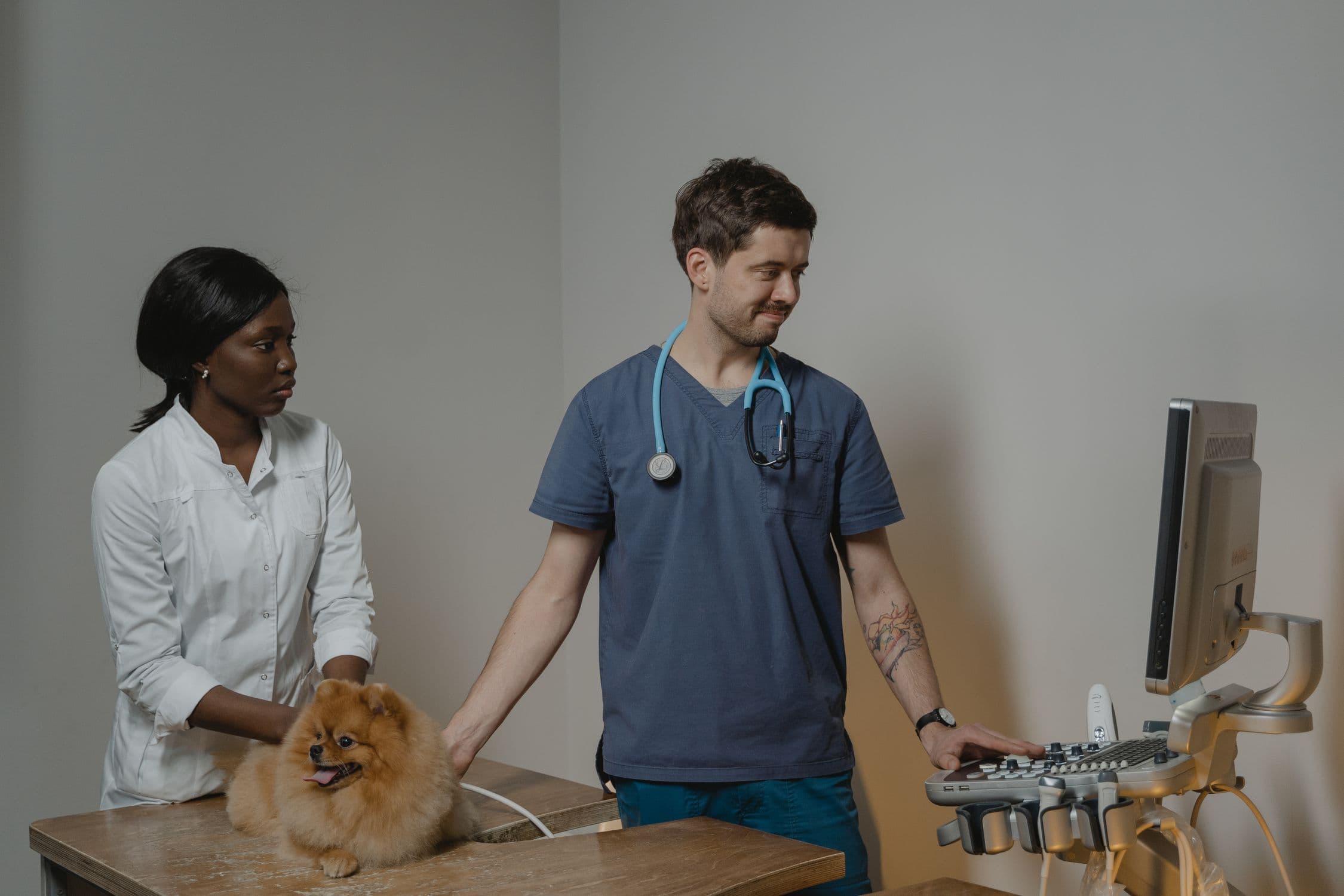
Bruno, a six-year-old Rottweiler down the street, started getting twice-a-year checkups the same month his owner brought him in for a limp. His vet wasn't waiting for him to turn "senior" by the usual math — for a giant breed, six already is senior. Two doors down, a twelve-year-old Chihuahua named Pixel was still doing fine on one annual visit, because her vet's risk assessment said she didn't need more yet. Same street, same year, two completely different answers to how often should dogs get a checkup — and both were correct.
That's the part most pet-health articles skip. They hand you a single number — "once a year," or "twice a year after age seven" — as if every dog ages on the same calendar. The AVMA does recommend at least one wellness exam annually for healthy adult dogs, with more frequent visits for young, senior, or medically complex ones. But "more frequent" is carrying a lot of weight in that sentence, and almost nobody explains what decides it.
The "how often should dogs get a checkup" answer that's usually wrong
The one-visit-a-year rule works fine for a healthy, mid-size adult dog between roughly two and six years old with no chronic conditions. It falls apart for:
- Giant and large breeds, who move into senior physiology 3-5 years earlier than small breeds
- Dogs on any long-term medication, who typically need bloodwork rechecks every 6-12 months regardless of age
- Dogs recovering from a past diagnosis — even a resolved one — where a "confirm it's still resolved" visit matters
- Multi-dog households where one dog's frequent flare-ups make it easy to under-schedule the quiet dog's visit
AAHA's Canine Life Stage Guidelines don't hand out one interval for every dog — they define stage-based intervals from puppy through senior specifically because "annual" stops matching physiology once a dog crosses into midlife.
"Life stage classification, and not chronological age alone, should guide the minimum database and frequency of the physical examination." — AAHA Canine Life Stage Guidelines
Why your dog's breed decides when "senior" starts, not their birthday
Ask a vet when a dog becomes senior and the answer depends more on projected lifespan than years lived. A Great Dane with a life expectancy around 7-9 years is often called senior at 5. A Chihuahua that might live to 16 isn't senior until 10 or 11. That's why AAHA's dog life-stage guide splits size categories the way it does.
This matters because "senior" is the trigger for semiannual exams with bloodwork, urinalysis, and blood pressure checks — not a fixed age. If your vet is still scheduling your seven-year-old Great Dane for a single yearly visit, that's worth a direct conversation, not an assumption the clinic already has it handled.
Puppies don't need "checkups" so much as a vaccine series with checkups attached
The puppy stage confuses the whole question because those visits aren't primarily wellness exams — they're a vaccination and parasite-control schedule that happens to include a full physical each time. Puppies typically see the vet every 3-4 weeks from about 6-8 weeks old through 16-18 weeks, for DHPP/DAPP boosters, a final round around 16 weeks, a rabies vaccine, and a fecal/parasite check layered in.
After that final puppy visit, most healthy dogs drop to a single annual exam during the "young adult" stage, from about 1-2 years old — assuming nothing came up during the puppy series worth monitoring.
The middle-life visit most owners quietly skip
Here's where the counterintuitive part shows up: dogs between about 2 and 6 years old are the group most likely to get skipped entirely. Puppy owners show up religiously because a vet tech calls to remind them. Senior-dog owners show up because they've read that twice a year matters, or a health scare taught them the hard way. But the healthy, unremarkable four-year-old Labrador? That one gets cancelled "since he seems fine."
That's precisely the wrong instinct for a species that hides pain and illness as a survival trait. A yearly exam on an asymptomatic adult dog still catches things owners wouldn't notice at home: a heart murmur that started this year, a subtle weight change, early dental disease, a mass small enough to only find by hands-on palpation. This is the visit where "he seems fine" and "he is fine" most often diverge.
What actually happens at each stage's exam
- Puppy (6-18 weeks): physical exam, weight and growth check, vaccine series, deworming, spay/neuter timing discussion, behavior and socialization questions.
- Adult (1-6 years, healthy): annual physical, weight trend review, dental check, heartworm test, parasite prevention refill, vaccine boosters on a 1- or 3-year rotation depending on the vaccine.
- Mature/senior (roughly 5-10+, breed-dependent): semiannual physical, bloodwork panel, urinalysis, blood pressure, thyroid check, pain and mobility assessment, and a hands-on joint and abdominal exam looking specifically for masses.
Questions worth asking at every visit, not just the first one
Bring these regardless of life stage:
- What changed since the last visit — weight, appetite, energy, behavior?
- Is this still the right vaccine interval for my dog's actual exposure risk (a dog that never sees other dogs needs a different bordetella conversation than one at daycare weekly)?
- Based on breed and current condition, when should the next visit be — not "in a year" by default, but a specific interval justified by what the vet just found?
- What should I be watching for between now and then?
That last question generates a list most owners lose within a month: "watch his water intake," "recheck that skin spot in three weeks," "start the new joint supplement and reassess in six weeks." This is exactly what ZooMinder's reminder and symptom-log features are built for — instead of trying to hold a vet's verbal instructions in your head, you log the specific follow-up (recheck date, symptom to watch, dose change) right after the appointment, and it surfaces again when it's actually due.
Tracking the trend, not just the visit
A single weight number at one appointment tells a vet very little. A weight trend across four or five visits tells them a lot — a slow decline in a senior dog is one of the earliest signs of kidney disease or cancer, often visible in the numbers before it's visible to the eye. Owners who log weight between visits, which is exactly what ZooMinder's weight-tracking log is for, walk into the next checkup with a chart instead of a guess — and that changes what a vet can catch early.
For households with more than one dog aging on different clocks — a six-year-old Rottweiler on a senior schedule and a two-year-old terrier on an annual one — keeping each pet's appointment history, vaccine dates, and vet questions separate matters more than it sounds like it should. Storing each dog's records and reminders under their own profile in ZooMinder is the kind of multi-pet bookkeeping that otherwise gets lost in a single paper folder or a memory that mixes up which dog needs what.
The actual rule
Not "once a year," and not "twice a year after seven." The honest answer to how often your dog should get a checkup is a moving target, not a fixed number: annual at minimum for any healthy adult dog, moving to semiannual once your specific dog's breed, size, and health history put them in mature or senior territory — with any medication, chronic condition, or unresolved symptom overriding the calendar entirely.
Ask your vet, at every visit, to name the interval for your dog specifically, and why — not to recite the general rule back to you. Bruno, needing six-month visits at six years old, and Pixel, still fine on an annual schedule at twelve, were both being examined correctly, because their vets were looking at the dog in front of them, not the number on a birthday card.
One App, Every Pet, Zero Missed Doses
Stop juggling sticky notes and phone alarms. ZooMinder keeps every medication, vaccine date, and vet note in one place — free, private, and built for households with multiple pets.