How to Give a Cat a Pill Without Losing a Finger
Three days into a ten-day course of antibiotics, most cat owners are down to one working hand and a cat that vanishes the second the pill bottle rattles. That's the moment this article exists for — not the theory, the actual 11pm-Google-search version of "how to give a cat a pill" when the first four methods have already failed. Below are the specific questions owners ask, answered the way a vet tech would answer them between appointments.
A 2025 Journal of Veterinary Internal Medicine survey found cat owners were noncompliant with medication instructions 39% of the time, and a separate owner survey found the top reasons were the cat spitting out the tablet (78.7%), biting or scratching (77%), and refusing it even hidden in food (71.7%). So if pilling your cat feels like a losing battle, the data says it usually is — for almost everyone. That's exactly why technique matters more than willpower here.
How do I actually get a pill into my cat's mouth?
Scruff-adjacent, not full scruff: place one hand over the top of the cat's head with your thumb and fingers on either side of the jaw hinge (not the neck skin), and tilt the head back gently until the chin points at the ceiling. This alone often makes the lower jaw drop slightly. With your other hand, use one finger to pull down on the front lower teeth, or use a pilling device, and drop the tablet as far back on the tongue as you can reach — aiming for the center-back, past the hump you can feel with your fingertip.
Close the mouth immediately and hold it shut while stroking the throat downward or blowing gently on the nose (cats often swallow reflexively when you blow on their nose). Keep the head tilted slightly up for a few more seconds — cats can hold a pill in their cheek for a surprisingly long time before spitting it out once you let go. Follow with a small syringe of water or a treat to make sure it actually goes down instead of stalling in the esophagus, which brings us to the next question.
Why does my cat throw the pill up hours later?
This is more common than most owners realize, and it's not always "the cat is dramatic." Dry-swallowed pills, especially tablets given without any water or food chaser, can get stuck in the esophagus instead of dropping into the stomach. Doxycycline in particular is notorious for this — it's acidic enough to cause esophagitis (inflammation or even ulceration of the esophagus) if it sits there, which is why vets are firm about following any pill with at least 3-6 mL of water or a small amount of food.
If your cat is chronically vomiting up pills 20-60 minutes after you gave them, two things are worth checking: first, whether the pill is actually reaching the stomach (try the water-chaser trick religiously for a week), and second, whether it's genuinely a swallowing issue versus the medication itself upsetting your cat's stomach. If it keeps happening despite a water chaser, that's a vet conversation, not a "try harder" problem — some drugs are simply harder on a cat's gut and need to be given with food or swapped for a different formulation.
Do pill pockets actually work, or is that a myth?
They work for a meaningful chunk of cats, but not all of them, and the failure mode is predictable: a food-motivated cat will often eat around the pill, lick the pocket clean, and leave a naked tablet on the floor. Cats are excellent at detecting a bitter pill through food by smell alone, which is why the "just hide it in a treat" approach has a real ceiling on how well it works.
What actually improves the odds: use a strong-smelling, soft food — a small ball of canned tuna in oil, a pinch of Churu-style lickable treat, or a pea-sized bit of cream cheese — and mold it completely around the pill so no edge is exposed, including at the ends. Some owners have better luck offering two or three identical-looking empty balls of the same food first, then the one with the pill, so the cat doesn't get suspicious after pill #1. If your cat is a "sniff and reject" type, pockets probably aren't your best tool and you should skip to the pill gun or liquid compounding options below rather than fighting a losing pattern twice a day.
Are pill guns (pillers) actually safer than using my fingers?
Yes, for two reasons: they get the pill further back on the tongue than most fingers can reach without triggering a bite reflex, and they keep your fingers out of range of a stressed cat's teeth. A soft-tip pilling syringe (the rubber-tipped kind, not a rigid plastic piller) is worth the few dollars — it reduces the risk of accidentally jabbing the roof of the mouth or throat, which does happen with the cheap rigid ones if the cat jerks its head.
The technique is the same as pilling by hand: tilt the head back, open the jaw, and insert the piller along the side of the mouth toward the back of the tongue, past the hump, then depress the plunger and withdraw quickly while holding the mouth closed. Most vet techs will demo this for free at a checkup if you ask — it's a five-minute lesson that's genuinely easier to learn by watching than by reading.
Can I just crush the pill and mix it into food?
Sometimes, but not by default — this is the single most common way owners accidentally reduce a medication's effectiveness or cause harm. Extended-release, enteric-coated, and gel-cap medications should never be crushed, because crushing destroys the coating that controls how and where the drug is absorbed, which can mean a dangerous dose dump or a drug that gets destroyed by stomach acid before it works. Always ask your vet or pharmacist "is this pill okay to crush?" before you do it — it takes one phone call.
For pills that are safe to crush, mix the powder into the smallest possible amount of intensely flavored wet food (not a whole meal — cats that taste medicine in a big bowl will often abandon the entire bowl and become food-suspicious for days). Crushing also doesn't fix the "cat detects it and won't eat it" problem for genuinely bitter drugs — some antibiotics and anti-inflammatories are bitter enough that no amount of tuna disguises them, which is exactly the situation liquid compounding solves.
What's the towel burrito and does it really help?
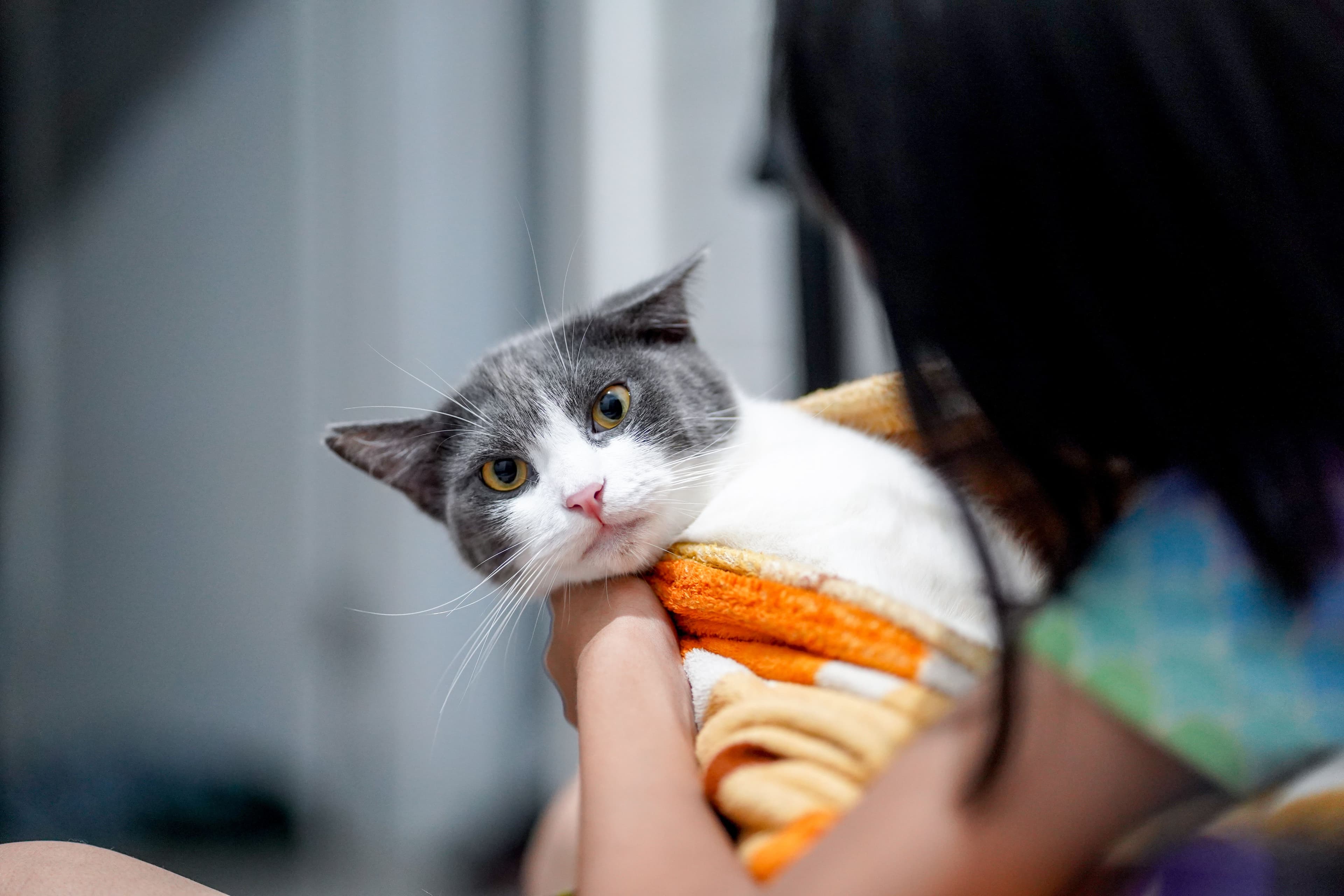
The "kitty burrito" is wrapping your cat snugly in a towel with only the head exposed, essentially turning a four-clawed animal into a calm loaf. Lay a bath towel flat, set the cat in the middle facing you, and fold the sides over the body and under the legs like swaddling a baby, leaving the head free. Done correctly, it immobilizes the paws so you're not getting scratched mid-pill, and a lot of cats actually settle down faster once they can't flail.
It works best as a two-person job — one person holds the burrito and stabilizes the head, the other handles the pill — but plenty of owners manage solo by sitting on the floor with the wrapped cat between their knees, facing away from them initially and then turned to face them for the pill. It's not a magic fix for every cat (some hate restraint of any kind more than the pill itself), but for scratchy, wiggly cats it's often the difference between a 10-second job and a bleeding forearm.
My cat runs and hides the second she sees the pill bottle. What now?
This is a conditioning problem, not a stubbornness problem, and it's fixable with a bit of patience between doses. Cats build a strong association between the sight of the bottle, being grabbed, and the bad taste that follows — so break the pattern by handling your cat calmly and giving treats at random times that have nothing to do with medicating, so "being picked up" stops meaning "something bad is about to happen." Keep the pill bottle out of sight until the last second, and consider medicating in a different room or spot than where your cat eats or sleeps, so those "safe" areas stay safe.
If a course of meds is short (5-10 days for an infection, say), the association usually isn't strong enough to cause lasting damage to your relationship, and things reset once the bottle disappears. But for long-term or lifelong medications — thyroid meds, chronic kidney disease support, seizure control — that daily chase-and-grab routine really can erode trust over months, which is a good reason to ask your vet early about compounding into a flavored liquid, transdermal gel, or long-acting injectable instead of accepting years of a fight twice a day.
Is it true I can ask for medication as a liquid instead of a pill?
Yes, and it's one of the most underused options. Veterinary compounding pharmacies can reformulate many (not all) medications into flavored liquid suspensions — chicken, tuna, fish, and beef are common flavors — that are given by oral syringe instead of pilled. Some drugs can also be compounded into a transdermal gel rubbed inside the ear flap, which is genuinely useful for cats who fight every form of oral medication, though absorption through skin isn't guaranteed to be as reliable as oral dosing for every drug, so ask your vet whether that matters for what's being prescribed.
This isn't automatically covered by every prescription — you usually have to ask your vet to write it as a compounded formulation and send it to a compounding pharmacy, which can take a day or two extra and sometimes costs more than the standard tablet. For a five-day antibiotic course, most vets will just talk you through better pilling technique instead. But for a cat that needs daily medication for months or years, it's absolutely worth asking about upfront rather than after you're both exhausted. This is exactly the kind of decision that's easy to forget between vet visits — ZooMinder's medication reminders let you log the dose, the exact time, and notes like "spit out, redosed" right on your phone, so when you're back in the exam room three months later you have real data instead of a vague "it's been rough" to work from.
Is it bad to give my cat a pill without any food at all?
For most tablets, giving on an empty stomach is fine and sometimes actually required — certain antibiotics and thyroid medications are better absorbed without food interfering. But you should always give a small water or food chaser immediately after (see the esophagitis question above), even if the pill itself wasn't given with food. "No food with the pill" and "no water after the pill" are two different instructions, and mixing them up is a common mistake.
If your vet specifically said to give a medication with food (common for anything that can upset the stomach, like some NSAIDs or steroids), skipping that step isn't just a compliance issue — it can cause vomiting or gastric irritation that looks like the cat "reacting badly to the medicine" when really it's a dosing-technique issue. When in doubt, ask the vet or the pharmacy label directly, since instructions vary by drug and even by brand.
Okay, this is going to sound ridiculous, but — can I get away with just skipping a dose if my cat wins?
Understandable question, and the honest answer depends entirely on the medication. For a short course of antibiotics, skipping or significantly delaying one dose here and there generally won't undo the whole treatment, though finishing the full course as close to on-schedule as possible matters for preventing resistant bacteria — this is actually a documented public health concern; Cornell's veterinary college has specifically flagged inconsistent antibiotic dosing in cats as a driver of antimicrobial resistance. For things like insulin, heart medication, or seizure control, a skipped dose can be genuinely dangerous and is not a "try again tomorrow" situation.
The real answer: don't guess. Call your vet's office (or the after-hours line) and ask specifically about the drug your cat is on — most clinics have a fast answer for "I couldn't get the pill in, what do I do" and would much rather field that call than have you improvise. If missed or fought doses are becoming a pattern rather than a one-off, that's also the signal to revisit the compounding or piller conversation instead of white-knuckling through the rest of the course.
A note on multi-cat households: if you're medicating one cat among several, keep them separated at pill time and for about 15-20 minutes after, so a resistant cat's dropped or spit-out pill doesn't get eaten by the wrong cat. ZooMinder's per-pet profiles help here too — when you're tracking meds for more than one cat, having each pet's dosage, schedule, and history in its own record means you're never guessing which cat is actually due.
When to call your vet
Call if your cat vomits within an hour of a dose (the pill may not have absorbed and a redose decision needs a professional call), if you've genuinely been unable to get more than one or two doses into your cat over several attempts, if you notice drooling, gagging, or reluctance to eat after pilling (possible esophageal irritation), or if a medication is meant to be lifelong and the daily fight is damaging your relationship with your cat. None of those are you failing at this — they're exactly the situations vets expect to hear about, and usually solve in a five-minute phone call with a change in formulation, timing, or technique.
Never Forget a Dose Again
ZooMinder turns the tips in this article into automatic reminders. Add your pet, add their meds, and let the app handle the rest — across as many pets as your household needs.