How to Manage a Diabetic Dog: A Night-by-Night Playbook
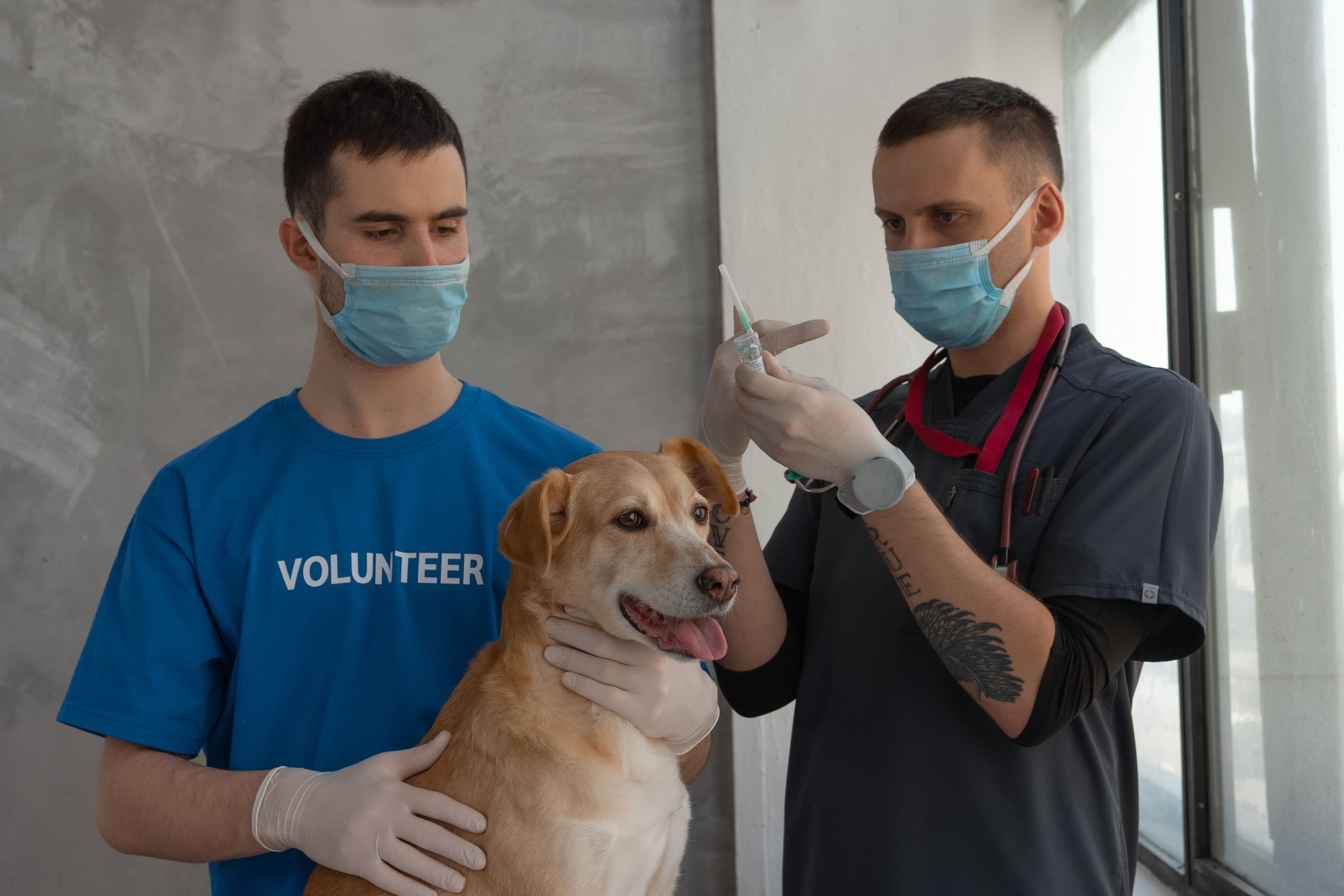
It's 7:04 p.m. Bailey's insulin is drawn up and sitting on the counter — six units, same as every night for the past eight months — and she just sniffed her dinner, turned around, and went to lie on the couch. The needle is ready. The clock is ticking. And you genuinely don't know whether giving it or skipping it is the more dangerous choice.
This is the moment that teaches most people how to manage a diabetic dog, and it's a rough way to learn. So here's the whole thing, in order: what to do in the next ten minutes, how to tell a hiccup from an emergency, and how to build a routine tight enough that tonight becomes a non-event.
Step 1: Put the syringe down and look at the bowl
Not the dog — the bowl. The amount of food that went in determines the amount of insulin that goes in. That's the entire rule, and it's the one most owners get backwards under pressure.
The standard protocol most veterinarians give — and you should confirm yours in writing:
- Ate the full meal: give the full dose.
- Ate roughly half: give roughly half the dose, rounding down to a whole unit. Six units becomes three. Five becomes two, not two-and-a-half — insulin syringes aren't built for half units and guessing is worse than under-dosing.
- Ate nothing at all: most vets say skip that dose entirely and call in the morning. A high blood sugar for twelve hours is uncomfortable. A crashed blood sugar can kill a dog in an afternoon.
Short term, it is always safer for your dog's blood sugar to run too high than too low. Hyperglycemia buys you a phone call. Hypoglycemia buys you an ambulance ride.
Never double up to "catch up" on a missed dose. And if you honestly can't remember whether you already injected — a shockingly common 6 a.m. scenario — skip it. One missed dose is a rounding error. One accidental double dose is an emergency.
This is a genuinely bad thing to track in your head, which is why logging each injection the second you give it (dose, time, how much she actually ate) beats memory every time. ZooMinder's medication reminders exist for exactly this — the reminder fires, you tap it, and now there's a timestamped record instead of a guess at 6 a.m.
Step 2: Check the clock, not your memory
Insulin for dogs is almost always twice daily, roughly 12 hours apart, given with or immediately after food. That interval is the backbone of the whole system.
If tonight's shot is going to land late, ask: how late?
- Under an hour off schedule: give it and carry on. Shift back to normal at the next dose.
- One to three hours off: give it, but note the time — and push the next dose to keep at least 10–11 hours of spacing.
- More than about four hours off: skip it. You're better off waiting for the next scheduled dose than stacking two shots close together.
Set your two anchor times around your real life, not an idealized version of it. Seven and seven is only better than nine and nine if you're actually awake at seven on a Sunday.
Step 3: Use this decision tree — wait, call, or go
Print this. Stick it on the fridge next to the insulin.
Wait and watch at home if: your dog skipped one meal, is bright and alert, drinking normally, no vomiting, walking normally. Offer something more tempting in an hour. Recheck.
Call your vet tomorrow if: she's skipped two meals in a row; drinking or urinating noticeably more than usual again; losing weight despite eating; her eyes are getting cloudy (most diabetic dogs develop cataracts within the first year or so — this is expected, not a failure); or you've given reduced doses more than twice in a week.
Go to the ER now if you see any of these:
- Wobbling, disorientation, "drunk" walking, tremors, or seizure — this is hypoglycemia until proven otherwise (see Step 4 for what to do on the way)
- Repeated vomiting plus refusing food — this is the classic path into diabetic ketoacidosis
- Rapid, deep, panting-but-not-panting breathing
- Sweet or nail-polish-like breath odor
- Collapse, extreme weakness, or unresponsiveness
That second cluster is diabetic ketoacidosis (DKA) — the metabolic crisis that puts diabetic dogs in the hospital. Roughly 70% of dogs survive DKA with prompt treatment, and the word doing the work in that sentence is prompt. A dog who vomits twice and won't eat isn't having a bad night. She's telling you something is breaking.
Step 4: Know what low blood sugar looks like before you need to
Hypoglycemia is the emergency you can actually treat in your kitchen, so rehearse it once, tonight, while nothing is wrong.
Signs, in escalating order: lethargy, weakness, wobbliness, a dazed or "not there" look, tremors, collapse, seizure.
What to do:
- If she's alert and can swallow: feed her. Real food first. If she won't take it, use light corn syrup or honey — roughly one tablespoon per 5 lb of body weight.
- If she can't swallow safely or is unconscious: do not pour anything into her mouth. Rub corn syrup or honey onto her gums with your finger, and leave for the ER immediately.
- Either way, call the vet. If symptoms are severe, or mild symptoms don't clearly improve within a few minutes of sugar, that's an emergency visit, not a wait-and-see.
Keep a bottle of light corn syrup in the same cabinet as the insulin. Not the pantry. The same cabinet.
Step 5: Rebuild the routine so tonight is boring
Once the immediate moment passes, the real work is making it not happen again. Diabetes is a consistency disease — the treatment isn't just insulin, it's sameness.
Food: most diabetic dogs do best on a high-fiber, moderate-protein, relatively low-fat diet, fed as two equal meals twelve hours apart. Fiber slows gastric emptying and blunts the post-meal glucose spike. Equal meals matter more than perfect meals — a lopsided breakfast and dinner produce a lopsided glucose curve no insulin dose can fix.
No free feeding. A bowl left out all day makes the curve unreadable, which means your vet is dose-adjusting on noise.
Treats: allowed, but budgeted and boring. Same treat, same time, ideally at the glucose low point mid-cycle. Plain green beans, a piece of her own kibble. Nothing with syrup, honey, molasses, or "made with real honey" on the bag.
Exercise: same duration, same intensity, same time of day. A sudden two-hour hike on a Saturday after five days of short walks is a well-documented route to a hypoglycemic episode.
Insulin handling: store it as labeled, and know how to mix yours — Vetsulin is shaken until uniform; most other insulins are rolled gently between your palms. Getting this backwards changes the dose you're actually delivering. Ask your vet how long your specific vial stays good after opening, write that date on the vial with a marker, and set a reminder to reorder a week ahead. Running out of insulin on a Sunday is an entirely preventable crisis.
If your dog is an unspayed female, ask about spaying. Progesterone drives severe insulin resistance, and in intact bitches, diabetes is often impossible to regulate until she's spayed.
Step 6: Pick a monitoring method and actually use it
You have three real options, and the best one is the one you'll keep doing.
Home glucose meter with ear-prick samples. Cheap, immediate, and stress-free once you both get the hang of it. Most dogs tolerate an ear prick better than a car ride.
Continuous glucose monitors. A sensor like the FreeStyle Libre sits on shaved skin, reads interstitial glucose for up to 14 days, and gives your vet an overnight picture that a clinic curve can't. Two caveats worth knowing: it measures tissue fluid rather than blood, and it isn't approved or supported for animal use — so it's a tool your vet interprets, not one you dose off unilaterally.
Clinical signs plus periodic vet curves. Thirst, urination, appetite, weight, energy. Less precise, still genuinely useful.
Whichever you pick, the log is the point. The 2018 AAHA Diabetes Management Guidelines (updated 2022) lean heavily on owner-collected home data — a canine-specific update is due in late 2026 — and your vet's dose decisions are only as good as the picture you hand over. Weight, water intake, appetite, injection times, and any weird days belong in one place. Keeping it in ZooMinder's symptom and weight log means that at your next appointment you're handing over eight weeks of trend data instead of trying to remember whether the wobbly evening was two Thursdays ago or three.
One hard rule: never adjust the insulin dose yourself. Rising numbers sometimes mean too much insulin, not too little — a rebound effect where an overnight crash triggers a hormonal counter-surge. Chase that with a bigger dose and you make it worse.
Step 7: How to manage a diabetic dog when life doesn't cooperate
Diabetes affects roughly 1 in 300 dogs over a lifetime, and Banfield's State of Pet Health data has tracked a sharp rise over the past two decades — so you're not managing something exotic. You're managing something common, on a schedule, for years.
Build for the days you're not there:
- Write a one-page protocol. Insulin name, dose, times, feeding amounts, what to do if he doesn't eat, corn syrup location, vet number, ER number. Anyone watching your dog gets this.
- Travel kit: insulin in an insulated case with a cold pack, twice the syringes you think you need, food measured into labeled bags, corn syrup, and your vet's records.
- Two humans, one system. The most common cause of a double dose is two people who love the same dog. A shared log that both of you check kills that entire failure mode — ZooMinder's shared pet profiles are useful here precisely because "did you already do it?" stops being a conversation and starts being something you look at.
- Book the recheck before you leave the clinic. Curves, fructosamine, and dose adjustments happen on a cadence, and "we'll call to schedule" is where that cadence goes to die.
The last thing to do tonight
Go back to Bailey on the couch. Offer her something warmed up in twenty minutes. If she eats, give the reduced dose and write down what happened. If she doesn't, skip it, note the time, and call in the morning.
Then do the one thing that makes this whole article unnecessary next time: put the corn syrup in the insulin cabinet, tape the decision tree to the fridge, and text the one-page protocol to whoever else feeds your dog. The night you need those three things, you will not be in any condition to go looking for them.
Make This Easier With ZooMinder
You shouldn't need a spreadsheet to take care of your pet. ZooMinder is the free app that handles medication schedules, vet records, and reminders so you can focus on the cuddles.