How to Prepare for a Vet Appointment That Actually Helps
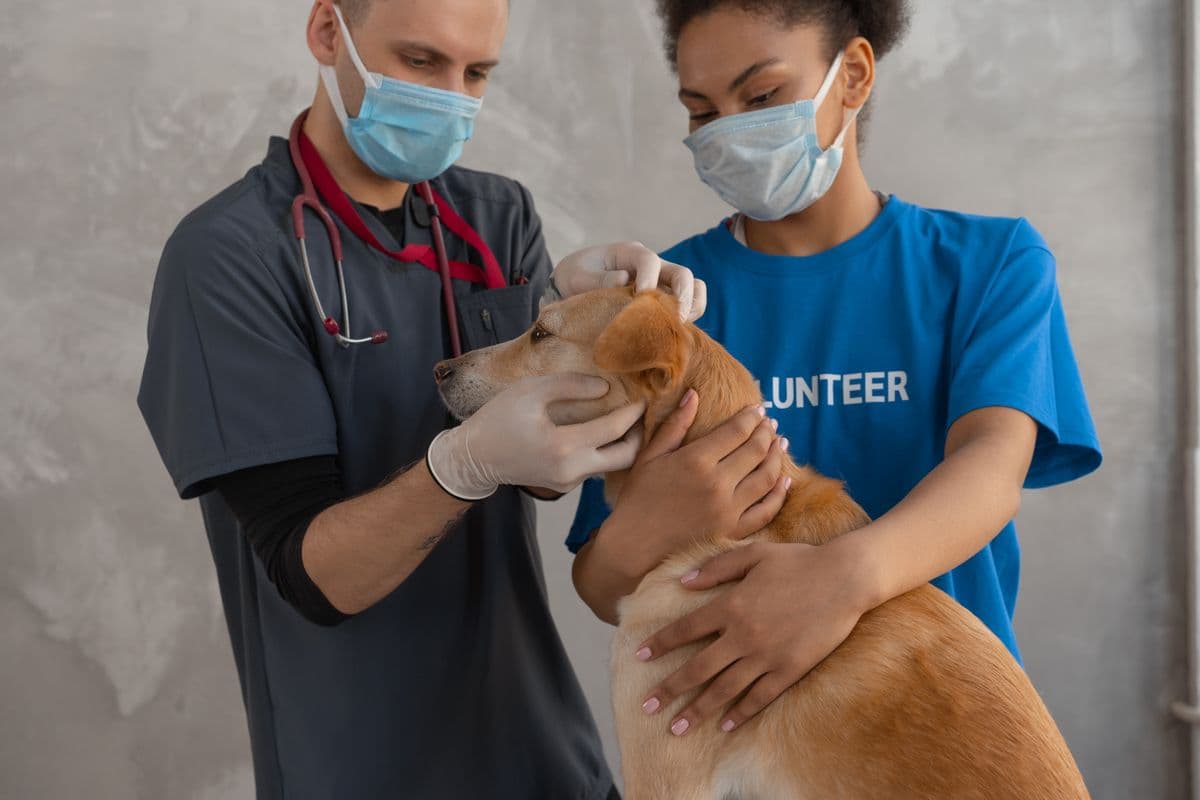
Marcus had exactly one thing to say when the vet walked in: "She just seems off." His beagle, Dot, was seven, and for about three weeks she'd been doing something strange with her back leg — a hitch, a skip, hard to describe — but in the exam room she trotted around like a puppy with a job. Eleven minutes later he was in the parking lot holding a receipt and a plan that amounted to "keep an eye on it."
Nobody teaches you how to prepare for a vet appointment. You get fifteen minutes with someone who has maybe eight hundred patients, and the quality of those fifteen minutes depends almost entirely on what you carry in with you. Marcus figured that out the hard way, on the drive home.
The drive home, when he remembered everything
It hit him at the second stoplight. The limp was worse when Dot got up from a nap, not after exercise — he'd said the opposite. It started the weekend after the trail hike in Aug. She'd stopped jumping onto the couch around the same time, which he hadn't connected until now. And his sister had given him a joint supplement two months ago that Dot had been eating in a pill pocket every night. He hadn't mentioned it. He couldn't even remember the brand.
None of that was in the exam room. All of it mattered.
A veterinarian can only reason from the history you hand them. The physical exam is one data point; you are holding the other three hundred.
That's the uncomfortable truth about the fifteen-minute appointment. AVMA's 2024 Pet Ownership and Demographics Sourcebook found that about 69% of pet owners visited a veterinary practice in the previous year, and roughly 80% of those visits were routine checkups or preventive care. Most of us get one shot a year to communicate everything we've noticed — and we walk in relying on memory.
How to prepare for a vet appointment, starting three weeks before it
The second time around, Marcus started prepping the day he noticed something rather than the morning of the visit. That's the actual shift. Preparation isn't a checklist you run through in the waiting room; it's a habit of writing things down when they happen.
For every symptom, he learned to capture four things:
- What it looks like, in plain physical description — not "she's uncomfortable" but "holds the right hind leg up for two or three steps, then walks normally"
- When it started, with a real date, even an approximate one
- How often, with a rough count — "four out of seven mornings this week"
- What changes it — after sleep, after stairs, after eating, in cold weather, only at night
The dates are the part people skip and vets desperately want. "A few weeks" and "since early August" lead to different conversations. Logging symptoms as they happen — with a timestamp attached automatically — is exactly what ZooMinder's symptom log is built for, so that when the vet asks "how long has this been going on?" you're reading an answer instead of guessing at one.
The thing his phone did better than his memory
Here's the cruel joke of the exam room: symptoms disappear there. Veterinarians writing for Pet Health Network make this point bluntly — limping, coughing, tremors, and lethargy have a way of vanishing under a flood of adrenaline, and unless the problem is constant, the odds of it appearing during your appointment are close to zero.
So Marcus filmed it. Three clips over ten days, and the rules he settled on:
- Get the whole animal in frame, not a close-up of the leg. Vets read gait from the whole body.
- Shoot 20–30 seconds, from the side, at your pet's level, on a surface with traction.
- Film the first thirty seconds after she stood up, because that was when it happened.
- Say the date out loud at the start of the clip.
One exception, and it's important: if what you're watching looks life-threatening, don't film it — drive. Collapse, labored breathing, a bloated hard abdomen, seizures lasting more than a couple of minutes, straining in the litter box with nothing coming out. Those are ER visits, not documentation projects.
What went in the bag the second time
Marcus showed up for the follow-up with more than a sentence. If you're building your own kit, this is what earns its place:
- Every medication and supplement, in the original containers. Not a photo, not the name from memory — the actual bottles, including flea and tick preventives, vitamins, and whatever a well-meaning relative handed you. Dosage and formulation matter, and "the joint chews from the pet store" isn't a dose.
- Previous records, if you've switched clinics or seen an emergency hospital. Vaccine history, prior bloodwork, discharge notes.
- A fresh stool sample if it's an annual visit — most practices want one for parasite screening, ideally collected within about 12 hours and kept cool.
- A photo of the food label, front and back. Vets ask what you feed and how much; "the blue bag" is not an answer.
- Your written questions, on paper or on your phone.
Keeping vaccine certificates, lab results, and discharge notes in one place — instead of scattered across a folder, three emails, and a glovebox — is the boring administrative thing that pays off at the worst possible moment, which is why ZooMinder lets you store vet records and documents per pet. Especially useful at 11 p.m. in an emergency clinic you've never been to before.
If you have a cat, add one more step, several days early: leave the carrier out, open, with a blanket and treats in it. The AVMA's own guidance on making veterinary visits better leans hard on this, and the numbers explain why — in AVMA's 2025 survey data, only 57.3% of cat owners had visited a practice in the previous year, versus 74.2% of dog owners. Cats aren't healthier. They're harder to get in the car.
The five questions he wrote on the back of the first receipt
Questions are where an appointment turns from a transaction into a plan. These five did the most work:
- "What's your top suspicion, and what else is on the list?" This gets you the differential, not just the headline.
- "What would this test change about what we do?" AVMA data shows diagnostics are the most commonly declined service, at around 22% — often because nobody explained the stakes. Asking this makes the cost-benefit explicit instead of awkward.
- "What should I watch for that means call you — versus go to the ER tonight?" Get the threshold in concrete terms. Write down the answer.
- "Exactly how do I give this, and what do I do if I miss a dose?" With food or without, twice daily or every twelve hours (not the same thing), and what happens if you're four hours late.
- "What should I keep an eye on over the next year?" The single best open-ended question you can ask — it invites your vet to talk about breed risks, age, weight trends, teeth, and mobility rather than only the problem in front of them.
And one practical note on cost, since it's the question people avoid: AVMA's 2025 data puts the average reported cost of a visit at around $200. Asking "what's the estimate, and what's the priority order if I have to stage this?" is a completely normal conversation. Vets would far rather stage a plan with you than watch you decline everything at the desk.
When it's a sick visit, not a checkup
Routine visits reward tracking. Sick visits reward timelines.
If your pet is unwell, the most valuable thing you can bring is the last day they were completely normal, plus what's happened since. Appetite: eating, picky, refusing? Water: more, less, obsessive? Vomiting or diarrhea: how many times, what did it look like, was there blood? Urination: straining, frequency, accidents indoors? Energy: sleeping more, hiding, unwilling to go up stairs?
Don't clean up all the evidence. A photo of the vomit or stool on a plain floor, with something for scale, tells your vet more than any adjective. And call ahead rather than just showing up — for anything severe, the clinic may want to triage you straight in, or send you to an emergency hospital with the right equipment.
Two more sick-visit specifics: ask on the phone whether to withhold food, since some tests read better fasted and the answer depends on what they're planning; and know where your nearest 24-hour emergency clinic is before you need it, including the drive time.
What the vet said the second time
Ninety seconds of video and a dated log changed the shape of the appointment completely.
The vet watched Dot on Marcus's phone — the stiff first steps out of the dog bed, loosening by step six — read the pattern of "worse after rest, better with movement," found the joint supplement bottle in the bag, and went straight to radiographs of the knee and hip. The answer was early arthritic change in one stifle, caught years before it would have started limiting her. The plan was unglamorous and effective: drop four pounds, a real pain-management conversation, controlled exercise instead of weekend-warrior hikes, and a recheck in six months.
That weight number is not a footnote. In a dog carrying extra pounds on an arthritic joint, weight loss is one of the most powerful interventions available — and it only works if someone is actually measuring. Logging weight at each visit in ZooMinder turns "she looks about the same" into a line you can show your vet, which is the difference between a plan and an intention.
The six-month recheck wasn't arbitrary either. AAHA's 2023 Senior Care Guidelines recommend wellness exams every six months for dogs and cats over the age of seven — Dot had just crossed that line, and Marcus hadn't known.
Six months later
Dot's follow-up ran about the same eleven minutes as that first appointment. Same clinic, same fifteen-minute slot, same beagle pretending nothing has ever been wrong with her in her life.
The difference was that Marcus walked in with a dated log, one video, a weight trend, and four written questions — and walked out with an actual answer.
The appointment doesn't start when you sit down in the exam room. It starts the first time you think "huh, that's new," and reach for something to write it on.
Make This Easier With ZooMinder
You shouldn't need a spreadsheet to take care of your pet. ZooMinder is the free app that handles medication schedules, vet records, and reminders so you can focus on the cuddles.