How to Track Pet Weight and Diet: A Weekly Routine That Works
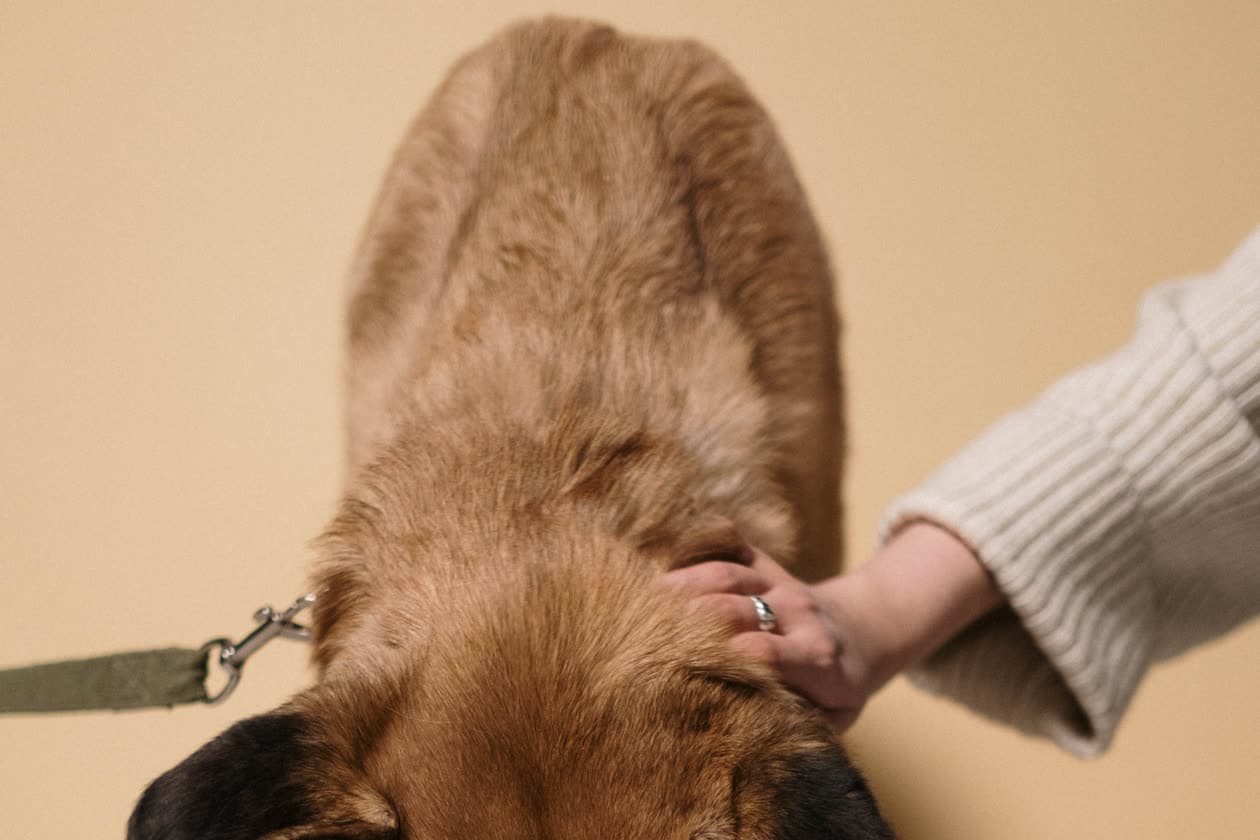
The scoop goes into the bowl at 7:15 every morning, and nobody has measured it in months. It's "about a cup," heaped a little on days the dog does the sad eyes. This is how most pets gain weight. Nobody overfeeds on purpose. Small amounts creep in, and the person who sees the dog every day is the last to notice.
The short answer to how to track pet weight and diet: weigh your pet the same way at the same time, every week or two. Check their body shape with your hands once a month. Measure food by weight, not by eye. Write the numbers down so you and your vet can see the trend instead of guessing. Below, that routine is broken into moments in a normal week, so you can fit it around a life that already has plenty in it.
Sunday, before breakfast: the 90-second weigh-in
Weigh before the first meal and after the morning bathroom trip. That gives you the most consistent number, because a full stomach or bladder can move the reading. Use the same scale on the same hard, level floor every time. Carpet can throw bathroom scales off.
For cats and small dogs, use the hold-and-subtract method:
- Weigh yourself and write it down.
- Pick up your pet, step back on, and write that down.
- Subtract. The difference is your pet.
For dogs too big to lift, a few options: put a sturdy board across the scale so the dog has room to stand, use a dedicated pet scale, or ask your clinic if you can drop in and use theirs. Many clinics are happy to let you do quick weight checks between appointments. It's worth a phone call.
There's one catch. Bathroom scales are built for adults, and a pet's weight is a small number on a big scale. A change of 0.25 kg (about half a pound) can matter for a cat, and many household scales can't reliably show that. A digital baby scale or a sturdy kitchen scale with a basket works better for cats, small dogs and other small pets. Treat home readings as a trend line. If something looks off, confirm it on the clinic's scale.
The rule that matters most: same scale, same time, same conditions. One reading tells you little. Ten readings taken the same way tell you what's actually happening.
Puppies and kittens are a separate case. They're supposed to gain weight, often quickly, and your vet will tell you how often to weigh them and what growth to expect.
Right after: the check a scale can't do
A scale tells you how much your pet weighs, not what that weight is made of. That's why veterinarians use a body condition score (BCS), usually on a 9-point scale. The WSAVA body condition charts are free and have pictures.
The hands-on version takes about a minute:
- Ribs: Run your flat palms along your pet's sides. You should be able to feel the ribs under a thin layer of fat without pressing hard, like feeling your knuckles through the back of your hand.
- Waist: Look down from above. There should be a visible narrowing behind the ribs.
- Tuck: From the side, the belly should slope up toward the hind legs, not hang level or sag.
On the WSAVA charts, 4–5 is ideal for dogs and 5 is ideal for cats. Each step matters more than it looks. Veterinary teaching tables often equate each point above ideal to roughly 10% extra body weight, so a dog at 7/9 is carrying around 20% more than it should. The Global Pet Obesity Initiative's 2019 position statement defines obesity as about 30% above ideal weight, or 8/9.
There's also a muscle condition score, which checks the spine, shoulder blades, skull and hips for muscle loss. It matters especially for older pets. A pet can carry extra fat and be losing muscle at the same time, and the scale can look stable while both happen. WSAVA has a separate chart for that.
Score honestly. The Association for Pet Obesity Prevention's 2022 survey found that veterinary professionals classified 59% of dogs and 61% of cats they assessed in the U.S. as overweight or obese. Many owners of those pets thought their animal's shape was normal. Your eyes adjust to what they see every day. Your hands are harder to fool.
Weekday mornings: weigh the food, not just the pet
This is the part of the routine that changes the most for the least effort.
A measuring cup measures volume. Kibble pieces vary in size and density, so the same cup can hold quite different amounts of food. A 2011 analysis by German and colleagues in the Journal of Animal Physiology and Animal Nutrition pooled 12 studies of owners portioning dry food with cups. Portions ranged from 18% too little to 80% too much, and the errors were worse for small portions. Small portions are exactly what cats and small dogs eat.
The fix is a cheap kitchen scale. Work out your pet's daily amount in grams with your vet, or start from the food label and adjust. Weigh it once in the morning, then split it into meals if you like. After a week, the scoop and the gram number will agree, or you'll find out they never did.
Here's an example. Say the label points you toward roughly 100 g a day for your dog. Weigh your usual "cup" for a few mornings and write it down. If it keeps coming out around 115 g, you've found a 15% surplus. It wasn't greed. It was the shape of the scoop.
Evenings: where the calories you didn't plan hide
Most diets go off track in the evening. Breakfast was weighed. Then come the training treats, the crust someone dropped, the cheese a family member slipped under the table, and the dental chew that "doesn't count."
WSAVA's owner handouts set a clear limit: treats should make up less than 10% of daily calories for dogs (WSAVA, 2024), and no more than 10% for cats (WSAVA, 2024). The cat handout includes a table by body weight, which is handy because "one little treat" means something very different for a 4 kg cat than for a 30 kg dog.
For one ordinary week, write down everything that isn't the main meal. You don't need calorie math yet. A list will do. Most households find one or two regular extras they'd never thought of as food. Write down what other people give, too. If three people each give "just one" treat, that's three treats.
The breed chart: a useful starting point, not a target
Breed standards give you a rough range. Here are typical adult weights from American Kennel Club breed information:
| Breed | Typical adult weight |
|---|---|
| Labrador Retriever | Males 65–80 lb, females 55–70 lb |
| Golden Retriever | Males 65–75 lb, females 55–65 lb |
| German Shepherd | Males 65–90 lb, females 50–70 lb |
| French Bulldog | Under 28 lb |
| Beagle | Under 20 lb (under 13") or 20–30 lb (13–15") |
These ranges are wide because the dogs are different sizes. A small-framed Lab at 80 lb may be overweight, and a tall one at 80 lb may be lean. Mixed breeds and most cats have no breed chart at all. Your vet should set your pet's ideal weight: the weight that matches a body condition score of about 5/9 for that particular animal. Write that number at the top of your log.
Once a month: turn the numbers into something your vet can use
A useful weight log is boring, and that's fine. Each line needs:
- Date and weight, taken the usual way
- Body condition score (monthly is enough)
- Daily food amount in grams, and any change in food or brand
- Notes: new medication, less activity, a stressful move, appetite changes
At a checkup, a vet can do much more with "4.6 kg in June, 4.3 kg in October, appetite normal" than with "I think she's maybe a bit thinner?" If your pet already has regular checkups or medications, keeping the weight notes next to those records means the information is in one place when you need it. ZooMinder is built for that kind of organizing: checkups, medications and vaccination records, so the log isn't scattered across a notes app, a calendar and the back of a receipt.
Call your vet promptly if you see weight loss you can't explain, or a big change in appetite or thirst. Cats need special care here. A cat that stops eating can become seriously ill, and cats are at risk of hepatic lipidosis (fatty liver) if they lose weight too quickly. That's why the AAHA weight management guidelines aim for slow, supervised loss in cats. If your pet needs to lose weight, let your vet set the target and the pace. Don't cut food on your own.
Why the boring routine pays off: the Labrador study
This is the fact that explains why small numbers matter.
In a lifelong study published in JAVMA in 2002, Kealy and colleagues followed 48 Labrador Retrievers from seven litters. The dogs were paired, and from 8 weeks old, one dog in each pair ate 25% less food than its sibling. The leaner dogs had a median lifespan of 13.0 years, compared with 11.2 years for their siblings, about 1.8 years longer. Nestlé Purina sponsored the study, which is worth knowing. Its main finding is still one of the most cited results in canine nutrition.
The difference between those groups wasn't dramatic in any one day's bowl. It was a modest gap kept up for years. That's how weight works in both directions. A slightly heaped scoop is invisible on a Tuesday and very visible over a decade. A gram scale and a weekly weigh-in are how you see that drift while it's still small.
The hardest moment: 8 p.m., when your dog stares at your dinner
Weighing is easy. Scoring is easy once you've practiced. The hard part is the evening stare: a dog sitting by your plate as if it hasn't eaten since spring, or a cat at the treat cupboard at the same minute every night.
What helps is deciding before the pressure starts. Each morning, when you weigh the main meal, count out the day's treat allowance into a small jar. Training rewards, the evening chew and the bits family members want to give all come out of that jar. When it's empty, the answer is no, and nobody has to argue it again at dinner.
It also brings you back to the scoop at 7:15. Once you've weighed it, you know exactly what's in the bowl, and the weekly number on the scale starts to reflect the plan you made instead of a guess.
Make This Easier With ZooMinder
You shouldn't need a spreadsheet to take care of your pet. ZooMinder is the free app that handles medication schedules, vet records, and reminders so you can focus on the cuddles.