How to Track Pet Weight and Diet: 5 Myths Vets Debunk
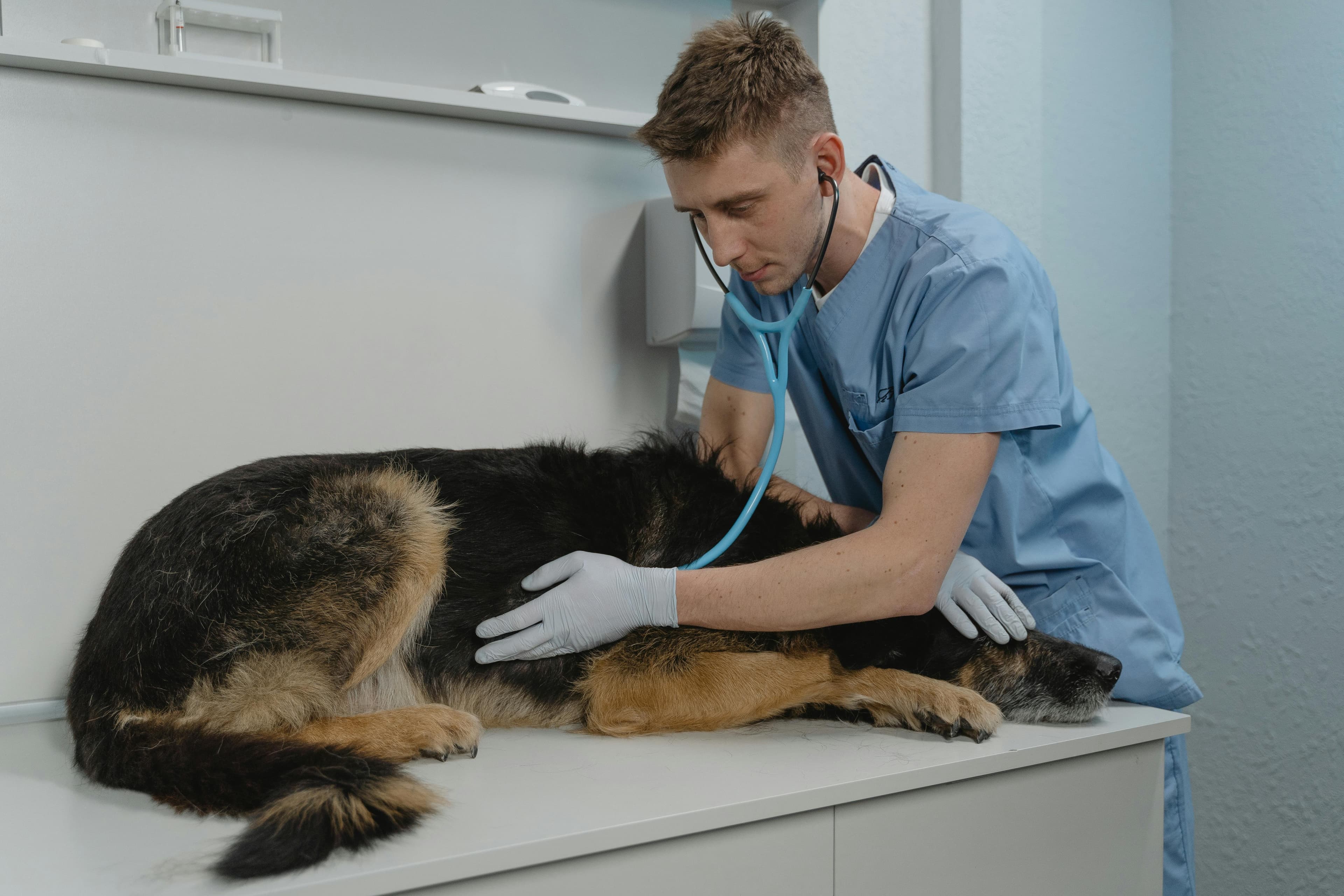
Last month a Beagle owner I know told her vet, "He's maybe two pounds over." The scale said eleven. That gap — between what owners see and what the scale says — is the entire reason this article exists. Most pet owners think they'd notice if their dog or cat gained meaningful weight, that a quick eyeball at feeding time is enough, and that the food bag's recommendation is calibrated for their specific pet. Here's what veterinarians actually say: none of those assumptions hold up, and the consequences show up years later as arthritis, diabetes, and shortened lifespans. If you've ever Googled how to track pet weight and diet, you've probably been told to "just weigh them monthly" without anyone explaining why your bathroom scale lies, why the food label is wrong by design, or what number actually matters. Let's go through the myths one by one.
"I'd notice if my pet gained weight"
The myth: you see your dog or cat every day, so any meaningful weight gain would be obvious. You'd spot the rounder belly, the thicker neck, the heavier walk.
The reality: you wouldn't, and the data is brutal. The Association for Pet Obesity Prevention's 2022 survey found that 59% of dogs and 61% of cats in the U.S. are overweight or obese — but only 28% of dog owners and 15% of cat owners classified their own pet that way. That's a perception gap of more than 30 percentage points. Vets call this "the normalization of overweight," because when most pets at the dog park look the same, your "slightly chubby" Lab looks normal by comparison.
Worse, weight creeps up at about 0.5–1% of body weight per month in a sedentary adult pet, which is invisible day-to-day. A 60-pound Golden Retriever can put on 7 pounds in a year — over 11% of body weight — and you'd swear nothing changed.
A 12% weight gain in a dog is the human equivalent of a 180-pound adult becoming 200 pounds. You'd notice that in yourself. You don't notice it in your dog.
What to do: weigh, don't look. For pets under 25 lbs, step on your bathroom scale alone, then again holding your pet, and subtract. For larger dogs, most vet clinics have a walk-on scale in the lobby — you don't need an appointment to use it. Do it monthly, same day each month, and write the number down. Logging it once and forgetting is worse than not weighing at all, because a single data point tells you nothing about the trend. This is exactly what ZooMinder's weight tracking log is designed for — you punch in the number, it graphs the trend, and you can hand the chart to your vet at the next visit instead of guessing.
"The feeding amount on the bag is correct for my pet"
The myth: the back of the kibble bag has a chart. You weigh your dog, you read the chart, you feed that amount. Done.
The reality: those charts are calibrated for an intact, active adult of average metabolism. If your dog is spayed or neutered (and 80% of U.S. pets are, per AVMA), their caloric needs drop by roughly 20–30% — but the bag doesn't know that. If your cat is an indoor-only adult, the same chart can overfeed by 25%. Tufts University's Cummings Veterinary Center has published repeatedly on this: feeding-guide overestimation is one of the single biggest drivers of pet obesity.
There's also the bag-math problem. The chart says "1 cup per 10 lbs." But what's a "cup"? If you use a coffee mug, a Solo cup, or an actual measuring cup, you can be off by 40–50% without realizing it. A 2019 study in Veterinary Record found that owners using a measuring cup over-portioned by an average of 47%.
What to do: ask your vet for a Resting Energy Requirement (RER) number. The formula is 70 × (body weight in kg)^0.75, multiplied by a factor based on whether your pet is spayed/neutered, active, senior, or overweight. Most vets will calculate it in 30 seconds if you ask. Then weigh the food in grams, not cups — a $10 kitchen scale is the single best investment you can make in your pet's diet. Log daily intake the same way you log weight; the goal is to spot the relationship between calories in and weight change.
"Treats don't count if they're small"
The myth: a Greenie here, half a Milk-Bone there, a few pieces of cheese during training — they're tiny. They can't matter.
The reality: a single large Milk-Bone biscuit is about 115 calories. For a 15-pound dog, whose daily caloric need is around 350 calories, that one biscuit is 33% of their day's food. The cheese cube you tossed during training? About 70 calories — another 20%. Three "small" treats can equal half a meal, and most owners are still feeding the full bowl on top of that.
Cats are even more sensitive. A Temptations treat is about 2 calories, which sounds harmless until you realize a 10-pound indoor cat needs only 180–220 calories a day. Ten treats — easy to give without thinking — is 10% of total intake.
The general veterinary rule: treats should never exceed 10% of daily calories. Most households exceed that before lunch.
What to do: measure treats into a small daily container in the morning, and when it's empty, the day is over. If you train with food, subtract the treat calories from the meal, don't add them on top. Track treats in the same daily food log you keep for meals — ZooMinder's symptom-and-diet log lets you note treats separately so you can see at the end of the week whether the "few extras" added up to a second dinner. This is also where multi-person households fall apart: if your partner, your kid, and the neighbor all give "just one," that's three on top of yours.
"Breed weight ranges are just averages — my dog's bones are bigger"
The myth: my Labrador is "big-boned." My cat is just a "chunky breed." The published weight ranges don't apply to my pet.
The reality: bone structure varies less than people think. A male Labrador's ideal weight range is 65–80 lbs — that's the full range, accounting for the largest-framed individuals. An 85-pound Lab isn't big-boned; he's 5–10 lbs overweight. Same with cats: an "average" domestic shorthair should be 8–10 lbs. A 14-pound cat isn't a "Maine Coon mix" unless DNA says so. Maine Coons themselves top out around 18 lbs for males, and they take 4 years to reach it — most "big" cats are just fat.
Here are the realistic ideal-weight ranges vets actually use:
- Labrador Retriever: 55–80 lbs (females lower end, males upper)
- Golden Retriever: 55–75 lbs
- Beagle: 20–30 lbs
- French Bulldog: 16–28 lbs
- Chihuahua: 4–6 lbs
- Domestic shorthair cat: 8–10 lbs
- Siamese: 6–10 lbs
- Ragdoll: 10–20 lbs (males larger, slow to mature)
But the better tool than a number is the Body Condition Score (BCS), a 1–9 scale where 4–5 is ideal. You should be able to feel ribs without pressing hard, see a waist tuck from above, and see an abdominal tuck from the side. If you can't, your pet is overweight regardless of what the scale says, because muscle and fat distribute differently.
What to do: combine the scale number with a monthly BCS check. Take a photo from above and from the side, same lighting, every month. Side-by-side photos catch what daily observation misses. Save the photos with the weight log so your vet can see the trajectory, not just the latest number.
"I'll just tell the vet at the annual visit"
The myth: your vet sees your pet once a year, weighs them, and tells you if there's a problem. That's the system working.
The reality: an annual data point is statistically almost useless. If your dog gained 8 pounds last year, the vet sees the endpoint but can't tell you when it started — was it a slow drift, or did it accelerate after you switched foods in October? Without monthly data, you can't connect the weight change to the cause, which means you can't fix it. You just get a "watch his weight" comment and the same problem next year.
The other issue: by the time the annual visit catches a problem, your pet has often been carrying the extra weight for 6–10 months. A 2019 study from the University of Liverpool found that overweight dogs live an average of 2.5 years less than lean-fed dogs of the same breed. Every month of delay matters.
What to do: treat weight tracking as a monthly home practice with the vet visit as a checkpoint, not the only data point. Bring a printed or screen-shareable graph showing weight trend, food intake, treat patterns, and any diet changes. Vets love this — it turns the appointment from "let's guess" into "here's the data." ZooMinder's vet-record export was built specifically for this: one tap and you've got a PDF of the last 12 months of weight, diet notes, and any flagged changes to hand over.
What to do instead
Forget the eyeball test. Forget the bag chart. The whole framework of how to track pet weight and diet comes down to four habits that take less than five minutes a week:
- Weigh monthly, same day, same scale, log the number immediately.
- Weigh food in grams using a kitchen scale, not a measuring cup.
- Count treats as part of daily calories, never on top.
- Photo + BCS check monthly from above and from the side.
That Beagle from the opening? His owner started weighing weekly and weighing his food in grams. Eleven months later, he was down to 25 lbs, off the arthritis trajectory his vet had predicted, and — her words — "actually looks like a Beagle again." The scale didn't lie. It just needed someone to read it.
One App, Every Pet, Zero Missed Doses
Stop juggling sticky notes and phone alarms. ZooMinder keeps every medication, vaccine date, and vet note in one place — free, private, and built for households with multiple pets.