How to Track Your Dog's Medication Schedule Step by Step
It's 9:12 p.m. on a Tuesday. You're loading the dishwasher when it hits you — Biscuit never got her evening phenobarbital. You gave her breakfast pill this morning, you're almost sure of it, but the evening dose just… vanished from the day. Your stomach drops a little. Did you give it and forget, or did you actually skip it? This is the exact moment most dog owners start Googling how to track a dog medication schedule, usually while standing in the kitchen with the pill bottle in one hand and their phone in the other. Here's what to do right now, and how to build a system so you're never doing this math at 9 p.m. again.
Step 1: Don't Panic — Figure Out Exactly What You Missed
Before you do anything else, get specific. Open the pill bottle or the vet's discharge sheet and confirm three things: the drug name, the dose, and the exact time it was supposed to be given. "Panic mode" makes people either double up out of guilt or skip the whole night out of confusion — both are worse than a clear-headed five minutes of fact-checking.
If you genuinely don't know whether the dose was given, check your evidence: an empty compartment in a pill organizer, a checked-off box on a chart, a text to your partner asking "did you feed Rosie her pill?" This is exactly the gap that trips people up — not forgetting to medicate, but forgetting whether they already did.
"The most common mistake isn't missing a dose — it's not being sure whether you did." That uncertainty is what leads to accidental double-dosing, which is often riskier than the missed dose itself.
Step 2: Check the Clock
Once you know what's missing, the next question is simple: how close are you to the next scheduled dose?
- Less than halfway to the next dose: give the missed dose now.
- More than halfway to the next dose: skip it and resume the normal schedule at the next scheduled time.
- Never give a double dose to "catch up," even if you feel guilty. Doubling up can cause vomiting, lethargy, or more serious toxicity depending on the drug.
This is the standard rule vets give for most oral medications — but it isn't universal, which is why Step 3 matters.
The Decision Tree: Give It, Skip It, or Call
Not every missed dose carries the same weight. Walk through this before you decide anything:
Give it now if:
- It's a routine medication (most antibiotics, joint supplements, thyroid meds) and you're within a few hours of the scheduled time.
- Your dog shows no symptoms and the medication doesn't require food or fasting you've already missed.
Skip it and wait for the next dose if:
- You're closer to the next scheduled dose than the missed one.
- It's a heartworm preventive — most monthly products have roughly a 15-day grace window, so if you're only a few days late, you generally give the dose now and just get back on schedule.
Call the vet (don't guess) if:
- The medication is insulin, phenobarbital or another seizure medication, or anything your vet specifically flagged as "call us if you miss a dose."
- Your dog has a chronic condition where timing affects blood levels — cardiac meds, thyroid regulators, or anything requiring twice-daily precision.
- You're not sure if the dose was given at all and doubling up is medically risky for that specific drug.
Go to the ER if:
- Your dog is having a seizure, is unusually lethargic, is vomiting repeatedly, is having trouble breathing, or is acting disoriented after a missed or doubled dose.
- You accidentally gave a double dose of anything with a narrow safety margin (insulin, heart medication, seizure medication) and your dog is showing any physical symptoms at all.
For Biscuit's phenobarbital specifically, this lands in "call the vet" territory — seizure medications are one of the few categories where vets consistently want a phone call rather than a guess, because both under- and over-dosing affect seizure threshold.
Step 3: Make the Call, Even If It Feels Small
Vet clinics field these calls constantly, and after-hours lines exist for exactly this. When you call, have ready: the drug name and dose, the time it was supposed to be given, the time you're calling, and whether your dog is showing any symptoms right now. That's a 90-second call, not an emergency-room-worthy production.
Step 4: How to Track a Dog Medication Schedule So Tonight Never Repeats
Once Biscuit's dose is sorted, the real fix isn't a better memory — it's a better system. Here's what actually works, in order of how much effort they take to set up.
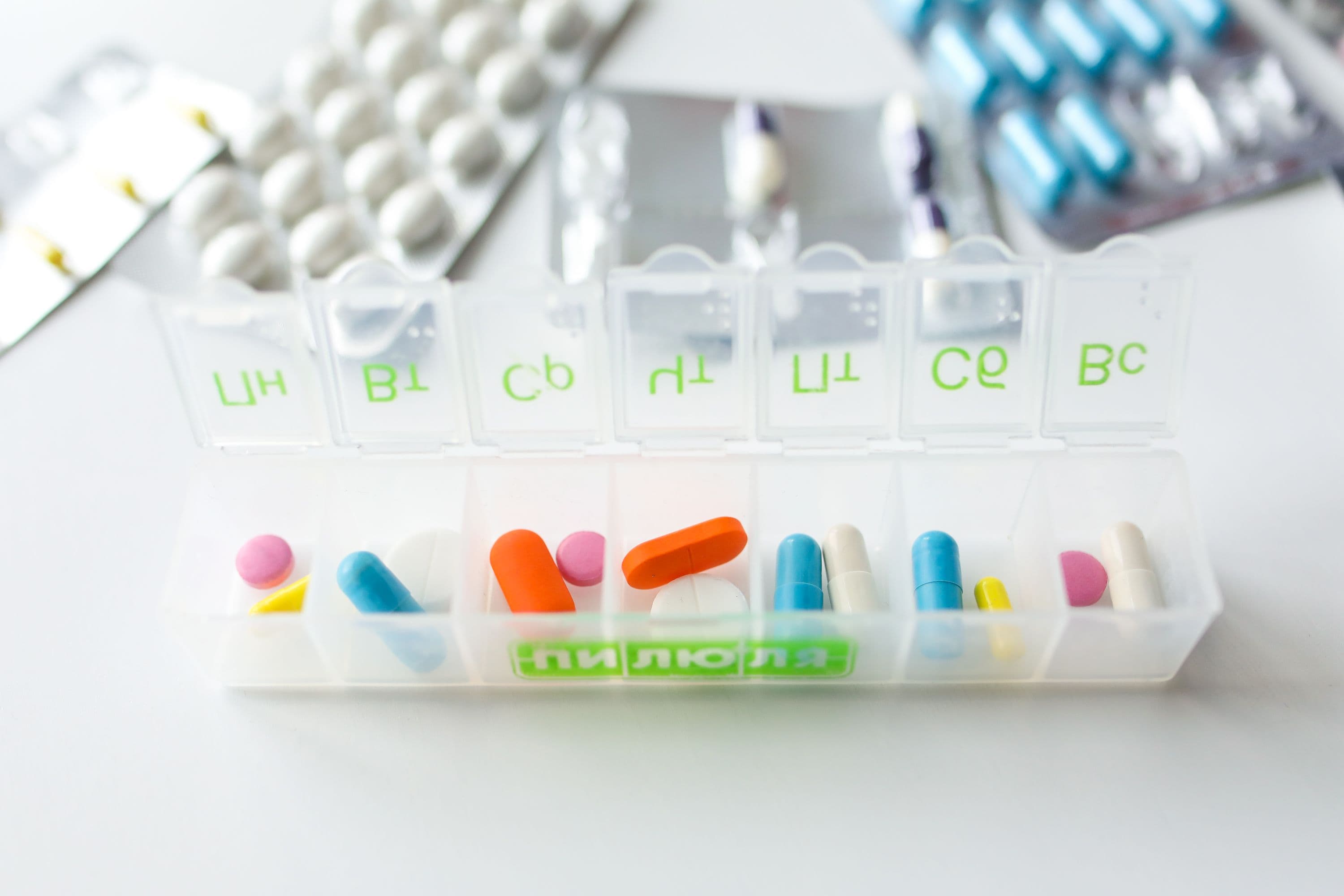
Pill organizers. A $5–$7 weekly pill case with AM/PM compartments is still one of the highest-value tools in pet care. Pick one day — Sunday works for most people — and pre-fill the whole week at once. An empty compartment at 9 p.m. answers the "did I already give it?" question instantly, without relying on memory at all. If your dog is on more than one medication, use a 7-day, two-compartment-per-day case rather than trying to remember which pill is which in a single slot.
Phone reminders. A basic recurring alarm labeled "Biscuit — phenobarbital 9am/9pm" beats a mental note every time. The trick is naming the alarm with the drug and dose, not just "dog pill" — when you're half-asleep silencing an alarm, specificity is what keeps you from mixing up two dogs' medications.
Apps built for this. Alarms tell you when; they don't tell you whether you actually followed through, which is the exact gap that caused tonight's confusion. This is the specific problem ZooMinder's medication reminders are built to solve — you log the dose the second you give it, so instead of standing in the kitchen trying to reconstruct your evening, you can just check the app and see a timestamped record. If you're managing more than one pet's medications, ZooMinder keeps each animal's schedule, dose history, and refill dates separate, so you're never guessing which dog got which pill on a chaotic night.
Sync with your household. If more than one person feeds or medicates the dog, verbal reminders ("I gave it, I swear") are the weakest link in the whole system. A shared log — whether that's a shared app, a chart on the fridge, or a group chat — removes the guesswork entirely.
Step 5: Why One Missed Dose Isn't "No Big Deal"
It's tempting to shrug off a single missed dose, and for some medications, that's genuinely fine. But the research on this is more sobering than most owners expect. A New Zealand study of dog owners found medication noncompliance in 47% of cases — nearly half — often simply because nobody clearly explained how or when to give the medication in the first place. For dogs on epilepsy treatment specifically, only about 21% of owners are fully compliant with their vet's dosing instructions, despite the fact that inconsistent dosing is one of the clearest ways to lower a dog's seizure threshold.
There's also a gap between how compliant people think they are and how compliant they actually are — in one study on canine atopic dermatitis, app-tracked data showed 12.6% non-adherence, while 60% of owners rated themselves as fully adherent. In other words, most people who miss doses don't realize they're missing them, which is exactly the trap you almost fell into tonight with Biscuit.
For chronic conditions — seizures, heart disease, diabetes — consistency isn't a nice-to-have. Missed or irregular antibiotic doses can also contribute to antibiotic resistance, making infections harder to treat down the line. This is the actual reason how to track a dog medication schedule is worth solving properly instead of white-knuckling it with willpower.
Make Sunday Your Reset Day
Pick one day a week — Sunday night works well — to refill the pill organizer, check that phone reminders still match the current dosing schedule (vets change doses more often than people update alarms), and glance at your medication log to make sure nothing's been quietly slipping. If you're logging in ZooMinder, this is also the moment to check refill dates so you're not caught without medication on a Friday night when the pharmacy's closed.
Biscuit's missed dose tonight isn't the failure — it's the prompt. The dogs who never have "the 9 p.m. moment" aren't owned by people with better memories. They're owned by people who stopped trying to remember and built a system that remembers for them.
Never Forget a Dose Again
ZooMinder turns the tips in this article into automatic reminders. Add your pet, add their meds, and let the app handle the rest — across as many pets as your household needs.