Managing Multiple Pets' Medications: Myths vs. Reality
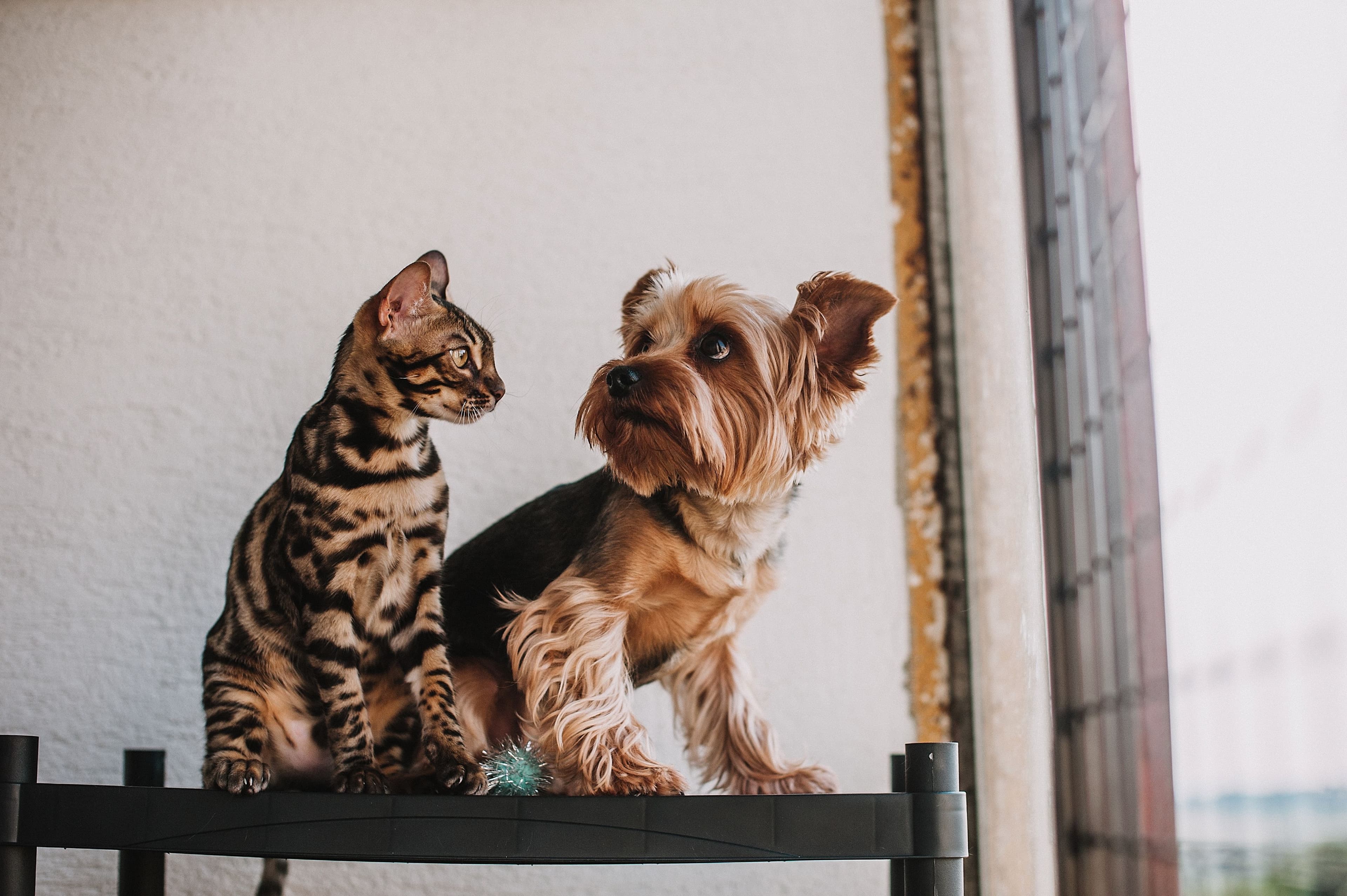
Two dogs, one cat, and four pill bottles that all looked the same from across the kitchen — that's the setup that sent Meadow, a 9-year-old cocker spaniel, to an emergency vet last spring after she swallowed her housemate's thyroid pill instead of her own arthritis medication. Her owner had a system. It just wasn't a good enough one. Managing multiple pets' medications is one of those tasks that looks simple until you're standing in the kitchen at 7 a.m., two bowls in hand, trying to remember which cat gets the pill wrapped in cheese and which one spits cheese out on principle.
Here's what veterinarians actually say about the mistakes multi-pet households make — and they're rarely the mistakes owners expect.
"Missing one dose doesn't matter"
The myth: one skipped dose, especially of something "maintenance," won't move the needle. Life happens — you're juggling three feeding schedules and two medication schedules, and one pill gets forgotten. No harm done, right?
The evidence says otherwise, and the scale of the problem is bigger than most owners assume. A 2024 New Zealand study on dog owners found that nearly half — 47% — were noncompliant with their veterinarian's medication instructions, and a related 2025 study on cat owners put noncompliance at 39%. For medications like anti-seizure drugs, thyroid supplements, or insulin, missed or inconsistent doses don't just delay treatment — they can destabilize a condition that took months to regulate, sometimes triggering the exact crisis (a seizure, a thyroid crash, a diabetic episode) the medication was preventing.
What makes multi-pet households specifically vulnerable isn't laziness — it's cognitive load. Tracking two feeding times is manageable. Tracking two feeding times, three medication schedules with different frequencies, and which pet just had food (some meds need food, some don't) is a different category of task entirely. This is the exact gap ZooMinder's medication reminders are built for — per-pet schedules that ping you by name, so "did I give Meadow her pill or was that Biscuit" stops being a guessing game at 7 a.m.
"My pets would never touch each other's medication"
This is the myth that catches people off guard, because it's usually true right up until it isn't. Owners assume a picky eater or a food-possessive dog won't touch a housemate's pill bowl. But according to the ASPCA Animal Poison Control Center, medications — human and veterinary — remain at the top of their toxin-exposure list year after year, with over-the-counter human medications alone accounting for roughly 17% of all exposure calls, the fourth year running they've held that position. Among prescription drug exposures specifically, cardiac medications, followed by psychiatric/neurological drugs and pain medications, make up the bulk of cases.
The mechanism is rarely "the dog raided the medicine cabinet." It's a pill that fell behind the food bowl during a rushed morning, a chewable heart medication left on the counter because it smells like a treat, or a curious cat batting a pill bottle off a nightstand. Chewable and flavored medications are the biggest offenders — a beef-flavored heartworm chewable or a liver-flavored pain pill doesn't read as "medicine" to the pet who wasn't prescribed it. It reads as food.
The real risk in multi-pet homes isn't a pet breaking into a locked cabinet. It's the five seconds between "pulled the pill out" and "gave it to the right animal" — the window where it's sitting on a counter, a floor, or a hand within reach of the wrong mouth.
If a pet does ingest another animal's medication, veterinary sources are consistent on one point: don't try to induce vomiting at home. Call your vet, an emergency clinic, or the ASPCA Animal Poison Control Center (888-426-4435) immediately, and have the medication name, strength, and estimated amount ready — timing genuinely changes what treatment options are available.
"I don't need a system — I know my own animals"
This one is less a myth than an overestimate. Most owners genuinely do know their pets well. What the compliance research shows is that knowing your pet isn't the failure point — the mental math is. In the same dog-owner study above, 76% of noncompliant owners said pet resistance (spitting out pills, running away, struggling) was a factor, and for cat owners it was essentially universal. Separately, close to half of dog owners and about 4 in 10 cat owners said their vet never actually demonstrated how to administer the medication in the first place — so the technique itself was never solid to begin with.
Multiply that by two or three pets, each with a different dosing schedule, a different administration technique, and a different level of cooperation, and "I'll just remember" becomes a system with no backup, no record, and no way to tell — three weeks later, when a vet asks "how has she tolerated the new dose?" — whether you actually gave it consistently or just think you did. This is where a shared, per-pet medication and symptom log (not a sticky note or a mental tally) earns its keep — something ZooMinder's multi-pet profiles handle by keeping each animal's schedule, dosage history, and any reactions in one place, so the answer to "did she get her pill Tuesday" doesn't rely on memory.
"One vet visit covers everyone if I just book them the same day"
Booking multiple pets on the same day feels efficient, and sometimes it is. The myth is that it's automatically the same as being organized about their care. In practice, back-to-back appointments for pets with different medications, different conditions, and different vets or specialists (a cardiologist for one, a routine wellness visit for another) tend to blur together — dosage changes made for one pet get misremembered as applying to another, or a question you meant to ask about Pet A's follow-up bloodwork gets asked about Pet B instead.
Coordinating multi-pet vet schedules works better when each animal's appointment history, medication changes, and vet notes are tracked separately rather than lumped into one mental file for "the pets." A dosage change discussed at 2:15 p.m. for one dog and at 2:45 p.m. for another, on the same visit, is exactly the kind of detail that gets swapped by dinnertime. Keeping separate records — even informally — per pet is the single biggest thing owners of two or more animals can do to stop managing multiple pets medications from turning into managing confusion.
What to do instead: a system for managing multiple pets' medications
The fix isn't more willpower or a better memory — it's removing memory from the equation entirely.
- Separate, labeled storage per pet. Not just separate bottles — physically separate locations or containers, so a rushed morning can't put the wrong pill in the wrong hand.
- One reminder per pet, not one reminder for "meds." A single daily alert that says "give the meds" doesn't tell you which animal or which dose. Reminders tied to a specific pet and a specific medication close the gap where mix-ups happen.
- A shared, written log, not a shared memory. Whoever gives the dose — you, a partner, a pet sitter — logs it immediately. If two people in the household are both capable of feeding the cats, at least one of you has, at some point, both given a dose and assumed the other hadn't.
- Feed and medicate in separate spaces when pets are food-motivated or resource-guard. If one pet finishes fast and wanders, that's the pet most likely to find a dropped pill.
- Keep records per animal, not per household, especially before and after vet visits, so a dosage change for one pet never gets attributed to another.
Meadow recovered — a fast call to her vet and an induced-vomiting protocol administered in-clinic (not at home) caught it in time. Her owner didn't switch to a more complicated system afterward. She switched to a more specific one: one bottle, one reminder, one label, per pet, every time. That's the whole fix — not remembering more, but never needing to.
Never Forget a Dose Again
ZooMinder turns the tips in this article into automatic reminders. Add your pet, add their meds, and let the app handle the rest — across as many pets as your household needs.