Managing Multiple Pets' Medications Without the Mix-Ups
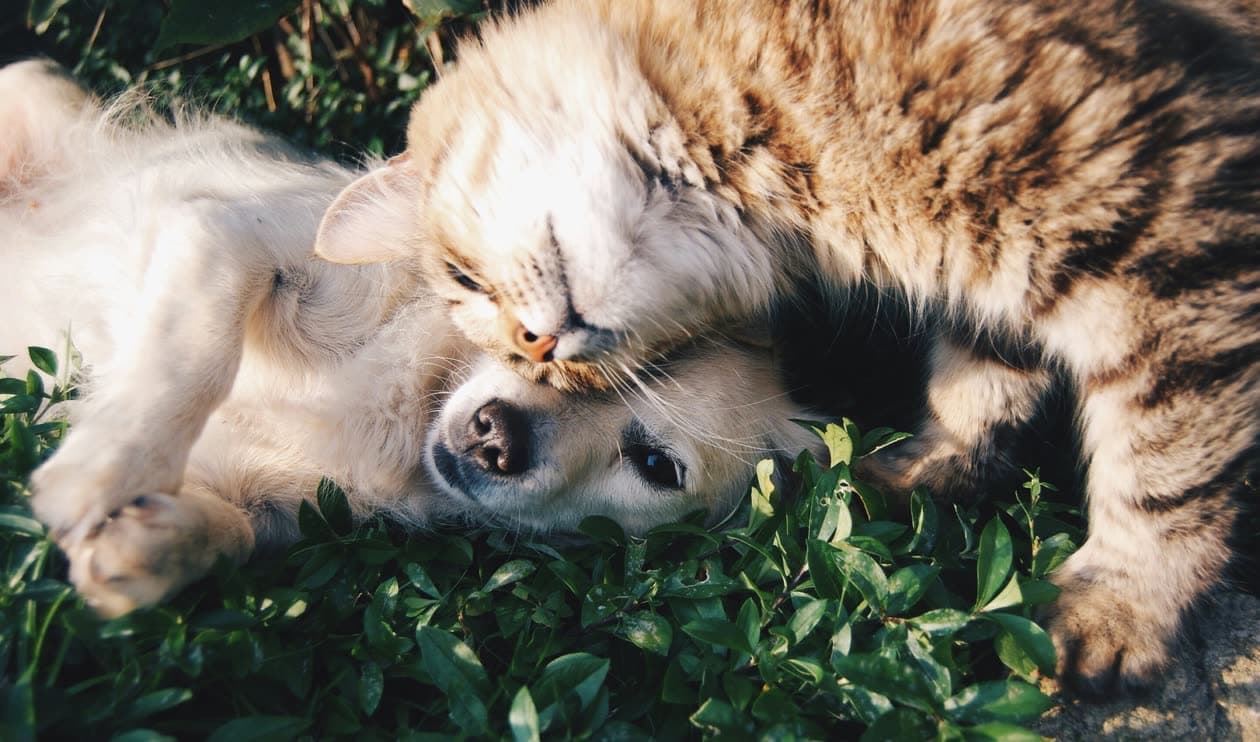
Picture an example. At 8 p.m., Biscuit the Labrador gets his monthly flea spot-on between the shoulder blades. By midnight, Miso the cat has spent an hour curled against his neck, the way she does every night. Nobody put a drop of anything on Miso. So here's a question few owners think to ask: can a medication that's safe for one pet harm another just because they share a sofa?
Sometimes, yes. The reason why is the most useful thing to understand about managing multiple pets' medications. In a multi-pet home, the risk usually isn't that you forget a dose. It's that a drug, a dose, or a meal ends up in the wrong animal. The fixes are mostly simple: keep each pet's medications physically separate, handle them separately, and keep a separate record for each pet. The interesting part is why.
The flea product that never touched the cat
Many dog flea and tick products contain permethrin, an insecticide that dogs tolerate well at labeled doses. In cats it can cause tremors, twitching, sensitivity to touch and sound, wobbliness, and in severe cases seizures. International Cat Care and the UK's PDSA both list permethrin toxicity as a recognized feline emergency.
Most cases happen when someone puts a dog product on a cat, often trying to save money or assuming "flea treatment is flea treatment." But not all of them. A 2008 review of adverse event reports in the Australian Veterinary Journal found that about three-quarters of affected cats had a canine spot-on applied to them directly, and about a quarter got sick from close contact with a recently treated dog. Grooming a canine friend, sleeping against him, or rubbing along his coat was enough.
That raises the real question. Why are cats so sensitive to things other species handle without trouble?
What a cat's evolutionary diet left behind
The answer is in the liver. Most mammals clear many drugs and foreign chemicals through a process called glucuronidation: an enzyme attaches a sugar-acid "handle" to the molecule so the body can flush it out. One of the key enzymes for this is called UGT1A6.
In 2000, pharmacologists Michael Court and David Greenblatt reported in Pharmacogenetics that in domestic cats, the UGT1A6 gene is a pseudogene. It's still in the genome, but several disabling mutations stop it from producing a working enzyme. This is a big part of why acetaminophen (paracetamol), a routine human painkiller, is so dangerous to cats.
A 2011 study in PLoS ONE by Shrestha, Court, and colleagues followed the trail back further. They found that the defect is shared across living members of the cat family and that it became fixed somewhere between roughly 35 and 11 million years ago. Every species they found with a broken UGT1A6 was a hypercarnivore, an animal whose diet is more than 70% meat. One explanation is that an animal that almost never eats plants rarely meets the plant compounds this enzyme evolved to clear, so losing it cost little. Then humans invented pharmacy, and the cost showed up.
Your cat isn't fragile. Her liver was built for a diet of meat, not for a house full of other species' medications.
The researchers note that UGT1A6 isn't the whole story, since other enzymes contribute too. Different drugs also cause trouble for different reasons, and permethrin sensitivity has been linked to cats' limited glucuronidation as well. Still, the practical lesson is clear: "safe for the dog" tells you nothing about the cat, and the gap between species can be very large.
What this means for managing multiple pets' medications
When pets live together, their medications don't stay neatly in their own bodies. They end up on fur, on hands, on floors, and in food bowls. A few habits cover most of the risk.
Treat topical medications as shared-space medications
- Buy species-specific parasite products and check the label every time. Packaging for dog and cat products can look alike, and the dose depends on weight bands within each species.
- Ask your vet how long to keep a treated pet apart from the others, and follow the product label. The advice varies by product. Some sources suggest separating permethrin-treated dogs from cats for about 72 hours, but your product's instructions and your vet's advice come first.
- Apply treatments where the other pets can't reach, then wash your hands before touching anyone else.
The same idea applies to your medications. In 2015 the FDA warned that cats in two households got sick or died after owners used prescription topical pain creams containing flurbiprofen on themselves. The cats were likely exposed by licking or touching the owners' skin. If you use a medicated cream, cover the area or keep pets from licking it, and ask your pharmacist whether it's risky around animals.
Assume the tastiest medication will be eaten by the wrong pet
Many modern pet medications are flavored chewables, which makes giving them much easier. It also means the dog who eats socks now finds the bottle interesting. A toxicology brief from the ASPCA Animal Poison Control Center, published in dvm360, notes that dogs often eat entire bottles of palatable chewable carprofen (an anti-inflammatory) when they can get to them. In 2017, veterinary products were the fourth most common category of pet toxin in calls to the ASPCA's center, about 9% of cases, according to AVMA reporting.
Practical defenses:
- Store pet medications like human ones: closed cabinet, high shelf, child-resistant cap. Countertops and nightstands are within reach of a determined dog.
- Give medications one pet at a time, in separate spaces. A pill dropped in a busy kitchen gets eaten by whoever is fastest, not by the pet it was meant for.
- Watch the pill actually go down. Cats can hide a tablet in their cheek and spit it out later, where another pet may find it.
If a pet swallows a medication that wasn't theirs, or more than their dose, call your veterinarian or a pet poison hotline right away with the product name, the amount, and the pet's weight. Don't induce vomiting unless a professional tells you to. Some effects, such as kidney injury from NSAIDs, can show up a day or more later, so a pet who seems fine may still need to be seen.
Feed medicated meals and prescription diets separately
Food is the other big crossover route. A pill hidden in food only works if the right pet eats it. Therapeutic diets, such as kidney, urinary, or weight-loss formulas, are designed for one animal's condition, and a healthy housemate snacking on them all day isn't what the vet prescribed.
- Feed at set times rather than leaving food out all day, and pick up bowls when meals are over.
- Use separate rooms, a closed door, or elevated feeding spots (cats can often reach places dogs can't).
- Consider a microchip-activated feeder if a cat on a special diet shares a home with a cat who isn't on one. The feeder opens only for the registered pet.
Keeping vet schedules straight when every pet has a different calendar
Even well-separated medications can drift into chaos on paper. Three pets might mean three vaccine schedules, two monthly parasite preventives on different dates, one daily thyroid medication, and an annual dental cleaning nobody wrote down. Vaccine recommendations also vary by species, lifestyle, and country, so one pet's calendar is no template for the next.
A few habits help:
- Keep one record per pet, not one list for the house. Each entry should note the drug, the dose, the pet, and the time. "Gave the pill" is useless if two pets take pills.
- Group routine appointments where it makes sense. Booking checkups on the same day can save trips. Ask your clinic whether one visit can cover several animals.
- Bring each pet's current medication list to every visit, including supplements and anything topical. This is the easiest way to catch interactions or duplicate treatments.
This is exactly the situation ZooMinder is designed for: each pet gets its own medication reminders and vaccination dates, so "who's due for what" becomes a quick check, not a memory test. It's an organizer, not a vet. It won't tell you whether a drug is safe for a species, but it makes it much harder to give the right pill to the wrong animal.
A note on who gives the meds
In households with several caregivers, double doses usually happen through a simple gap in communication: one person gives the medication, someone else doesn't know and gives it again. A shared log, a whiteboard on the fridge, or a tick box everyone checks before giving anything closes that gap. If you're tracking doses in ZooMinder, marking each dose as given right away is the habit that matters.
The question to ask before any medication
So, can a treatment that's safe for one pet harm another just by sharing the sofa? With some drugs and some species, yes. That's because each animal's body handles chemicals differently, and multi-pet homes are full of shared fur, shared floors, and shared bowls. You don't need to be afraid of that. You need to be specific about it.
In a multi-pet home, "is this safe?" is always an incomplete question. The full question is "safe for whom?"
Tonight, try this: take every pet medication out of the cabinet and put a strip of colored tape on each one, a different color for each animal. Do the same with the bowls. It takes ten minutes, and it changes the rule in your house from "give the pill" to "give the blue pill to the blue pet."
Never Forget a Dose Again
ZooMinder turns the tips in this article into automatic reminders. Add your pet, add their meds, and let the app handle the rest — across as many pets as your household needs.