Pet Emergency Information Card: What to Include and Where
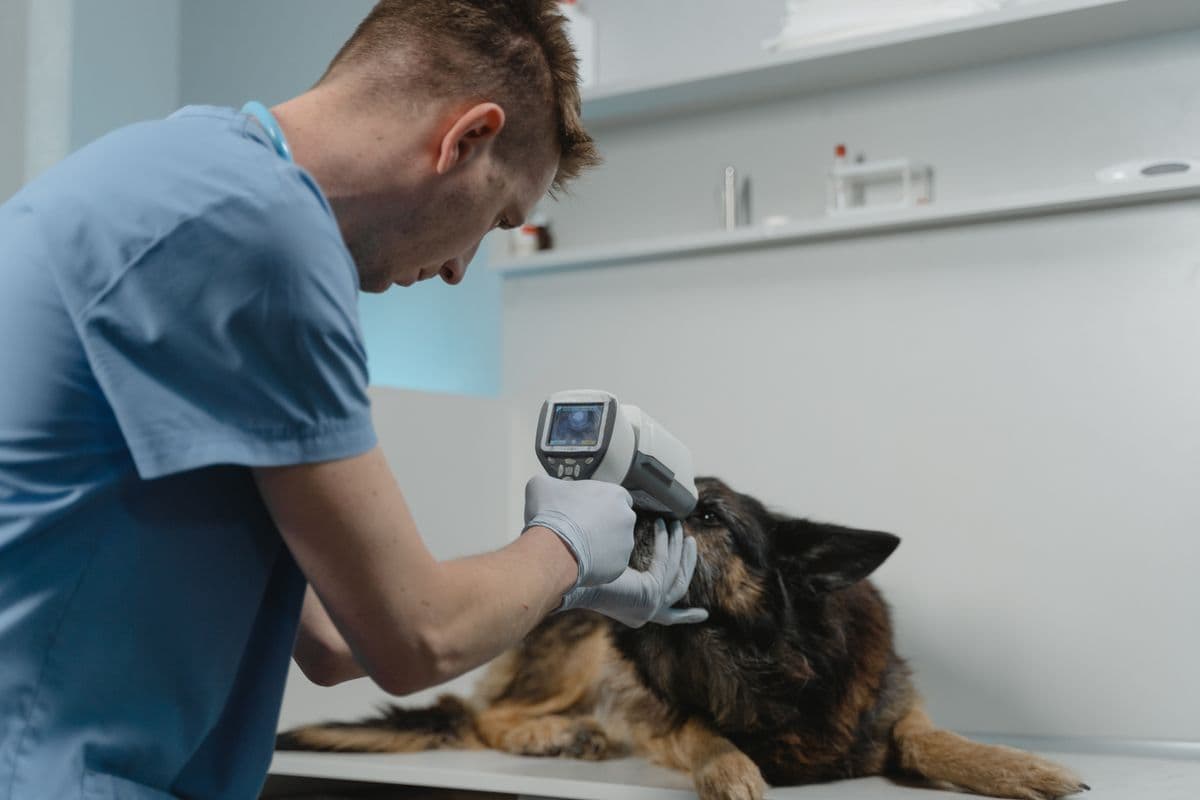
The emergency vet's first three questions are almost always the same: What is she on? When did she last eat? Has she ever reacted badly to a drug? At 11:40 on a Tuesday night, with a 12-year-old beagle shaking on a steel table, plenty of owners answer "um" to at least one of them — and that pause burns real minutes during triage. A pet emergency information card exists to close that gap. These are the questions owners actually ask once they sit down to make one.
What do I actually need to include on a pet emergency information card?
Think in four blocks. Identity: name, species, breed, sex and whether they're spayed or neutered, age or date of birth, current weight with the date you weighed them, and distinguishing marks. Add a photo of you together — that doubles as proof of ownership if you're ever separated at a shelter or evacuation site.
Medical: current medications (more on that below), chronic conditions spelled out plainly — diabetes, epilepsy, heart murmur, Addison's, chronic kidney disease — known drug and food allergies plus what the reaction actually was, past surgeries, and rabies vaccination date. "Allergic to penicillin" and "vomited once after amoxicillin" lead to different decisions.
Contacts: your primary vet's name, phone, and address; the nearest 24-hour emergency hospital; two local people who can physically get to your pet; and one out-of-area contact. The AVMA specifically recommends that out-of-area name, because in a regional disaster local phone lines are the ones that jam. Include your microchip number and the registry it's enrolled with — not just "he's chipped." A chip number with no registry attached sends a shelter on a phone tree.
Numbers and permissions: the ASPCA Animal Poison Control Center at (888) 426-4435 (about $95 per incident) and Pet Poison Helpline at (855) 764-7661 (about $89, follow-up calls included). Neither is government-funded, so budget for the fee. Then add a signed veterinary medical treatment authorization — the AVMA suggests keeping one in your evacuation kit so a vet can legally treat your pet if you're not reachable.
If a stranger picked up this card and nothing else, could they keep your pet alive and figure out who owns her? That's the entire test.
What should the card say about my pet's medications?
Write generic name, brand name, strength in mg, dose, frequency, and route — all six. "Half a pill in the morning" is useless to someone who doesn't know what the pill is. "Levetiracetam (Keppra) 500 mg, one tablet by mouth every 8 hours" is a sentence an ER team can act on immediately.
Include supplements and over-the-counter products. Fish oil affects clotting. Joint supplements, CBD products, and anything you bought without a prescription still count as drugs when someone is deciding what to give next. Emergency clinicians consistently ask for current medications and when the last dose was given — that timestamp changes the plan for insulin, seizure medications, and NSAIDs, where a repeat dose can do real harm.
This is where paper cards go stale fastest and where a phone beats an index card. If you're already logging doses in ZooMinder, the medication list and the last-given timestamps are sitting there with actual times attached — you're copying, not reconstructing from memory at midnight. Add one more line while you're at it: when your pet last ate, since that determines whether anesthesia can happen now or in six hours.
Do I need a separate card for each pet, or can they all go on one?
One card per pet for medical detail, one household sheet for the door. Mixing three animals onto a single card forces a stranger to parse which allergy belongs to which cat, and parsing is exactly what you're trying to eliminate.
The household sheet is different — it's the count. "2 cats, 1 dog, 1 rabbit," a one-line description of each, and where they hide. Cats in a smoke-filled house go under beds and behind dryers; telling a firefighter "the tabby hides in the linen closet" is more useful than a photo. Note it if a pet is fear-aggressive when handled by strangers, and say what makes them manageable.
For multi-pet homes this gets unwieldy fast, which is the practical case for per-pet profiles in an app like ZooMinder — each animal carries its own med list, weight history, and vaccine dates, so the printed card only has to hold the triage-speed version.
Where do I keep it so someone actually finds it?
Four copies, four places. Your wallet, tucked with your driver's license — that's the one strangers find if you're the one who ends up unconscious. The refrigerator door or the inside of a kitchen cabinet, which is where EMS crews are trained to look for human medical info. The go-bag, in a waterproof sleeve; the AVMA recommends an easy-to-carry waterproof container stored near an exit. And one copy with whichever neighbor or friend has your key.
Then keep a digital copy — photo of the card in your phone's favorites, or the record itself in a health app. The two formats fail in opposite ways: paper survives a dead battery and no cell service, phones survive a flood that turns a paper card to pulp. Keep both, and put a line on the paper card telling people the digital version exists and where.
Is the "pets inside" sticker on my window enough?
It's a flag, not a plan. Responders do look for them, but decals are famously unreliable — people move out, pets pass away, and the sticker stays on the glass for a decade. A firefighter who searches a burning house for a cat that died in 2019 is spending time they didn't have.
Fix it with a marker: write the current count and the month/year you last updated it directly on the sticker. Then add one line pointing to the real information — "Pet info card on fridge." The sticker's only job is to tell someone there are animals inside and where to read about them.
Is it weird to write down how much I'm willing to spend?
Not weird. It's one of the most useful lines on the card, and almost nobody includes it. If a neighbor carries your dog into an emergency hospital while you're on a flight, the staff need someone with authority to say yes before treatment starts — and most ER hospitals ask for a deposit up front. Write it plainly: "Authorized to approve treatment up to $____ without contacting me. Call before exceeding." Name the person who holds that authority, and add your pet insurance carrier and policy number.
While you're in uncomfortable territory, finish the job. For a senior or terminally ill pet, state your resuscitation wishes in one sentence. Whoever is standing at that counter at 2 a.m. will be desperate not to guess wrong, and a sentence in your handwriting is a real kindness to them.
What's the difference between an emergency card and my pet's full medical records?
The card is a triage summary a stranger can read in twenty seconds. The records are bloodwork trends, imaging, surgical reports, and full vaccination history — far too much for an index card, and essential the moment care goes past triage.
The card isn't the record. The card is the pointer to the record, plus the twenty seconds' worth a stranger needs before the record arrives.
So the card should end with a line like: "Full history in ZooMinder on my phone; [contact name] has the passcode." Digital records earn their keep here in a way paper can't — a dated symptom log turns "he's been off for a while" into "vomiting started Thursday, three episodes, stopped eating Saturday," and a weight history shows a vet a 9% loss over four months that you'd never have noticed on your own. That's diagnostic information, not just record-keeping.
How often should I update it, and what goes stale first?
Twice a year, anchored to a date you'll actually remember. August 15 is the AVMA's Check the Chip Day — use it, then do a second pass in January.
Phone numbers rot first. In the national shelter study out of Ohio State (Lord et al., JAVMA), among microchipped pets whose owners couldn't be found, 35.4% failed on incorrect or disconnected phone numbers, and another 17.2% were registered in a database other than the chip manufacturer's. The chips work; the paperwork behind them decays. That same study found microchipping raised return-to-owner rates from 21.9% to 52.2% for dogs and from 1.8% to 38.5% for cats — the chip is only as good as the number attached to it.
After phone numbers: weight (nearly every emergency drug dose is calculated per kilogram, so a cat who quietly lost two pounds changes the math), the medication list, an emergency contact who moved three states away, and the vet clinic that got acquired and changed its phone number without telling you.
When to call your vet
Don't stop to update anything if you're seeing labored or open-mouthed breathing, pale/white/blue gums, collapse, a seizure lasting more than two to three minutes or repeating, a distended hard abdomen with unproductive retching, straining to urinate (a true emergency in male cats), uncontrolled bleeding, known ingestion of a toxin, heatstroke signs, being hit by a car even if your pet walks away, or unproductive labor past 30 minutes. Go now, and call poison control from the car if a toxin is involved — the toxicologist can start advising before you arrive.
For everything else: hand your card to your vet at the next wellness visit and ask them to read it. They'll flag the condition you phrased wrong and the drug you left off in about ninety seconds, for free.
Three questions, twelve seconds. That's the whole job of the card — so that the next time someone asks what she's on, the answer comes off a piece of paper in your wallet instead of out of your memory at 11:40 at night.
Try ZooMinder — Built by Pet Owners, for Pet Owners
If this guide helped, ZooMinder takes it a step further: smart medication reminders, vet appointment tracking, weight and symptom logs you can share at your next visit. Free, no ads.