Pet First Aid Kit Essentials: What the Data Says to Pack
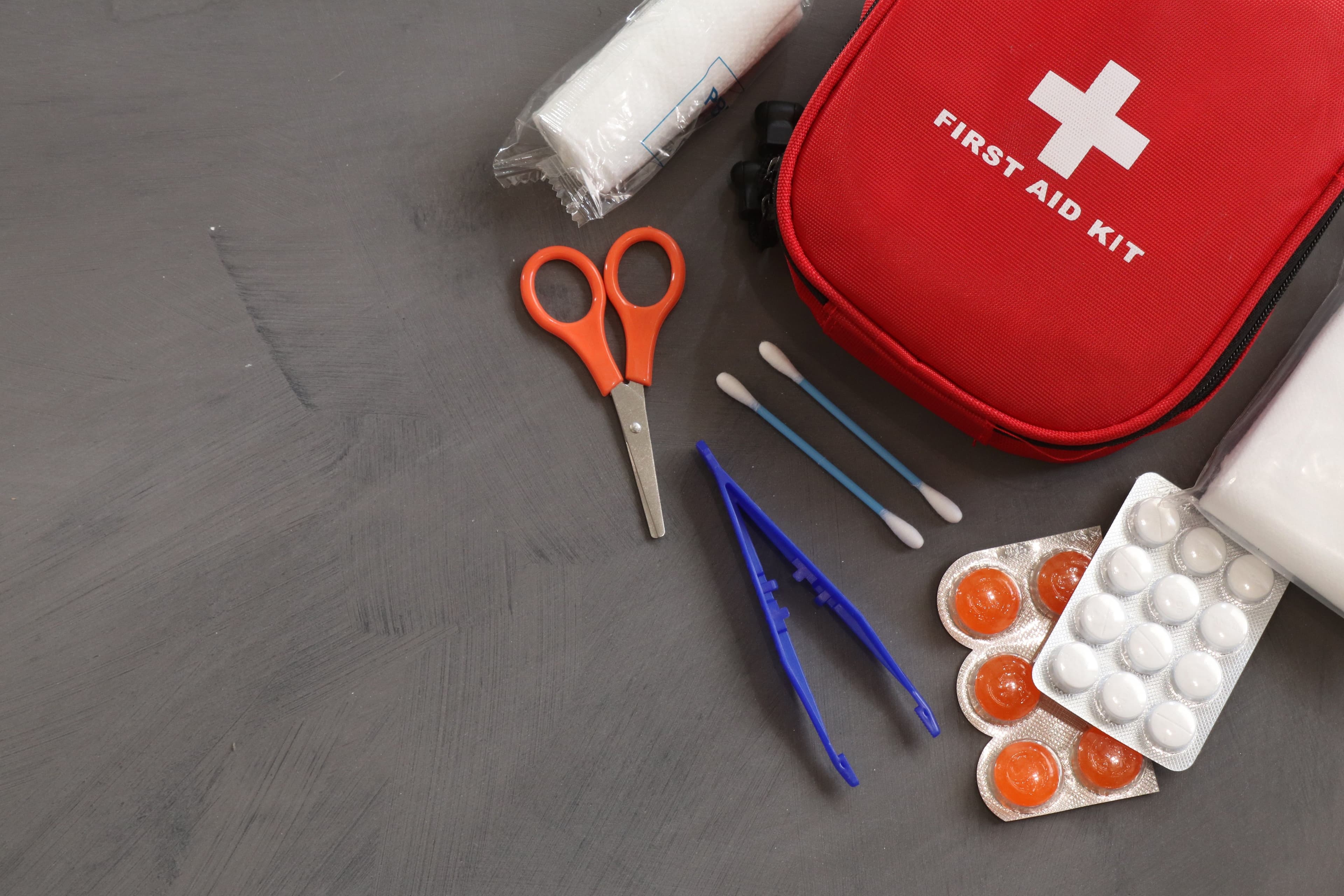
The most common thing that poisons American pets isn't chocolate, isn't lilies, and isn't antifreeze. It's the bottle of ibuprofen or the jar of gummy vitamins sitting on a kitchen counter. In 2025 the ASPCA Animal Poison Control Center handled more than 376,000 toxic-exposure cases, and over-the-counter human medications topped the list at 16.9% of all exposures — the category's widest lead yet, per the ASPCA's Top 10 Pet Toxins of 2025. That single number should reshape how you think about pet first aid kit essentials. The emergency most likely to happen in your house isn't a dramatic laceration. It's your dog eating something off a counter at 10 p.m.
Most kits get built backwards. People buy the gauze and skip the information. Below is a kit assembled around what actually sends pets to the emergency room, according to the data — and, just as important, the moments when opening the kit at all is the wrong move.
The 16.9% Problem: Your Kit's Most Valuable Item Is a Phone Number
Toxin exposure is a numbers game, and the numbers are lopsided. The ASPCA's 2025 breakdown puts OTC medications first at 16.9%, food and drink second at 16.4% (grapes, raisins, xylitol gum, onions and garlic dominate that group), human prescription drugs third — cardiac meds, antidepressants and ADHD stimulants leading — and chocolate fourth at 13.6%.
Two numbers belong inside your kit lid, written on tape, before anything else:
- ASPCA Animal Poison Control Center: (888) 426-4435 — $95 per incident, 24/7/365
- Pet Poison Helpline: (855) 764-7661 — $89 per incident, follow-up calls included
Both are staffed by veterinary toxicologists, and both will give you a case number your ER vet can pull up, which shortens triage considerably. Write the fee down too. An ASPCA report released in March 2026 found roughly 6 in 10 pet owners lack confidence they could afford a pet medical emergency — knowing a $95 phone consult may be the entire intervention is genuinely useful information at 10 p.m.
When you call, they will ask, in this order: species and breed, exact current weight, what was ingested, how much, and when — plus any medications your pet is already on. Toxic doses are calculated per kilogram. "About forty pounds, I think" changes the math and can change the recommendation.
A 12-pound terrier and an 18-pound terrier that eat the same handful of ibuprofen are two different cases. One may be a monitor-at-home; the other is a hospitalization.
This is exactly the kind of moment ZooMinder's weight log and medication list are built for — a logged weight from three weeks ago and a current med list you can read off your phone beat a panicked guess every time.
What not to do: do not induce vomiting on your own initiative. The Veterinary Poisons Information Service and current clinical guidance are unambiguous that at-home hydrogen peroxide can cause severe gastritis, gastric ulceration and aspiration pneumonia, and it is flatly contraindicated for corrosives, petroleum products, and any pet that is already vomiting, sedated, seizing, or brachycephalic. Keep a small bottle of 3% hydrogen peroxide in the kit if you like — but label it "only on instruction from poison control or a vet." Never for cats, where it causes severe hemorrhagic gastritis.
Pet First Aid Kit Essentials: The Checklist Worth Its Space
Built from AVMA and Red Cross recommendations, organized by what you'll actually reach for.
Bleeding and wounds
- Sterile non-stick gauze pads (assorted sizes)
- Roll gauze
- Self-adhering bandage wrap (vet wrap) — 2" and 4"
- Medical tape
- Blunt-tipped bandage scissors
- Sterile saline (wound flush and eye flush)
- Chlorhexidine 2% solution or antiseptic wipes
- Styptic powder — nail quicks only, never deep wounds
- Water-based sterile lubricant
- Nitrile gloves
Assessment and vitals
- Digital rectal thermometer (label it; it does not go back in the human kit)
- Fine-tipped tweezers and a tick removal hook
- Penlight
- Card with your pet's normal resting temperature, pulse and gum color — baselines you took on a healthy day
Toxins and medication
- Both poison hotline numbers, taped inside the lid
- 3% hydrogen peroxide, labeled as above
- Plain diphenhydramine tablets — no decongestant combinations, no liquid formulations containing xylitol — dosed only as your vet has pre-authorized for your pet's weight
- Any pet-specific rescue meds you've been prescribed (anti-seizure, EpiPen, inhaler spacer)
Restraint and transport
- Soft muzzle sized to your pet (never on a pet that is vomiting, choking, or struggling to breathe)
- Spare slip leash
- Thick towel or blanket — restraint, warmth, and a stretcher for a small dog or cat
- Rigid board or a firm-bottomed carrier for suspected spinal injury
Paperwork
- Vaccination records (rabies status matters for bite wounds)
- Current medication and allergy list
- Recent photo
- Address and phone of your nearest 24-hour ER — looked up now, not then
Store it somewhere you can grab it one-handed in the dark, and keep a duplicate in the car. The car kit is the one you'll use.
14.18% Died: The Heatstroke Data That Earns Your Thermometer a Slot
Hall, Carter and O'Neill's 2020 VetCompass study in Animals, which examined UK dogs under primary veterinary care in 2016, found that 14.18% of dogs affected by heat-related illness died, and that 74.2% of cases were exertional — dogs on walks, at the beach, playing fetch — not the hot-car scenario that dominates public awareness.
A thermometer converts a vague worry into a decision. Normal for dogs and cats is 101–102.5°F (38.3–39.2°C). Above 104°F (40°C) is an emergency. Above 106°F (41.1°C), organ damage is already underway.
Current emergency-medicine consensus reversed the old advice: cool first, transport second. Cold water — dousing, hosing, immersion where practical — is now supported by the evidence, and the old fear of "cooling too fast" has not held up. Stop active cooling at 103°F (39.4°C) to avoid overshooting into hypothermia, then drive. Every dog that reaches 104°F needs to be seen even if they seem fine afterward, because the dangerous complications — clotting failure, kidney injury, GI necrosis — surface hours later.
That delayed presentation is why a written timeline matters. Logging when the collapse happened, the temperature you recorded, and what you did in ZooMinder's symptom log gives the ER vet a real chronology instead of a reconstruction, and it's genuinely hard to remember accurate times once you're in a waiting room.
Under 6% Survive: What the 2024 RECOVER Guidelines Say About Home Heroics
In June 2024 the RECOVER Initiative published the first major revision of veterinary CPR guidelines since 2012. Buried in the supporting literature is the number that should recalibrate everyone's expectations of first aid:
Fewer than 6% of dogs and fewer than 20% of cats that suffer cardiopulmonary arrest survive to hospital discharge — against more than 20% in humans.
Read that as a mandate, not a discouragement. Your kit is a bridge to the vet, not a substitute for one. Its job is to control bleeding, prevent a bad situation from worsening, and buy you the fifteen minutes of drive time. Nothing in a canvas bag reverses cardiac arrest.
If you want the skill anyway — and it's worth having — take a hands-on course. RECOVER offers rescuer certification for laypeople, and both compression depth and technique now vary by chest conformation and body size in a way that no article, including this one, can teach you properly.
79% Survived — Because They Got to Surgery: When to Skip the Kit Entirely
A Vets Now study of 492 emergency gastric dilatation-volvulus cases in the UK found 79% survival to discharge among dogs that went to surgery. Across the broader literature, time from onset to surgical intervention is repeatedly associated with mortality. GDV is the clearest illustration of a whole category: conditions where every minute spent rummaging through gauze is a minute subtracted from the number above.
Close the kit and drive for:
- Unproductive retching, a distended hard abdomen, restlessness and drooling — suspected bloat/GDV, especially in deep-chested breeds
- Labored breathing, open-mouth breathing in a cat, or blue/grey/white gums
- A seizure lasting over 3 minutes, or two seizures in 24 hours
- A male cat straining in the litter box without producing urine — urethral obstruction kills in under 48 hours
- Bleeding that soaks through a pressure bandage in under 5 minutes
- Suspected ingestion of a human medication, xylitol, grapes/raisins, or a rodenticide — call en route
- Any hit by a car, big-dog-shakes-little-dog bite, or fall from height, regardless of how normal they look
- A dystocia: more than 30 minutes of hard straining without a puppy or kitten
- A protruding eye, or any chemical splashed in the eye (flush with saline while someone else drives)
- Collapse, sudden hind-limb paralysis, or gums that are pale and tacky
Keep your ER clinic's address saved alongside your regular vet's in ZooMinder, with your pet's records attached — handing over a full medication and vaccination history at 2 a.m. removes a real bottleneck from triage.
What to Leave Out
- Human pain relievers. Ibuprofen, naproxen, acetaminophen and aspirin are not backups. Acetaminophen kills cats. These are literally the top-ranked toxin category.
- Tourniquets. Direct pressure with gauze and vet wrap, elevation, and a fast drive. Improvised tourniquets cost limbs.
- Activated charcoal. Aspiration and hypernatremia risk make it a clinic-only tool.
- Leftover antibiotics. Wrong drug, wrong dose, expired, and it obscures the culture the vet needs.
- Anything expired. Saline, chlorhexidine and diphenhydramine all degrade. Audit the kit twice a year — when you change your smoke detector batteries is as good a schedule as any.
One more thing worth doing tonight: apply a vet wrap bandage to your healthy dog's leg while nothing is wrong. You will wrap it too tightly. Everyone does. Better to learn that on a calm Tuesday than on the worst night of the year — the same night your dog gets to the gummy vitamins on the counter, which, statistically, is the emergency you should be preparing for.
Try ZooMinder — Built by Pet Owners, for Pet Owners
If this guide helped, ZooMinder takes it a step further: smart medication reminders, vet appointment tracking, weight and symptom logs you can share at your next visit. Free, no ads.