Pet Insurance vs Savings Account: A $4,200 Reality Check
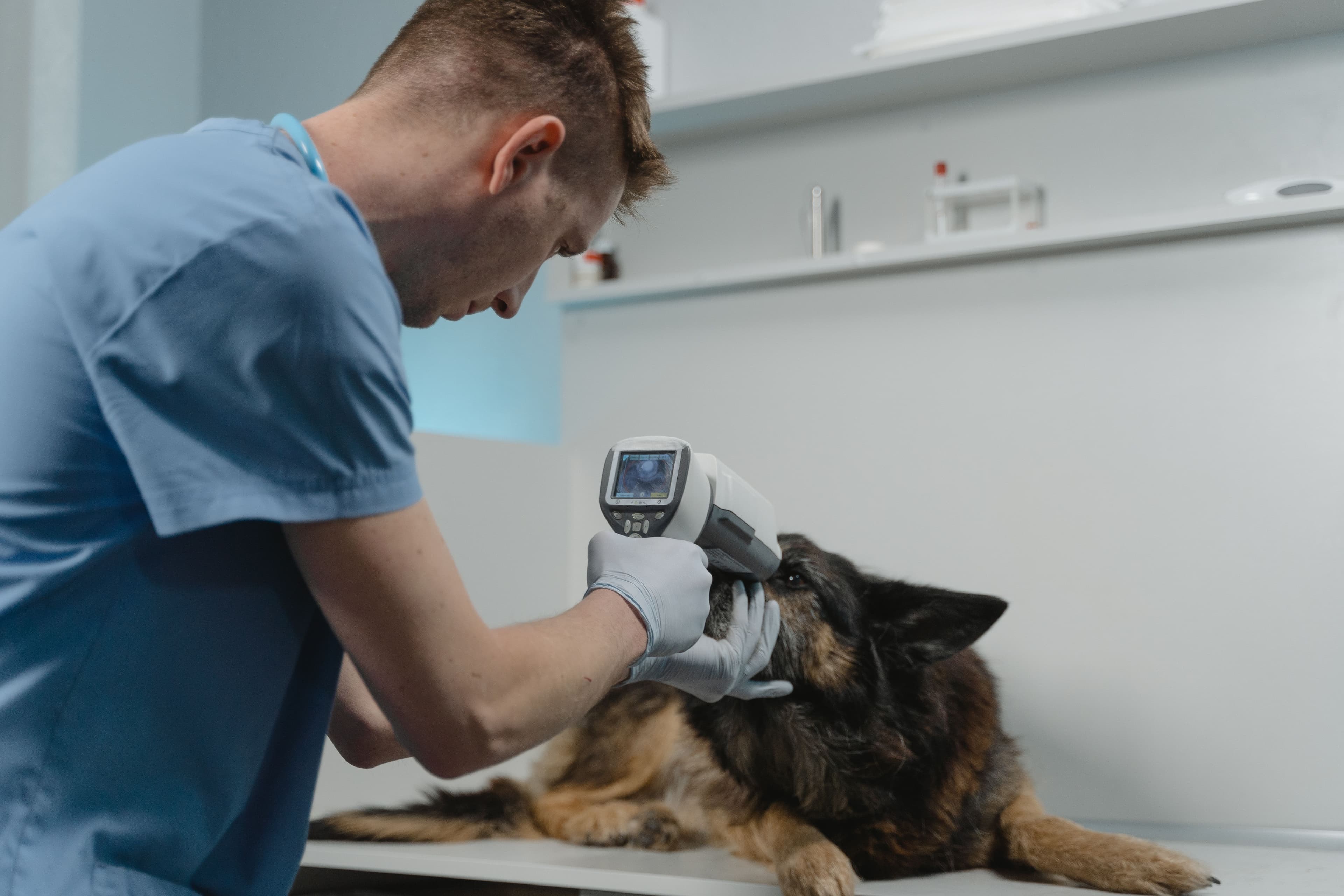
Elena had exactly $1,340 in the savings account she'd nicknamed "Tito" when her six-year-old boxer mix ate half a corn cob off a paper plate at a Fourth of July barbecue. Twenty hours later, an emergency surgeon was explaining that corn cobs don't pass — they lodge, they cause pressure necrosis, and they come out through an incision. The estimate was $3,800 to $4,600. Elena had spent six years quietly winning the pet insurance vs savings account debate with herself, every month, by not opening either one.
That gap — between the fund she meant to build and the one she actually had — is the real subject here. Not which option is theoretically superior. Which one survives contact with your actual life.
The number on the estimate, and the number in her account
The final bill came to $4,213: emergency exam, radiographs, bloodwork, exploratory laparotomy with enterotomy, two nights of hospitalization, fluids, pain management, and a course of antibiotics. That's squarely in line with what emergency medicine costs now — foreign body surgery generally runs $1,500 to $5,000, and a straightforward after-hours emergency visit with diagnostics starts around $800 to $1,500 before anyone picks up a scalpel.
Elena is not unusual for having been caught short. Synchrony's 2025 Lifetime of Care study, which surveyed nearly 5,000 U.S. pet owners, found that nearly 8 out of 10 people underestimate what a pet costs over its lifetime — dog owners guessed around $8,000, while the actual 15-year range came in at $22,125 to $60,602. The line from that study that should stop you: 74% of owners had already faced an unexpected pet expense over $250, but only 31% said they could comfortably absorb a major one.
She put $2,900 on a credit card and cried in the parking garage.
Running the pet insurance vs savings account math at 2 a.m.
Somewhere around Tito's second night in the hospital, Elena did the arithmetic she should have done at his first birthday. Here's that math, with real numbers.
The insurance path. NAPHIA's State of the Industry data puts the average accident-and-illness premium at roughly $62 a month for dogs and about $32 for cats. Six years of $62/month is $4,464 in premiums. A typical policy — $500 annual deductible, 80% reimbursement, $10,000 annual cap — would have paid on Tito's bill like this:
($4,213 − $500 deductible) × 80% = $2,970 reimbursed. Elena's out-of-pocket: $1,243, plus the $4,464 she'd already paid in premiums.
The savings path. That same $62 a month, deposited faithfully into a high-yield savings account, is not nothing. Top HYSAs are paying around 4.15%–4.50% APY as of August 2026, against an FDIC national average of just 0.38% — so the account you pick matters as much as the habit. Six years of $62/month at ~4.15% compounds to roughly $5,060: $4,464 in contributions plus about $595 in interest. Tito's surgery would have left her with $847 still in the account and no card balance.
On this specific bill, the savings account wins. That is the honest answer, and most articles won't give it to you, because most articles are published by insurers.
The part the spreadsheet doesn't show
Here's where the comparison turns. The savings account wins the median emergency. Insurance wins the tail.
Tito is a boxer mix. Boxers carry elevated risk for mast cell tumors, lymphoma, and arrhythmogenic right ventricular cardiomyopathy. If the 2 a.m. call had been lymphoma instead of a corn cob, Elena wouldn't be looking at $4,213 — she'd be looking at a CHOP chemotherapy protocol running $6,000 to $12,000 over six months, with a specialist oncology consult on top. A $5,060 savings account absorbs that once, badly, and then it's empty. An insurance policy with a $10,000–$15,000 annual limit absorbs it, resets in January, and absorbs it again if the disease relapses.
That's the actual trade:
- A savings account is broad but shallow. It covers everything — dental cleanings, pre-existing conditions, behavioral work, prescription food, end-of-life care, the stuff no policy touches. It just runs out.
- Insurance is narrow but deep. It covers less, argues with you about what counts, and has no ceiling problem until you hit the annual cap.
The financially literate version of this question isn't "which is better." It's "what's the largest bill I could absorb without borrowing, and what's the largest bill my pet could plausibly generate?" If those two numbers are close, self-fund. If the second is 3x the first, you're not self-insuring — you're gambling with a deadline you don't control.
The door that closes, and exactly when
The thing Elena didn't understand at year one is that the two options aren't equally available forever.
You can open a savings account for a 12-year-old cat with kidney disease on a Tuesday afternoon. You cannot buy insurance that will cover that cat's kidney disease — not for any premium, not ever. Pre-existing conditions are permanently excluded by essentially every carrier in the U.S. market, and so are conditions that develop from them. A "kidney" exclusion can swallow the hypertension and the anemia that follow.
Worse, the exclusion window starts before your coverage does. Most policies impose waiting periods — commonly 14 days for illness, a few days for accidents, and six to twelve months for cruciate ligament and other orthopedic conditions. Anything your pet shows symptoms of during that window is treated as pre-existing, even though you were paying premiums the whole time.
This is why the honest advice is asymmetric by age:
- Pet under 2 with a clean record: insurance will never be cheaper or cover more than it does today. Buy it now or accept that you're choosing savings permanently.
- Pet 3–7, healthy: either works. Run the numbers against your emergency-fund reality, not your intentions.
- Pet 8+ or with anything already in the chart: the insurance door is mostly shut. Fund the account aggressively and consider an accident-only policy, which is cheaper and doesn't care about your pet's illness history.
One clarification worth $500 a year: a "wellness plan" is not insurance. It prepays routine care — vaccines, dentals, heartworm preventive — at roughly what those services cost. It will not touch a corn cob.
The folder Elena didn't have
Three weeks after surgery, Elena bought a policy for Tito's younger sister, a two-year-old cattle dog named Pepa. That's when she learned that insurance is a paperwork product, and that the paperwork starts before you ever file a claim.
Here's what a real claim requires, and where people lose money:
1. An itemized invoice — not a receipt. Line-item costs for every service and medication, plus proof of payment. A credit card slip showing "$4,213 — Animal Emergency" gets rejected.
2. Full SOAP notes, not a summary. SOAP stands for Subjective, Objective, Assessment, Plan — the actual clinical narrative your vet types during the visit. Carriers typically want at least the last 12 months of these, and vaccine certificates, visit summaries, and invoices explicitly do not qualify. If you've used more than one clinic, you need records from all of them, and the ER's records don't automatically reach your regular vet.
3. Your own dated symptom log. This is the one that actually protects you, and almost nobody keeps it. Say your vet wrote "occasional soft stool, likely dietary" in a 2024 note. Two years later your dog is diagnosed with IBD, and the carrier flags it as pre-existing. Your defense is a dated record showing the 2024 episode resolved in four days and never recurred — with photos, dates, and what you fed.
Building that log after the fact is impossible. Building it in ten seconds per entry, on the day it happens, is trivial — this is precisely what ZooMinder's symptom log is for: timestamped notes and photos that live in one place instead of scattered across your camera roll and your memory.
The same goes for the documents themselves. When Pepa's first claim came due, Elena had the itemized invoice and the ER discharge notes photographed and attached to Pepa's profile in ZooMinder's vet records before she left the parking lot — reimbursement landed in nine days instead of the six weeks her first attempt took. And during Tito's recovery, three medications on three different schedules, two of them with food, she stopped trying to hold it in her head and let ZooMinder's medication reminders run the two weeks that mattered most for his incision healing.
The gap between "I have insurance" and "I got reimbursed" is almost always a records problem, not a coverage problem. Fix it on a calm day.
Where Elena landed
She kept both. Pepa has an accident-and-illness policy bought at age two, before anything could be called pre-existing. Tito — now with an abdominal surgery permanently in his chart, which means most carriers would exclude future GI claims anyway — has an automatic transfer instead: $110 on the 1st of every month into a separate high-yield account she cannot see from her main banking app.
The corn cob wasn't the expensive part. The expensive part was six years of believing that intending to save is the same as saving.
If you take one thing from Tito's night: open the account today with $25 and set the automatic transfer before you finish reading this, or get the quote today if your pet is young enough that the door is still open. The pet insurance vs savings account question is genuinely close on the numbers. It stops being close the moment one of them exists and the other one is still a plan.
Keep Your Pet's Health on Track with ZooMinder
ZooMinder helps you manage medication schedules, track vet appointments, and keep complete health records for all your pets — all in one free app.