Preparing Pet for Surgery: Why the Overnight Fast Is Out
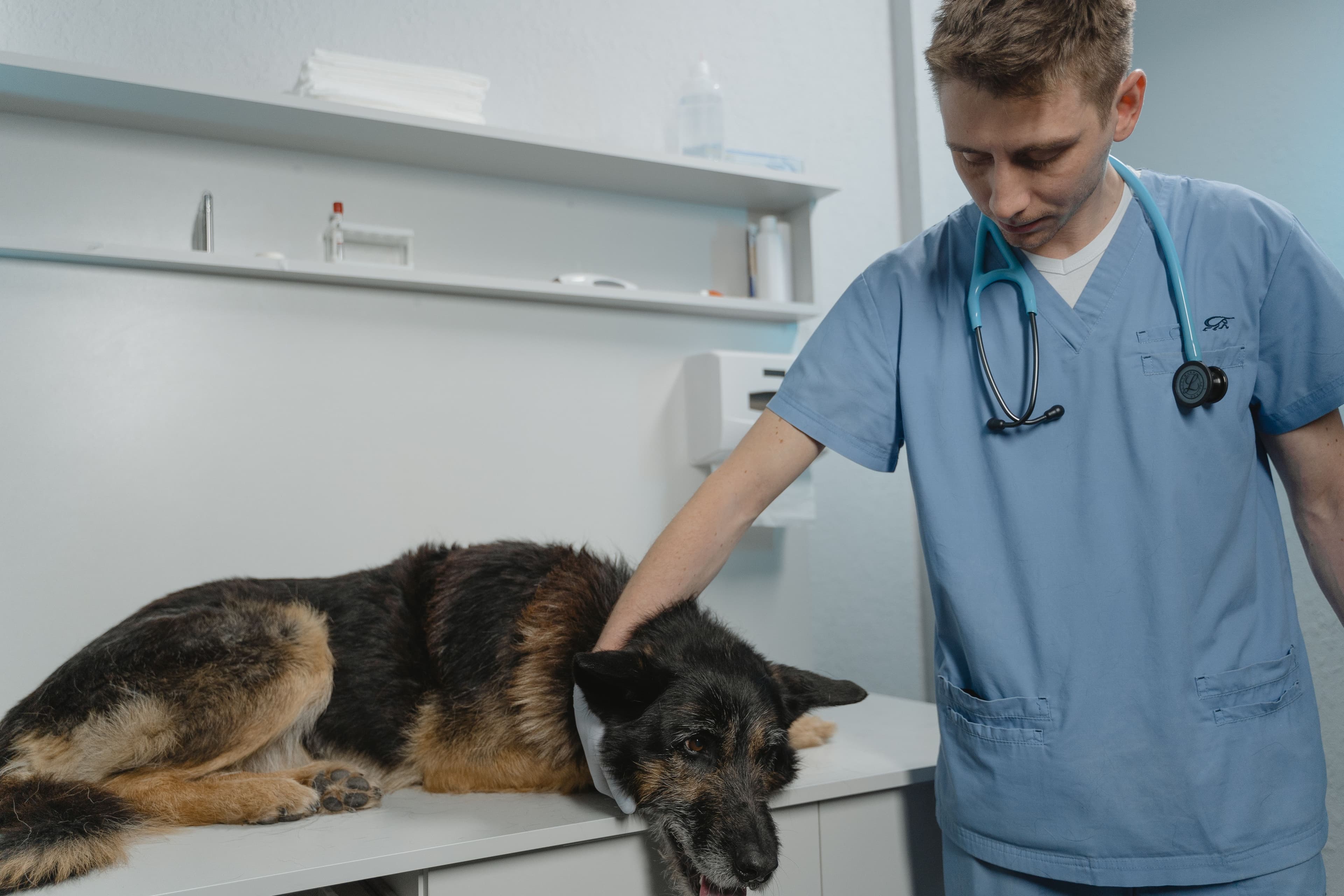
At 11:40 p.m., a Boston terrier named Ollie has his water bowl lifted off the kitchen floor, because the consent form said no food or water after midnight. His procedure is booked for 10:15 the next morning. By the time he's induced, he's gone roughly fourteen hours on an empty stomach, and nearly every guide to preparing pet for surgery still treats that as the responsible thing to do. Current veterinary anesthesia guidelines don't. A fast that long isn't neutral — for some dogs, it raises the odds of the one complication owners are never warned about.
The overnight fast is a holdover, not a safety rule
The logic behind fasting is sound and nobody in veterinary medicine disputes it. An anesthetized pet loses the reflexes that keep stomach contents out of the airway, so a stomach full of kibble is a genuine aspiration risk. What's changed is the number.
The 2020 AAHA Anesthesia and Monitoring Guidelines for Dogs and Cats recommend a four- to six-hour fast for healthy adult dogs. Not twelve. Not "after midnight." The 2018 AAFP feline guidance is shorter still — around three to four hours for cats, at the clinician's discretion.
Longer isn't safer, because an empty stomach isn't an inert stomach. It keeps making acid. Work on gastro-oesophageal reflux under anesthesia has found that refluxate from dogs fasted around three hours is significantly less acidic than from dogs fasted eighteen hours. Reflux under anesthesia is fairly common either way — but the overnight-fasted dog is the one washing far more corrosive fluid over an unprotected esophagus. That's how you get post-op esophagitis, and in the worst cases an esophageal stricture that shows up as difficulty swallowing two or three weeks later, long after everyone has stopped connecting it to the surgery.
The goal was never "as empty as possible." It was "empty enough, for as short as possible."
Water is not food, and most pets shouldn't lose it
This is the part that surprises people most. The 2024 AAHA Fluid Therapy Guidelines state that for most patients it is unnecessary to withhold water before anesthesia. Water empties from the stomach quickly, and a pet who arrives mildly dehydrated is a pet whose blood pressure is harder to hold up once the anesthetic drugs are on board — hypotension is one of the most common intra-operative problems there is.
If your clinic's form says no water, that isn't necessarily wrong; there are real reasons for it (megaesophagus, upper GI surgery, a known regurgitator). But it is a question worth asking rather than assuming. "Can he keep water until we leave?" takes four seconds on the phone.
The pets who genuinely need a longer fast
Conventional advice fails in both directions, and this is the direction where being casual is dangerous.
Brachycephalic dogs — pugs, French and English bulldogs, Boston terriers like Ollie, Persians — are a real exception. One frequently cited analysis found brachycephalic dogs were about 1.57× more likely to have an intra-anesthetic complication and 4.33× more likely to have a post-anesthetic one. Regurgitation and aspiration pneumonia sit at the center of that risk, which is why many anesthetists extend the fast for these patients and add anti-nausea medication before induction. If your dog has ever regurgitated undigested food, say so out loud at booking. It changes the protocol.
The opposite exception matters just as much. Toy breeds under about 2 kg, very young puppies and kittens, and diabetic patients need shorter fasts, not longer ones, because hypoglycemia is the more immediate threat. A 1.4 kg Yorkie fasted from dinner to mid-morning can arrive genuinely unwell.
Preparing pet for surgery starts with a photo, not a checklist
The week before matters far less than the internet suggests — with about four exceptions.
Get a current weight. Anesthetic drugs are dosed by kilogram, and a weight from eight months ago on a dog who's gained 3 kg is a meaningfully different dose. Most clinics reweigh at drop-off anyway, but a trend line is more useful than a single number.
Write down every single thing your pet ingests. Not just prescriptions — the fish oil pump, the joint chew, the calming supplement, the CBD tincture, the flea preventive given last Tuesday. Owners consistently omit these because they don't file them mentally as "medication." Several of them are exactly what the anesthetist wants to know about. If you keep your pet's meds and supplements in ZooMinder, this becomes a two-minute job: open the profile and read the list to the technician, including the last dose time for each. The one that gets forgotten is almost always a chew or an oil.
Report anything new a week out, not on the morning. A cough, sneezing, three days of soft stool, a new limp, drinking more than usual. Mentioned early, it's a phone call and maybe a blood panel. Mentioned at drop-off, it's a cancellation.
Buy the cone early and let them wear it. A pet meeting an e-collar for the first time while sore, groggy and confused is a pet who will spend the night fighting it.
The medication advice that's backwards
The folk rule is "stop everything before surgery." For most drugs, that's the wrong instinct — and for a couple of them, it's dangerous.
Anti-seizure medication is never stopped. Abrupt withdrawal of phenobarbital or levetiracetam can trigger seizures, including clusters. These are typically continued right through, sometimes with a tiny amount of food if the clinic allows it.
Heart, thyroid and most chronic medications usually continue too, often on the normal morning schedule. Skipping a cardiac drug the morning of anesthesia is not a cautious choice.
Insulin is the one that needs a specific number from your vet. The traditional approach is roughly half the usual morning dose in a fasted patient, since a full dose without breakfast invites hypoglycemia; published comparisons suggest either protocol can work with proper glucose monitoring. Which means the correct answer isn't on the internet — it's whatever your veterinarian writes down for your pet. Get it in writing, with the time.
NSAIDs are the ones that often do pause. Many clinics give an injectable NSAID like carprofen or meloxicam on the day, and doubling up raises GI and kidney risk. NSAIDs must also never overlap with corticosteroids.
Fish oil, some joint and herbal supplements are commonly stopped around five to seven days out over platelet-function and interaction concerns. Ask which of yours qualify.
"Stop everything" and "give everything as usual" are both wrong. What you want is a drug-by-drug instruction. And once you have it, set it up so autopilot can't override you — the failure mode isn't forgetting the rule, it's your hands doing the 7 a.m. routine before your brain catches up. Skipping or shifting the morning-of dose in ZooMinder the night before means the reminder doesn't fire at all, which is more reliable than remembering to ignore it.
The three things that actually cancel surgeries
Someone fed the pet. This is overwhelmingly the number one cause, and in multi-pet homes it's rarely the patient's own bowl — it's the other cat's dish on the counter, the dog who cleans up after the toddler, the housemate who wasn't told. Lift every bowl in the house, not just one.
A symptom that wasn't mentioned. Vomiting overnight, a hot spot, a new cough at 6 a.m.: call before you drive. Sometimes it changes nothing. Sometimes it changes everything.
Arriving late and frantic. Drop-off usually includes a physical exam, an IV catheter, a consent conversation and often bloodwork. Ten rushed minutes is where details get skipped. Also: don't bathe your pet that morning — a damp coat plus anesthesia is an avoidable hypothermia problem. A short leash walk to empty the bladder is worth more.
What to bring (and one thing worth more than the leash)
Bring the medication list with last-dose times. Bring their actual food, especially for diabetics or prescription diets. Bring cats in a carrier, not in your arms, no matter how good they are.
And bring two phone numbers that will genuinely be answered for the next six hours, plus a clear answer to the question "who is authorized to approve a change of plan mid-procedure?" Surgeons sometimes find something unexpected once they're inside. An unanswered phone at that moment is the worst outcome on this list.
Leave the irreplaceable blanket at home. Things come back stained.
The most dangerous hours are not on the operating table
This is where owner anxiety is aimed at the wrong moment entirely.
The CEPSAF study (Brodbelt et al., 2008), covering roughly 98,000 dogs and 79,000 cats, put the overall anesthetic death risk at 0.17% in dogs and 0.24% in cats — and in healthy animals, 0.05% and 0.11%. Those are small numbers. But the same data showed that about 47% of canine deaths and 61% of feline deaths occurred after the procedure, with the highest-risk window being the first three hours post-anesthesia.
The theater isn't the scary part. The car ride home and the following two weeks are.
At home, the single biggest variable you personally control is licking. Clean procedures like spays and neuters carry surgical site infection rates around 2%, and self-trauma is the most common owner-controllable path to that 2% — and to dehiscence, where the incision opens. The cone is not optional, and it's not cruel; a second surgery is.
The trap is day three to five. Pain medication is working, your dog feels fantastic, and everyone relaxes exactly when the incision is most vulnerable to a bad jump off the couch. "He seems fine" is the most expensive sentence in post-op care.
Track four things daily: appetite, first urination and first bowel movement, energy, and the incision itself. Take one photo of the incision every day, in the same light, from the same distance — "is it redder than yesterday?" is nearly impossible to answer from memory and trivial to answer from two side-by-side photos. Logging those photos and notes in ZooMinder's symptom log gives your vet something concrete if you have to call at 9 p.m. on a Saturday, instead of "it looks a bit off."
Here's the actual rule
Your clinic's written instructions win on the day. They know your pet's airway, bloodwork and procedure; a blog post doesn't. But you are entitled to instructions that are specific to your animal rather than a template printed in 2011.
So ask three questions when you book, and that's genuinely the whole of preparing pet for surgery: What exact time should the last meal be for this pet? Can she keep water until we leave? And which medications does she get, skip, or halve on the morning — drug by drug?
Any practice working from current guidelines will have those answers ready. Ollie's family didn't do anything careless; they followed the form. But had someone asked, Ollie would have kept his water bowl until 6 a.m. and eaten a small breakfast at 4 a.m. — and the quietly safer version of that morning would have looked, to everyone in the house, exactly like the more relaxed one.
Try ZooMinder — Built by Pet Owners, for Pet Owners
If this guide helped, ZooMinder takes it a step further: smart medication reminders, vet appointment tracking, weight and symptom logs you can share at your next visit. Free, no ads.