Signs Your Pet Is in Pain: What to Do Tonight, Step by Step
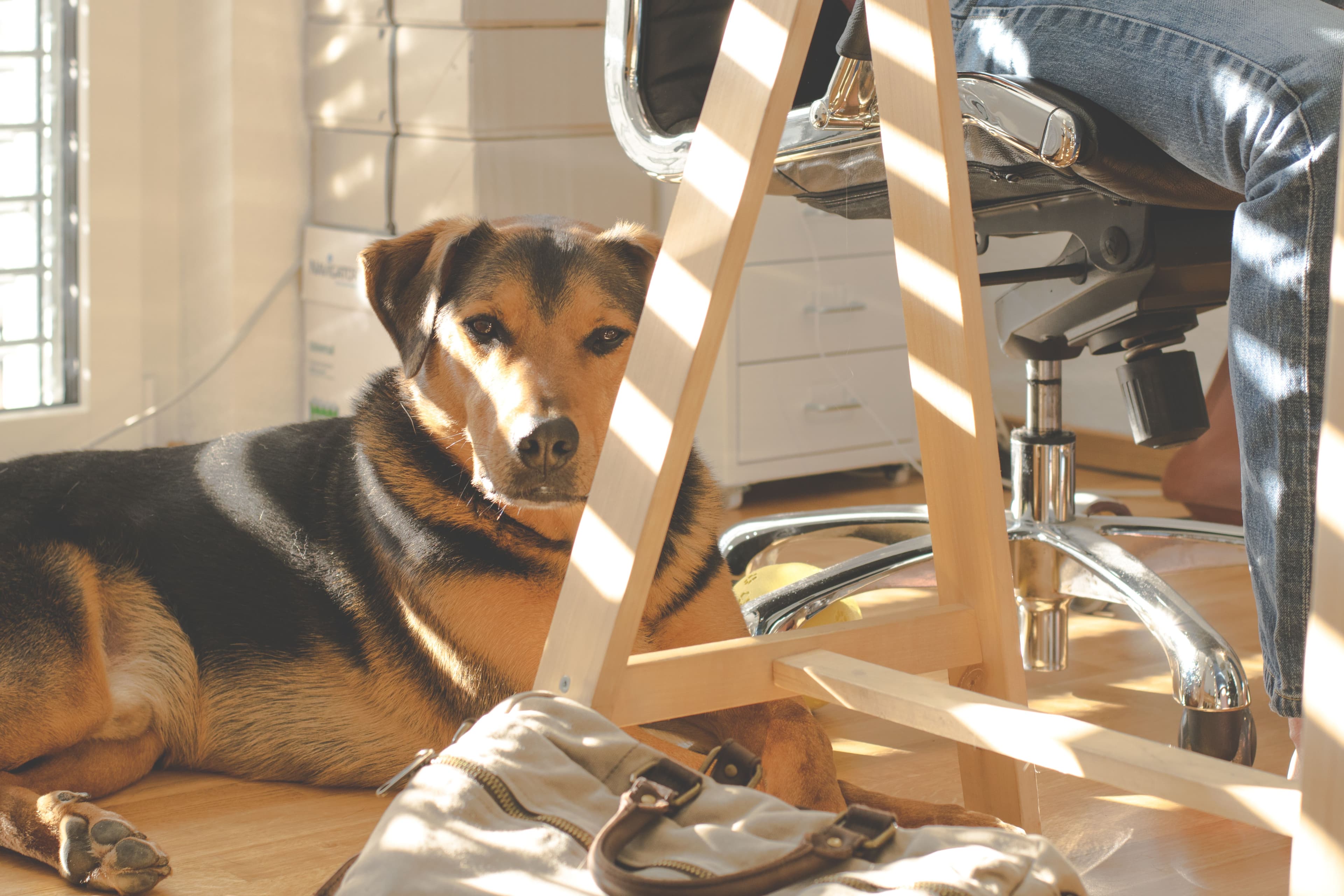
It's 9:40 on a Tuesday night. Your seven-year-old Lab, Miller, has stood up, circled, and lain back down four times in the last ten minutes. He's not whimpering. He's not limping. He ate dinner. But he's sitting in the hallway instead of on his bed, facing the wall, and every time you look over he's already looking away.
Nothing here screams emergency. That's the problem — the signs your pet is in pain are usually this quiet. Dogs and cats descend from animals that got eaten when they looked weak, and that instinct didn't go away because you bought a memory-foam bed. The 2022 WSAVA Global Pain Management Guidelines are built around exactly this reality: pain in animals is recognized through behavior, not through complaining.
So let's work through the next hour in order.
Step 1: Watch for 60 seconds before you touch anything
Your instinct is to go press on him and find the sore spot. Don't — not yet. Palpating a painful animal is how calm pets bite people they love, and it also destroys the thing you most need: a clean, unprovoked observation.
Sit down. Say nothing. Watch for a full minute and note:
- Posture. Is the back arched or hunched? Is he in a "praying" position — chest down, rear up? (That one is a classic abdominal pain posture in dogs.) Is a cat sitting hunched with all four feet tucked and the tail wrapped tight?
- Face. Ears back or sideways, eyes squinted or half-closed, a tense muzzle, whiskers pulled forward or flattened.
- Where they chose to be. Not the bed, not the couch, not the sunny spot. Under something, behind something, or facing a wall.
- Breathing. Faster than usual at rest, or shallow. Count breaths for 15 seconds and multiply by four.
Those facial details aren't folklore. The Feline Grimace Scale, validated in Scientific Reports in 2019 and now used in clinics worldwide, scores exactly five things — ear position, orbital tightening, muzzle tension, whisker change, and head position — from 0 to 2 each. A total score of 4 or higher means the cat needs a professional pain assessment. It's free at felinegrimacescale.com and takes about 30 seconds on a phone.
A pet who is "just being weird" at 9pm is giving you data. Weirdness with no obvious cause is a symptom, not a mood.
Step 2: Rule out the true emergencies first
Before you decide whether this can wait until morning, check for the short list of things that cannot. Go through these now, fast:
Unproductive retching in a dog. He's trying to vomit and nothing is coming up, especially with a swollen, drum-tight belly and restlessness he can't shake. This is gastric dilatation-volvulus (bloat/GDV) until proven otherwise, and per AAHA, one to two hours is genuinely the difference between a good and a bad outcome. Deep-chested breeds are highest risk, but it happens in others. Go now.
A cat — especially a male cat — going in and out of the litter box producing nothing. Straining, crying in the box, licking at the genitals, urinating in odd places, or vomiting alongside it. This is a urethral obstruction, and a blocked cat can go into fatal kidney failure and cardiac arrhythmia within roughly 24–48 hours. Owners routinely mistake it for constipation. Go now.
Pale, white, or grey gums. Press a finger on the gum; the color should return in under two seconds. If gums are pale, brick red, or blue-tinged, or the pet is cold and wobbly, that's circulatory. Go now.
Labored breathing, open-mouth breathing in a cat, or a hunched cat with elbows out. Cats do not pant. Go now.
A sudden painful eye — squinting shut, cloudy, tearing, rubbing. Glaucoma and corneal ulcers destroy vision in hours, not days. Go now.
Non-weight-bearing on a limb, collapse, seizure, known trauma, or a suspected toxin. All ER.
If none of those apply, you have time to be systematic. Keep going.
Step 3: Know the species-specific signs your pet is in pain
Dogs and cats hide pain differently, and the biggest mistake is watching a cat for dog behavior.
In dogs
- Restlessness and the settle-circle — Miller's exact behavior. Up, down, up, down, never comfortable.
- Panting at rest with no heat, no exercise, no thunderstorm.
- "Shadowing" — following you room to room more than usual — or the opposite, going off alone. Both are documented pain behaviors, and both get read as "clingy" or "moody."
- Lagging on walks, hesitating at stairs, hesitating before jumping into the car. Owners file these under aging. They're the number one missed sign.
- Slow to rise, stiff for the first few minutes after a nap, then loosens up.
- Licking one spot obsessively — a joint, a paw, a flank.
- A trembling or tucked posture, lowered head, tail carried lower than normal.
- Change in personality — a friendly dog snapping when touched near the hips, a tolerant dog no longer tolerating the kids.
That last cluster matters more than most people realize. A 2022 study in the Journal of Small Animal Practice found owners of dogs with clinical osteoarthritis reported observable impairment in only about 30% of cases — meaning roughly 70% of visibly affected dogs looked fine to the person who fed them every day. Not because those owners were careless, but because the change happened over months and the baseline moved with it.
In cats
Cats are worse. They are exceptionally good at looking normal right up until they aren't.
- Hiding — under the bed, in a closet, behind the toilet. In cats, new hiding is one of the strongest single indicators something is wrong.
- Stopping grooming, leading to a greasy, matted coat, especially over the back and hips — or over-grooming one specific area until it's bald.
- Not jumping to the counter, the windowsill, the top of the cat tree anymore. Look for a cat who now takes the ottoman as a midway step.
- Sitting hunched, feet tucked, eyes half closed, in a loaf that never relaxes.
- Litter box changes — going next to it instead of in it. Litter box "misbehavior" is very often arthritis in the hips making the step-over painful, or a urinary problem.
- Purring. Yes, purring. Cats purr when they're stressed and in pain too. Never use a purr to rule pain out.
- Reduced appetite — a cat who eats half, or eats slower, or drops kibble (think dental pain).
Step 4: Write it down before you forget the details
Here's the part that changes your vet visit. At 9:40pm you know exactly what you saw. At the 4:15pm appointment on Thursday, you'll say "he was acting off Tuesday" and the vet will get nothing useful from it.
Log these six things while it's happening:
- Time and date of the first thing you noticed.
- What specifically changed, in plain language: "wouldn't lie on his bed, kept standing up."
- Eating, drinking, peeing, pooping — normal, less, more, none. Include the last normal one.
- Anything new in the last 48 hours — new food, new treat, new chew, a dropped pill, a longer hike, a fall, a fight, a fence they got into.
- Current medications and supplements, with doses and last dose time.
- Whether it's worse at a particular time — first thing in the morning, after rest, after activity.
This is exactly what ZooMinder's symptom log is for — timestamped entries you can add in 20 seconds from the hallway floor, so the record is built the moment you notice it instead of reconstructed from memory three days later. When the vet asks "how long has this been going on?", you'll be able to scroll and answer with dates instead of guesses.
Then take a 20-second video. Film them walking away from you and toward you, getting up off the floor, and going up two stairs. Clinics see a pet who's been in a carrier, in a car, and in a waiting room full of strange smells — adrenaline masks lameness beautifully, and half the time the limp you drove in for vanishes on the exam table. Video wins arguments that memory can't. Attach it to the pet's record in ZooMinder alongside the log entry so it's one tap away at the appointment.
Step 5: Wait, call, or go — the decision tree
Work top to bottom and stop at the first match.
Go to the ER now if: unproductive retching or a distended belly; a cat straining to urinate with nothing coming out; pale/blue/grey gums; labored or open-mouth breathing; collapse, unresponsiveness, or seizure; a suddenly painful or cloudy eye; a limb that won't bear weight at all; screaming or crying out; known trauma, a possible toxin, or a swallowed object; or any pain that's escalating in front of you over minutes.
Call the clinic first thing tomorrow if: they're eating and drinking, gums are pink, breathing is normal, and the sign is persistent but stable — the stiffness, the not-jumping, the hiding, the new reluctance on stairs, licking one joint, a limp that's there but weight-bearing. Also call if a cat has skipped more than one meal; cats who stop eating for 24–48 hours risk hepatic lipidosis, so this is a shorter fuse than it is for dogs.
Watch and log overnight if: it's mild and brand new, everything else is normal, and the pet is willing to eat, drink, and settle eventually. Set a phone alarm to recheck in two hours. Any escalation moves you up a row.
While you wait, three hard rules: give no human painkillers — ibuprofen and naproxen cause ulcers and kidney failure in pets, and acetaminophen (paracetamol/Tylenol) is lethal to cats in a single tablet; give no leftover medication from another pet or another illness; and withhold food if you suspect an abdominal problem, since a possible surgery goes better on an empty stomach. Water is usually fine unless they're actively vomiting.
Step 6: Make the next one easier to catch
The reason tonight felt so uncertain is that you were comparing Miller to a memory instead of a record. Fix that in the calm weeks:
- Weigh monthly. Weight loss is one of the earliest objective signs of chronic pain and illness, and it's invisible day to day because you see them constantly. A 5% drop matters. ZooMinder's weight tracking will show you the curve, which is the thing your eyes genuinely cannot do.
- Film a 15-second baseline video every few months: your pet walking toward the camera, walking away, and getting up from lying down. When you suspect a change later, you'll have proof of what "normal" looked like in March.
- Write down the small things when they're small. "Didn't jump on the bed last night" is meaningless alone and diagnostic three times in a month.
- Keep the senior checkups. The 2022 AAHA Pain Management Guidelines recommend reevaluating patients with pain every three to six months, and the whole philosophy is proactive rather than reactive — catching pain before it's obvious, not after.
- Learn your pet's resting respiratory rate when they're healthy and asleep. It's a 30-second measurement and one of the most useful numbers you'll ever have.
Miller, for the record, had a cracked carnassial tooth. He'd been eating on one side for weeks — the "won't settle" evening was the day it finally became unbearable. Nobody in that house had done anything wrong, except assume that a dog who eats his dinner isn't hurting.
Pain doesn't announce itself. It reschedules things. The bed he stopped using, the counter she stopped jumping to, the stairs taken one at a time — that's where it lives. Learn what your pet chooses to do when nothing is wrong, and you'll notice the day they choose differently.
Keep Your Pet's Health on Track with ZooMinder
ZooMinder helps you manage medication schedules, track vet appointments, and keep complete health records for all your pets — all in one free app.