Why Dogs Tilt Their Heads: 5 Myths, and When to Call a Vet
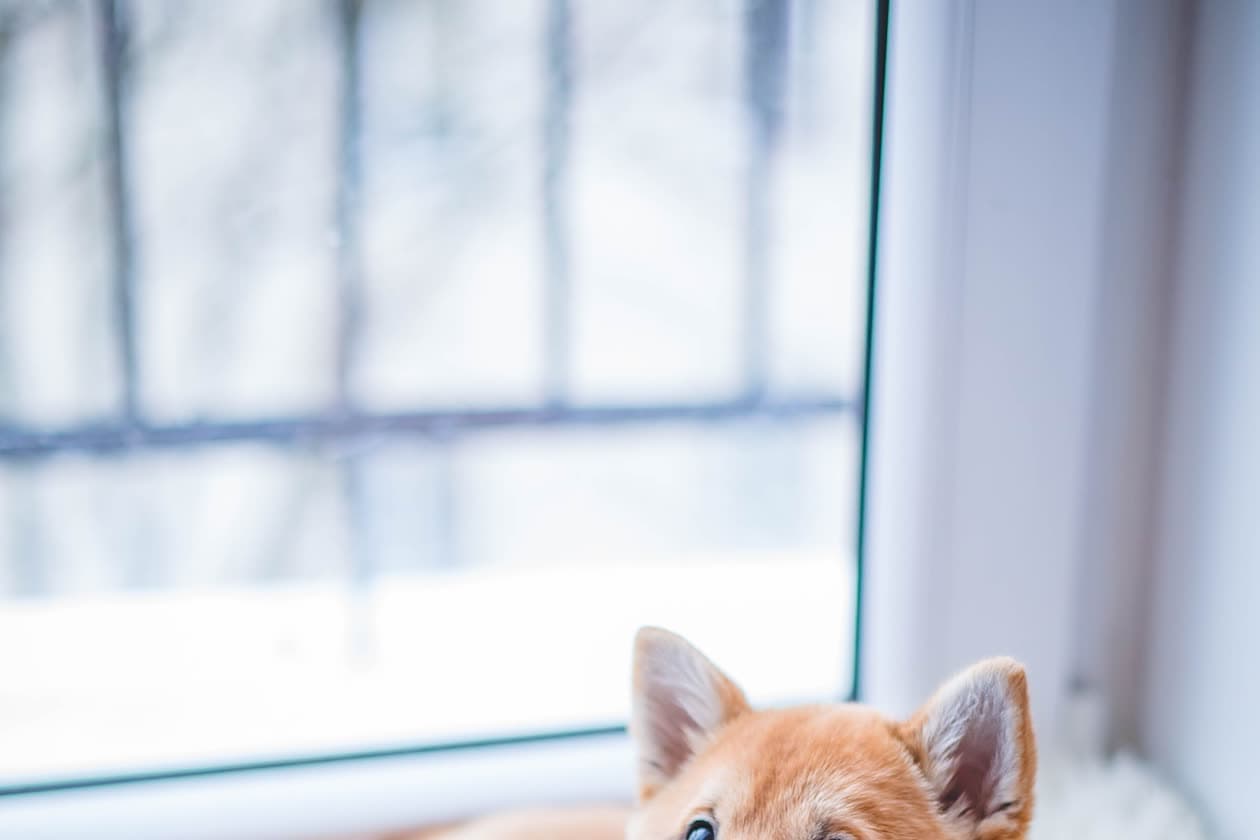
Say the word "walk" in a slightly higher voice and plenty of dogs will do the move: ears up, eyes locked on you, head turning sideways like a radio dial looking for a station. Most pet owners think they know why dogs tilt their heads. The usual answers are that the dog is confused, the dog is trying to hear better, or the dog has worked out that it's adorable. Here's what veterinarians and researchers actually say: the evidence points to attention and processing, with hearing and vision probably helping. And one kind of head tilt isn't behavior at all. It's a medical sign, and it looks completely different once you know what to watch for.
Here are the five most common beliefs about the head tilt, and what holds up.
"My dog tilts its head because it's confused"
This is the most popular explanation, and it's probably backwards.
In 2021, researchers from the Family Dog Project at Eötvös Loránd University (ELTE) in Budapest published an exploratory study in Animal Cognition (Sommese et al., 2021). They compared a rare group they call "gifted word learner" dogs, which have learned the names of many individual toys, with typical family dogs. Owners asked their dogs to fetch a specific toy by name. According to ELTE's summary of the study, the gifted dogs tilted their heads in about 43% of trials, compared with about 2% for typical dogs.
If tilting meant confusion, the dogs that understood the words should have tilted least. They tilted most. The researchers suggest the tilt may go with processing a meaningful sound: the dog has heard something it recognizes and is pulling up what it means.
A head tilt is more likely to mean "I know that word" than "I have no idea what you just said."
Some caveats, because the authors gave them too. The study was small, every gifted dog was a border collie, and it looked at only one situation (being asked for a named toy). It's an interesting signal, not a final answer. Still, it explains why so many dogs tilt at their own name, at "dinner," and at the squeaky voice their owners save for them.
There's one more odd detail. Each dog tended to tilt to the same side every time, and that held across sessions months apart. That consistency is one reason researchers want to know whether the tilt is linked to how a dog's brain divides up its work. For now, nobody knows.
"Dogs tilt their heads to hear you better"
Partly true, but less proven than it sounds.
Dogs have mobile ear flaps (pinnae) and hear much higher-pitched sounds than people do. Tilting the head changes how sound reaches each ear. That could help a dog work out where a sound is coming from, especially its height, which is hard to judge when both ears sit level. It's a reasonable idea, and you'll find it in plenty of articles.
What's missing is a study showing that dogs actually locate sounds better when they tilt. The tilt clearly happens around sounds, but "it helps them hear" is still an assumption, not a finding.
The interesting part is what hearing is for. Hearing researchers Rickye and Henry Heffner compared many mammal species and found that how precisely an animal can pinpoint a sound tracks how its eyes and field of vision are set up. Their interpretation: for most mammals, a big job of locating a sound is pointing the eyes at whatever made it. Hearing and vision work as a team.
That's why the next myth is more interesting than it first looks.
"Breed has nothing to do with it"
There's a hint that it does, though the evidence is weak.
Psychologist Stanley Coren, who writes widely about dog behavior, ran an informal online survey of 582 dog owners. As he reported in Psychology Today in 2013, 71% of owners of dogs with longer muzzles said their dog often tilted its head when spoken to, compared with 52% of owners of flat-faced (brachycephalic) dogs.
His idea was that a long muzzle can block a dog's view of the lower half of your face, including your mouth, which tells it a lot. Tilting the head moves the muzzle out of the way. Picture trying to read someone's expression while holding a loaf of bread under your nose.
Be careful with this one. It was a self-reported survey, not a controlled study. Owners judged both their dog's face shape and how often it tilted. And more than half of the flat-faced dogs tilted often anyway, so muzzle length can't be the whole story. The fair summary: seeing your face may be part of it, and it fits nicely with the Heffners' point that ears and eyes work together. It isn't settled.
"A head tilt is always just cute"
This is the myth that matters.
The tilt your dog does when you say "walk" is brief, voluntary, and stops as soon as the conversation ends. A medical head tilt is different. The head stays tilted, the dog doesn't choose it, and it usually comes with other signs. It happens when something is wrong with the vestibular system, the balance organs in the inner ear and the brain areas that process their signals.
Veterinary references, including the Merck Veterinary Manual, list a persistent head tilt as a classic sign of vestibular problems. The common causes include:
- Middle or inner ear infection (otitis media/interna). Veterinary neurology sources describe it as one of the most frequent causes of peripheral vestibular disease. An infection that spreads deep enough can affect balance, even if the outer ear doesn't look obviously dirty.
- Idiopathic ("old dog") vestibular disease. It comes on suddenly in older dogs, often dramatically, with no cause found.
- Central causes in the brain itself. These include inflammation, tumors and vascular events, and some need urgent treatment.
The signs that usually come with a medical tilt:
- Losing balance, leaning, stumbling or falling to one side
- Rapid flicking of the eyes (nystagmus), side to side or up and down
- Circling in one direction
- Nausea, drooling, vomiting or refusing food (vertigo makes dogs feel seasick)
- A drooping face or eye on one side, or head shaking and scratching at an ear
- Weakness in the legs, unusual sleepiness, or confusion
A sudden, persistent head tilt, especially with wobbling, eye flicking or vomiting, is a reason to call your vet the same day. It isn't something to watch for a week.
A head tilt that shows up gradually alongside ear scratching, odor or discharge also deserves a prompt appointment rather than a wait-and-see approach.
"A sudden tilt in an old dog means a stroke, and it's the end"
Many families have panicked over this scene, and it's an understandable fear. An older dog that was fine yesterday can't stand up straight today, its eyes are flicking, and it falls over when it tries to walk.
Idiopathic vestibular disease can look exactly like that. Veterinary sources describe it as often severe at the start but frequently improving with supportive care. Many dogs get noticeably better within days. A full recovery can take a couple of weeks, and some keep a slight tilt for months while living perfectly normal lives. Some never fully lose it.
The catch is that you can't tell this apart from a stroke, a brain lesion or a deep ear infection at home, and they're treated differently. Vets examine the ears, check the eye movements and run a neurological exam to work out whether the problem is in the inner ear or the brain. Sometimes they need imaging too. A normal-looking eardrum doesn't rule out a middle-ear infection. So the reassurance is real but conditional: many of these dogs recover, and finding out which kind it is takes a vet.
What to do instead
Enjoy the everyday tilt, and use it. If your dog tilts at certain words, that's a good sign it's paying attention. Training sessions where you see the tilt are probably landing.
Learn your dog's normal tilt. Notice which side it tilts to and what triggers it. Since each dog tends to favor one side, a dog that suddenly holds its head tilted the other way, or keeps the tilt when nobody is talking, is showing you something new.
Know the two questions that separate behavior from a medical problem:
- Does it stop when the sound stops? Normal tilts do.
- Is anything else off? Balance, eyes, appetite, ears, alertness.
If the answer to the first is no, or the second is yes, call the vet. Note when it started and take a short video if your dog's eyes are flicking, because it may stop before you get to the clinic.
Don't treat ear problems yourself with leftovers. Some ear medications can harm the inner ear if the eardrum is damaged, and you can't check that at home. Let your vet look first.
If treatment is prescribed, keep the routine going. Ear infections often need a course of medication over days or weeks, plus a recheck to confirm the infection has cleared deep in the ear, not just at the surface. Stopping early because the dog seems better is a common way for an infection to come back. That routine is where ZooMinder's medication reminders and checkup scheduling are useful: they keep track of the doses and the recheck date while you focus on the dog. Dosing and duration are always up to your vet, for your dog.
So the next time you say "walk" and the head goes sideways, you're probably watching a dog that recognized a word and is working out what comes next. The tilt to worry about is the one that's still there after you stop talking.
Keep Your Pet's Health on Track with ZooMinder
ZooMinder helps you manage medication schedules, track vet appointments, and keep complete health records for all your pets — all in one free app.