Why Pets Hide When They Are Sick (and What to Do Tonight)
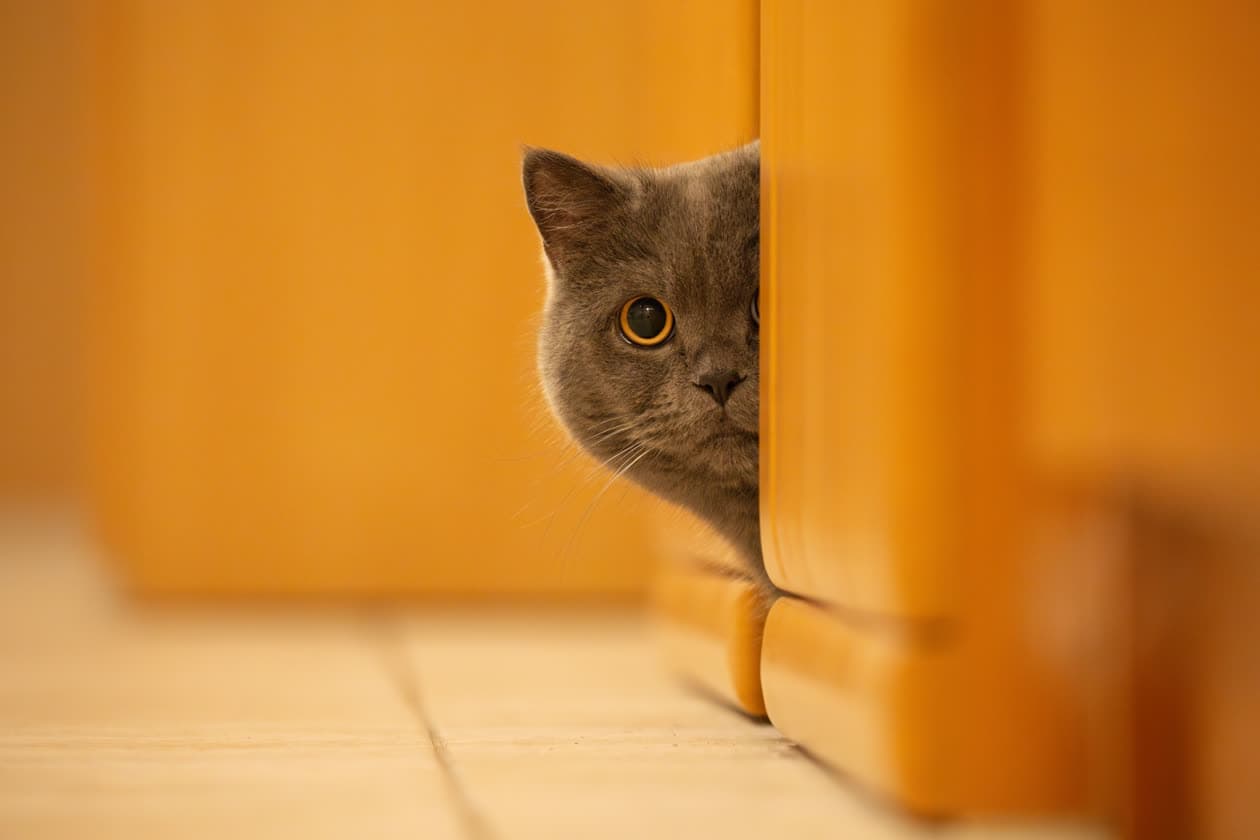
It's 9:40 on a Tuesday night. You're rinsing dishes when it hits you that Miso, your four-year-old tabby, hasn't shown up to inspect dinner. Her breakfast bowl is still half full. You find her under the bed, pressed against the wall, staring at you with that flat, patient look cats save for when they'd rather you went away.
You start doing the math: Did she eat lunch? When did she last use the litter box? Is this a mood or a problem?
Here's the short answer to why pets hide when they are sick: for most of their evolutionary history, looking weak got animals killed. Cats are both small predators and prey for bigger animals, and rabbits, guinea pigs and birds are prey through and through. Their instincts tell them to hide symptoms, find a protected spot and wait it out. So by the time you notice something, it has often been going on for a while.
That's not a reason to panic. It's a reason to take small changes seriously and to start writing things down. Here's what to do, in order.
Step 1: Leave her where she is (for now) and look
Don't drag her out. Hiding is a coping strategy, and a frightened or sore animal pulled from a safe spot may scratch, bite, or get more stressed. Get down to floor level with a flashlight and watch quietly for a minute.
You're looking at three things:
- Breathing. Is it calm and even, or fast, with visible effort in the belly? In cats, open-mouth breathing or panting is an emergency (unless she's just finished a wild play session and it settles within moments).
- Posture. A cat lying relaxed on her side is different from one hunched in a tight "loaf" with her head held low and her feet tucked under.
- Face. This is where the science gets useful.
What a cat's face gives away
In 2019, researchers at the Université de Montréal published the Feline Grimace Scale in Scientific Reports (Evangelista et al.), a validated tool for spotting acute pain from a cat's expression. It scores five features: ear position, squinted or tightened eyes, a tense muzzle, whiskers held straight or pulled forward, and a lowered head. Veterinary teams use it in clinics, but the cues are things you can see from the bedroom floor.
You're not scoring your cat or diagnosing her. You're noting what you see: "Ears turned out, eyes half-closed, head lower than her shoulders." That one sentence is far more useful to a vet than "she seems off."
A sick cat rarely looks dramatic. She looks slightly different, and that small difference is the information.
One more thing that surprises people: purring doesn't mean everything is fine. Cornell Feline Health Center director Dr. Bruce Kornreich has pointed out that cats may purr when they're uncomfortable. It can be a self-soothing sound as well as a happy one.
Step 2: Understand what you're up against
This part changes how you read everything else, so it's worth a minute.
In 1988, veterinary behaviorist Benjamin Hart argued that the way sick animals behave (lethargy, poor appetite, withdrawal) isn't just a side effect of illness. It's an organized survival strategy that saves energy for fever and the immune response. Hiding under the bed fits that pattern.
The twist is that animals can switch the display off when showing it would cost them. In a 2012 study in Behavioral Ecology and Sociobiology, Lopes, Adelman, Wingfield and Bentley gave zebra finches a substance that triggers an immune response. Finches housed alone became noticeably less active, as you'd expect. Finches housed in a colony largely didn't. Their bodies were still mounting the immune response, but in company they behaved as if nothing was wrong.
That's the surprising part: an animal looking normal doesn't mean it feels normal. For prey species, looking healthy around others is a survival skill. It's also why your cat may act fine when you're in the room and then retreat as soon as the house goes quiet, and why rabbits and guinea pigs can look fine until they suddenly aren't.
What this means for you: trust the small changes more than the big ones. A big obvious symptom often means the animal can no longer hide it.
Step 3: Check the quiet evidence around the house
Animals can hide symptoms, but the house usually keeps a record. Check:
- Food bowl. Roughly how much is gone since the last fill? Did she skip a favorite treat?
- Water bowl. Noticeably more or less than usual?
- Litter box. Count the urine clumps and stools. Look for blood, diarrhea, very small clumps, or nothing at all.
- Vomit. Check behind furniture. What did it look like, and when do you think it happened?
- Mobility. Did she skip her usual jump onto the bed or windowsill?
- Grooming. A patch of fur that's suddenly messy, or one spot she won't stop licking.
For rabbits and guinea pigs, the key evidence is droppings and appetite: fewer, smaller or no droppings, or a refusal of hay or favorite greens.
Step 4: Decide using the decision tree
This is a general guide, not a substitute for your vet. When in doubt, call. Most clinics would rather take a two-minute phone call than see a crisis the next morning.
Go to an emergency vet now if you see:
- Labored breathing, open-mouth breathing in a cat, or pale, gray or bluish gums
- A cat (especially a male) straining in the litter box with little or no urine. A urinary blockage can become life-threatening quickly.
- A rabbit that hasn't eaten or produced droppings in about 12 hours. VCA Animal Hospitals uses this as an emergency threshold, and some emergency vets advise acting sooner, because gut stasis in rabbits can worsen within hours.
- Collapse, seizures, inability to stand, or sudden paralysis of the back legs
- Repeated vomiting, vomiting blood, or a swollen, painful belly
- Known or suspected toxin exposure (lilies, medications, antifreeze, rodent bait)
- Crying out when touched, or obvious trauma
Call your regular vet today or first thing tomorrow if:
- A cat or dog has eaten noticeably less for a day but is otherwise stable
- She's hiding more than usual but is still drinking, using the litter box and breathing comfortably
- There's a single bout of vomiting or diarrhea without other signs
- You notice new limping, squinting, or a tender spot
Watch closely and log it if:
- Everything above is normal and there's an obvious recent stressor (more on that below)
- She comes out, eats, and acts like herself within a few hours
Remember that small animals don't have much reserve. A day of "not quite right" means more for a cat than a large dog, and more for a rabbit than a cat. Lower your threshold for calling the smaller the animal is.
Step 5: Write it down before you call
Your memory at 9:40 p.m. is not a reliable witness. Before you phone anyone, jot down:
- When you last saw normal behavior (e.g., "ate all her breakfast Monday, played with the feather toy that evening")
- What changed, and when you first noticed it
- Food and water: roughly how much, and since when
- Litter or droppings: number, appearance, any straining
- Breathing, posture and face, in plain words
- Recent changes: new food, new medication, a visitor, renovations, a trip
- Current medications and doses, and when the last dose was given
That last item matters more than it looks. If she's on a daily medication, the vet will want to know whether a dose was missed or doubled. If you track her medications in ZooMinder, the schedule and doses are already in one place, so you're not trying to remember which day the bottle was opened.
"She's been off since about Monday dinner: half her usual food, two small urine clumps instead of four, ears out, won't jump on the bed." That's a phone call a vet can actually work with.
Step 6: Don't overlook stress
Not every disappearance is a disease. Changes in routine can make a perfectly healthy cat look sick.
In a study published in JAVMA in 2011, Stella, Lord and Buffington at Ohio State followed healthy cats alongside cats with a chronic bladder condition. During weeks with unusual events (a change of caretaker, changes to feeding schedules or routines), both groups showed roughly three times more "sickness behaviors", mainly vomiting, eating less, and going outside the litter box. Healthy cats did it about as often as the sick ones.
So check your recent history. Did you rearrange the living room, change her food, start a new work schedule, or bring home a houseguest with a dog? Stress can explain a lot, but it doesn't rule out illness, and the red flags in Step 4 still apply. Let it guide your notes, not replace the phone call.
How to make sure this doesn't catch you off guard next time
You can't stop an animal from hiding symptoms. Evolution got there first. What you can do is know what normal looks like for your pet so that a change stands out sooner.
- Learn their baseline. How much does she usually eat? How many clumps a day? What's her resting breathing rate while asleep? Ask your vet how to count breaths at home and what's normal for your pet.
- Weigh small pets regularly. Gradual weight loss is one of the hardest signs to see and one of the easiest to measure. A kitchen scale works for rabbits, guinea pigs and small cats.
- Keep a few lines of notes when something seems off, even if it turns out to be nothing. Patterns show up over weeks, not hours.
- Keep routine checkups. Your vet can pick up things you can't see at home, like dental pain, heart murmurs and early kidney changes. Keeping vaccinations and checkups in ZooMinder makes it harder for the yearly visit to quietly slide into an 18-month one.
- Keep routines steady. Consistent feeding times, a litter box that stays put, and daily play, as the Ohio State authors suggested, reduce the stress-driven false alarms that make real ones harder to spot.
The next time Miso skips half her breakfast, you won't need to wait for her to come out from under the bed to know something changed. You'll already have the start of the note: what's normal, what's different, and since when. For an animal built to hide symptoms, those three lines are the best early warning you'll get.
Make This Easier With ZooMinder
You shouldn't need a spreadsheet to take care of your pet. ZooMinder is the free app that handles medication schedules, vet records, and reminders so you can focus on the cuddles.